

Why Dental Inventory Management Matters More Than You Think
How to manage inventory of dental office supplies effectively starts with these essential steps:
- Create a master inventory list with item names, SKUs, suppliers, costs, and minimum/maximum stock levels
- Establish reorder points using the formula: Average Daily Use × Lead Time + Safety Stock
- Implement FEFO (First-Expired, First-Out) to minimize waste from expired supplies
- Designate an inventory manager and train at least one backup person
- Track your supply spend to keep it at 5-6% of monthly collections
- Conduct regular audits using cycle counting for critical items and annual physical counts
- Leverage technology with barcode scanning or inventory management software for practices with 150+ line items
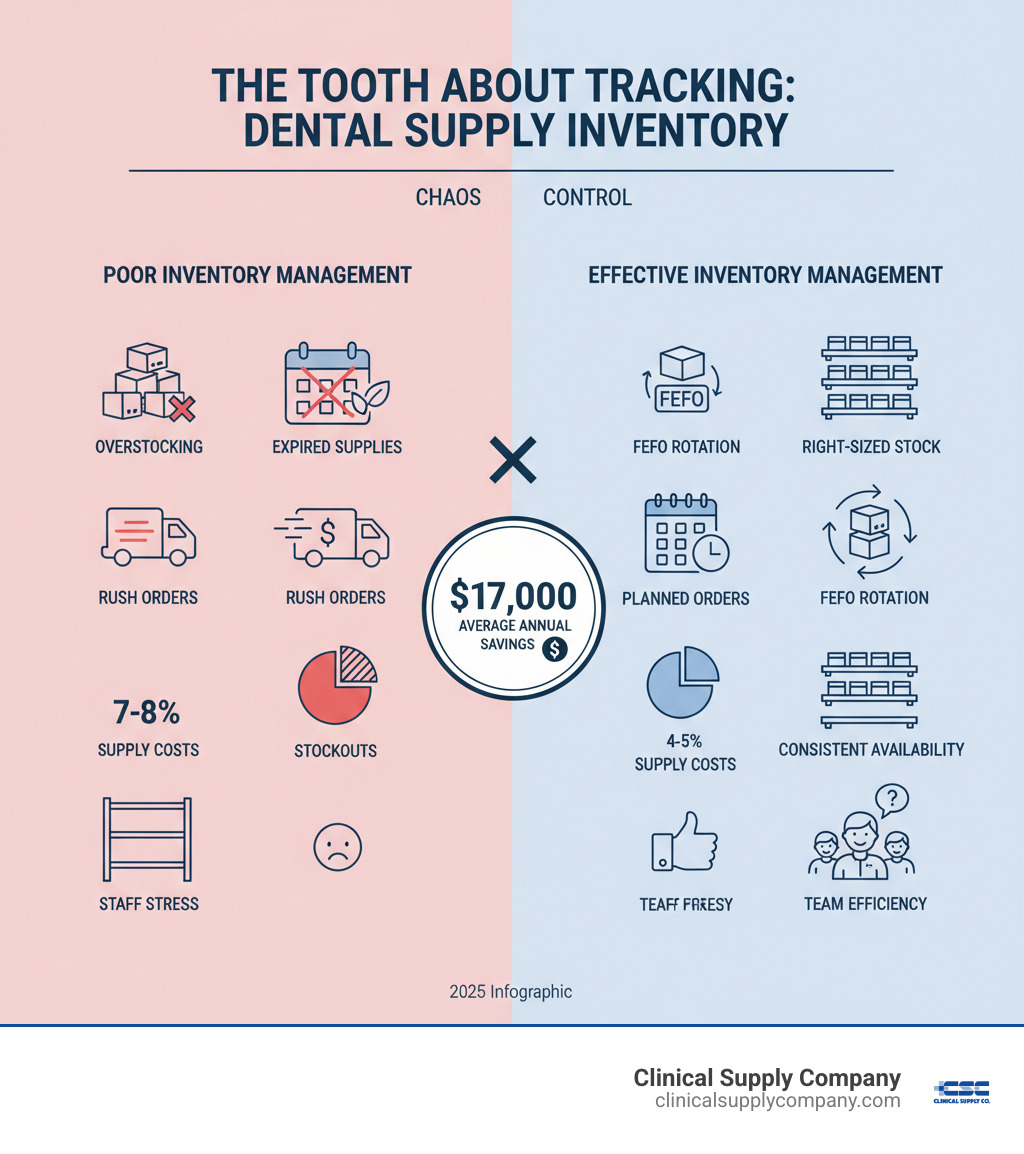
Many dental practices have over $20,000 in supplies but still run out of critical items like anesthetic because of poor tracking. This isn't just inconvenient—it's expensive. The average practice can save over $17,000 annually with better inventory management, but waste often happens because no one knows what's in stock, what's needed, or when to reorder.
Poor inventory control hurts your practice financially, operationally, and clinically. It leads to high carrying costs, emergency order fees, production delays, staff frustration, and stockouts during patient care. When supply costs exceed the 5-6% of collections benchmark, or your team is constantly searching for items, your bottom line suffers.
The good news? Inventory control is one of the fastest margin wins in a practice. Many clinics target 4-5% of monthly collections for clinical supplies, and with the right system, that target becomes achievable without sacrificing quality or patient care.
I'm Adam Schuh, President and CEO of Clinical Supply Company, and I've spent years helping dental practices steer supply-chain challenges. Through my work, I've learned that how to manage inventory of dental office supplies comes down to systematic processes, not complex technology. Let me show you the practical steps that turn chaotic supply closets into profit centers.
Why Effective Inventory Management is a Game-Changer
Ineffective inventory management quietly drains your practice's profitability and creates team stress. Common challenges like overstocking, understocking, and expired supplies lead to tied-up capital, production delays, and expensive emergency orders with rush shipping fees. But changing these daily headaches into smooth operations yields significant rewards.
The benefits ripple through your practice: financial savings that can exceed $17,000 annually, improved cash flow, and reduced team stress. Most importantly, it ensures uninterrupted patient care—no more delays or scrambling for supplies. As we explored in The Juggling Act: Balancing Efficiency and Quality in Dentistry, this balance is essential for sustainable growth.

The High Cost of Disorganization
The true cost of disorganized inventory is steep. Lost profits accumulate from rescheduled appointments and empty chairs. Production delays cascade through your schedule, frustrating patients and staff, which can lead to costly staff turnover. Patient safety risks emerge when expired or incorrect materials are used. The ADA also warns of potential for fraud, as unmonitored supplies are an easy target. Finally, constant emergency orders rack up thousands in extra shipping fees annually.
The Tangible Benefits of a Streamlined System
Conversely, a streamlined system offers tangible benefits. Budget adherence becomes automatic, keeping supply costs within the recommended 5-6% of collections. Data-driven purchasing eliminates waste and ensures you get the best value. Improved productivity follows as your team spends more time on patient care and less on hunting for supplies. And regulatory compliance becomes simpler with organized tracking of expiration dates and lot numbers, a cornerstone for providing Top Quality Dental Supplies for Your Clinic.
Building Your System: How to Manage Inventory of Dental Office Supplies
Building a solid inventory system can be done step-by-step. The core elements are a centralized storage space, clear reorder rules, defined team roles, and regular check-ins. When these pieces work together, you'll always have what you need without overstocking or scrambling for supplies mid-procedure.

Creating a Centralized and Organized Storage System
Start by designating one central area for all bulk supplies to maintain control and accurate counts. Organize this space with clear, labeled bins and sturdy shelving. This simple step saves countless minutes.
Implement a First-Expired, First-Out (FEFO) system: always place items with the earliest expiration dates at the front. This rotation minimizes waste from expired supplies. When new shipments arrive, put them behind existing stock.
Categorize supplies using frameworks like ABC (cost/importance) or VED (Vital, Essential, Desirable) analysis to prioritize management efforts, as supported by research on ABC and VED analysis methods for inventory control. For operatories, stock only enough for a day or two and replenish from the central supply. This keeps treatment rooms tidy and inventory counts accurate.
Essential organization supplies include:
- Clear stackable bins
- Durable shelving units
- A quality label maker
- Drawer dividers
- A rolling cart
Establishing Your Master Inventory List
Your master inventory list is your practice's single source of truth. For smaller practices, a well-organized spreadsheet is a great start. We've created a template to help: Download our free dental inventory list template pre-filled with common SKUs.
Each item on your list needs key information:
- Clear item name (e.g., "Nitrile Gloves, Powder-Free, Medium")
- SKU or part number
- Supplier and cost per unit
- Minimum and maximum (par) levels to signal when to reorder and when you're overstocked.
- Storage location
- Expiration date to support your FEFO system.
As your practice grows (150+ line items), inventory management software becomes a worthwhile investment. This master list is your control center, reflecting our commitment to helping practices succeed, as discussed in Behind the Scenes: Clinical Supply Company's Commitment to Dentistry.
How to manage inventory of dental office supplies with a reordering process
A solid reordering process prevents stockouts and emergency fees.
Cycle counting is your key to accuracy without shutting down the practice. Instead of one massive annual count, count small sections regularly:
- Weekly/Daily: High-cost, critical "A" items (anesthetic, composites).
- Monthly: Moderate-cost "B" items.
- Quarterly: Low-cost "C" items (gauze).
This rolling approach catches discrepancies early. Also, schedule quarterly audits of expensive items and an annual full physical count. Pro-tip: Have a different person count than the one who orders to reduce errors and deter theft.
Your reorder point (ROP) is the stock level that triggers a new order. Use this formula: Average Daily Use × Lead Time (in days) + Safety Stock. For example, if you use 40 anesthetic carpules daily, the lead time is 5 days, and you want a 100-unit safety buffer, your ROP is (40 × 5) + 100 = 300 units.
Standardize your purchase order process with clear approval thresholds. Track orders to avoid duplicates. Build relationships with vendors to stay informed about lead times and pricing. This proactive approach creates a smooth, predictable rhythm, making Quick and Easy Clinical Supply Company Purchases possible because you're ordering strategically, not desperately.
Training Your Team and Delegating Responsibilities
A great system needs a great team. Designate one detail-oriented team member as your inventory manager to handle the master list, reordering, and vendor communication. Critically, train at least one backup person to ensure the system runs smoothly during absences.
Document your processes in Standard Operating Procedures (SOPs). Create simple, one-page guides for tasks like receiving shipments, cycle counting, and handling expired items, and post them at workstations.
Foster team accountability by sharing KPIs in meetings, like supply spend percentage. When everyone understands how inventory impacts the practice's success, they become more invested.
Finally, build a 30-minute inventory orientation into your onboarding process for new hires. This small investment prevents future mistakes. A well-trained team is the foundation of a successful practice, a principle we champion in Navigating Dental Success: A Complete Guide with Clinical Supply Company.
From Data to Dollars: Optimizing Costs and Reducing Waste
Once your system is in place, you can use data to make smarter financial decisions. This is where how to manage inventory of dental office supplies shifts from reactive firefighting to proactive optimization. We're no longer just counting boxes—we're leveraging data to make smarter decisions that directly impact our bottom line.

How to manage inventory of dental office supplies using data and analytics
Track these Key Performance Indicators (KPIs) to guide your practice toward profitability:
- Supply Spend as a Percentage of Collections: Aim for 4-6% for clinical supplies and ~2% for office supplies. A higher number is a red flag for waste or overspending.
- Inventory Turnover Rate: This shows how quickly you use supplies. A healthy rate (4-6 times per year) means cash isn't tied up in stagnant stock.
- Cost Per Procedure: Map supplies to procedure codes to understand the true material cost and profitability of each service.
- Expired Stock Value: Track this monthly. It's a direct measure of money being thrown away and helps identify over-ordering patterns.
- Usage Forecasting: Analyze historical data and your appointment schedule to predict future needs, allowing for more accurate ordering.
The Role of Technology: Software, Scanners, and Integrations
While spreadsheets work initially, technology is a game-changer for practices with 150+ line items.
Barcode scanning eliminates tedious and error-prone manual data entry. A quick scan adds items upon arrival and deducts them when used, ensuring high accuracy.
Modern inventory management software offers a cloud-based hub with features like low-stock and expiration date alerts, multi-supplier price comparison, and audit trails to improve accountability. The real power comes from integration with practice management software, which allows for automatic deduction of materials as procedures are charted and provides real-time cost-per-procedure data.
Here's how manual spreadsheets compare to inventory management software:
| Feature | Manual Spreadsheets | Inventory Management Software |
|---|---|---|
| Setup Cost | Low (free software) | Moderate (subscription fees) |
| Accuracy | Prone to human error, duplicate entries | High, automated data entry, barcode scanning |
| Real-time Data | Difficult to maintain, updates are manual | Yes, instant updates across the practice |
| Alerts (Low Stock/Expiry) | Manual reminders, easy to miss | Automated notifications, customizable |
| Reporting & Analytics | Basic, requires manual data manipulation | Advanced, customizable reports, usage trends |
| Scalability | Limited, becomes cumbersome with growth/multiple locations | High, designed for growth and multi-location management |
| Time Savings | Minimal, labor-intensive | Significant, automates many tasks |
| Integration | None | Often integrates with practice management systems |
| Security | Limited access control, data loss risk | Role-based access, data backup, audit trails |
For practices with more than 150-200 line items or multiple locations, software typically pays for itself within months through time savings and waste reduction.
Supplier Strategy and Cost Management
Your supplier relationships directly impact your bottom line. Some practices prefer a single, trusted vendor for simplicity, while others shop with multiple suppliers for the best price on each item. At Clinical Supply Company, we aim to be that trusted partner, offering a comprehensive selection so you can save time without coordinating multiple vendors.
Consider joining Group Purchasing Organizations (GPOs) to leverage collective buying power for discounts. Don't be afraid of price negotiation, as suppliers value loyal customers. Bulk purchasing can reduce per-unit costs, but balance the savings against storage space and expiration risks. Also, take advantage of loyalty programs, which offer additional savings and benefits.
To help you decide, review our guides on Phone Sales vs. Online Shopping and What to Consider When Buying Dental Supplies Online. The right strategy is about total value—price, reliability, service, and time saved.
Advanced Strategies for Compliance, Security, and Growth
Once you've mastered the fundamentals, a robust inventory system can actively protect your patients, ensure legal compliance, and position your practice for growth. These advanced strategies ensure you're building on solid ground.
Ensuring Compliance and Patient Safety
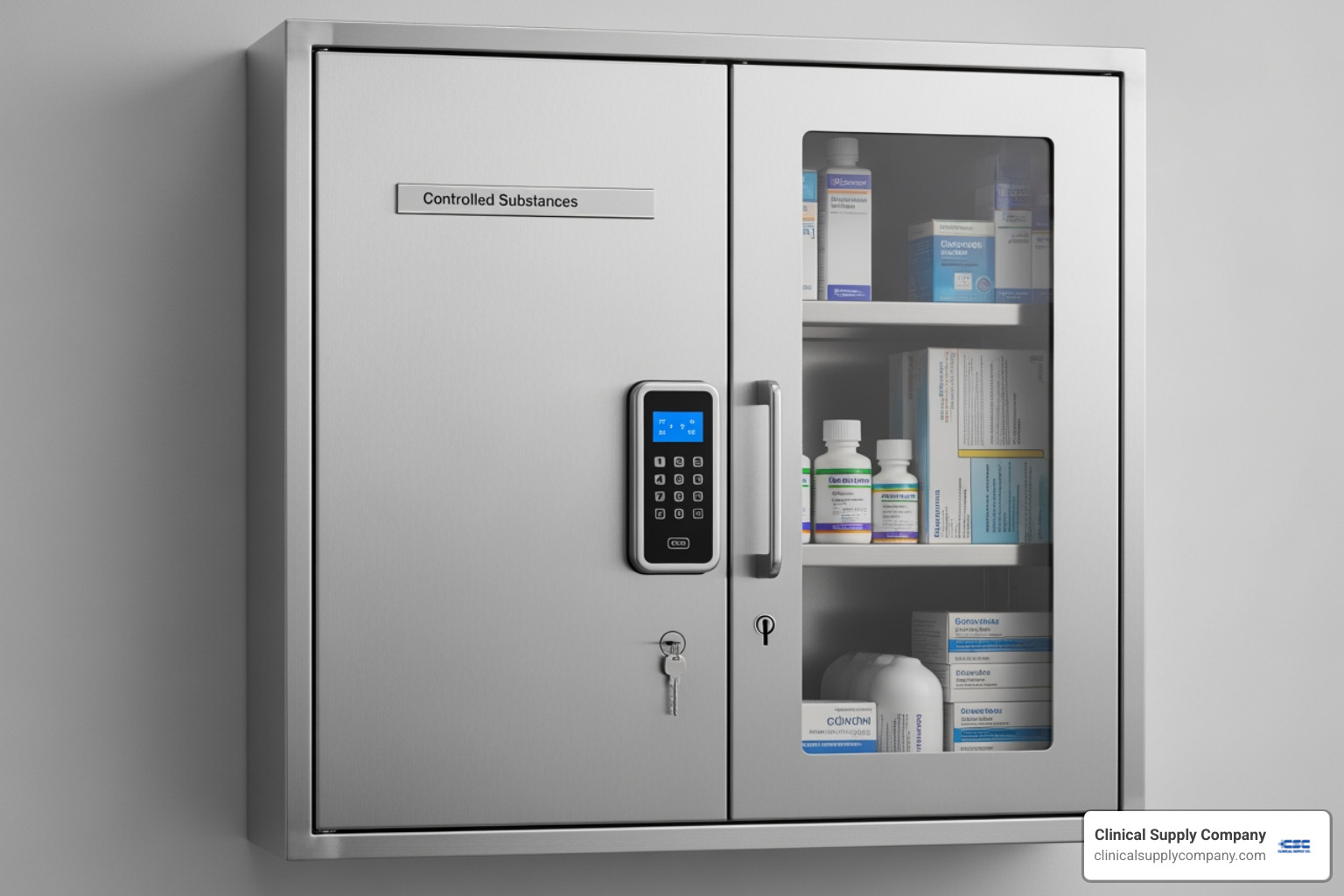
A robust inventory system is your first line of defense for compliance and patient safety. When you manage inventory of dental office supplies with this in mind, you build safety into your workflow.
- Track Expiration Dates: Use your FEFO system and conduct quarterly "shelf-life sweeps" to remove items nearing expiration. This prevents waste and protects patients.
- Lot Number Tracking: Record lot numbers for all recallable items (e.g., anesthetic, composites) upon receipt. Link this data to patient records so you can act immediately if a recall occurs.
- Recall Management: Subscribe to FDA, ADA, and supplier recall alerts. Have a protocol to quickly identify, quarantine, and document affected stock.
- Sterility Logs: Maintain detailed logs for sterilized instruments, capturing lot numbers, sterilization parameters, and staff signatures as required by state dental boards.
- OSHA Requirements: Ensure proper storage conditions (temperature, light exposure) and segregate chemicals according to their Safety Data Sheets (SDS). Our commitment to safety goes More Than Just Gloves; it covers every supply you handle.
Managing Inventory Across Multiple Locations or DSOs
For multi-location practices or DSOs, standardization and centralization are key to avoiding chaos and scaling efficiently.
- Standardized Formulary: Create a master catalog of approved products for all locations. This ensures consistent care, simplifies training, and increases purchasing power.
- Centralized Purchasing: Consolidate orders to negotiate better pricing and reduce administrative overhead. A central coordinator can manage bulk orders and allocate supplies based on each location's usage.
- Inter-Office Transfers: Establish clear protocols for tracking supply transfers between offices to maintain accurate records.
- Consolidated Reporting: Use a central dashboard to view inventory levels, usage trends, and costs across all locations. This bird's-eye view helps identify patterns, share best practices, and manage the entire organization efficiently.
This data-driven approach builds an infrastructure for sustainable growth, aligning with our vision for Building a Brighter Future: How Clinical Supply Company is Shaping 2025.
Frequently Asked Questions about Dental Inventory Management
Learning how to manage inventory of dental office supplies brings up plenty of questions. Here are answers to the ones we hear most often.
What percentage of collections should my practice spend on dental supplies?
The industry benchmark is 5-6% of monthly collections for clinical supplies and around 2% for office supplies. Well-run practices often target 4-5% by eliminating waste and using strategic purchasing, not by cutting corners on quality. Tracking this KPI monthly is an early warning system for overspending.
When should I switch from a spreadsheet to inventory software?
Make the switch when your spreadsheet becomes the problem. This typically happens when you manage more than 150-200 unique line items, expand to multiple locations, or spend more time fixing errors than counting supplies. If you need real-time, automated alerts for low stock and expiration dates, or want to easily compare supplier prices, it's time to upgrade. The time saved often pays for the software subscription.
What is the difference between FIFO and FEFO?
These acronyms are critical for managing waste.
FIFO (First-In, First-Out): You use the oldest stock first, based on arrival date. This method ignores expiration dates.
FEFO (First-Expired, First-Out): You use the stock with the earliest expiration date first, regardless of arrival date.
FEFO is the gold standard for dental practices. It directly minimizes waste from expired materials and is the best practice for patient safety. Always place items expiring soonest at the front of the shelf.
Conclusion
Mastering how to manage inventory of dental office supplies is a journey, not a destination. But by committing to a systematic approach—even starting small—you can achieve measurable improvements in financial control, operational efficiency, and patient safety.
By creating a master list, setting reorder points, using FEFO, and training your team, you're not just organizing supplies. You're reclaiming thousands in wasted spending, eliminating the stress of emergency orders, and ensuring uninterrupted patient care. That $17,000 in average annual savings is real money that stays in your practice.
At Clinical Supply Company, we're more than a vendor; we're your partners in building a more efficient, profitable practice. As a Midwest-based company serving dental professionals nationwide, we provide high-quality products and the resources to help you manage them effectively. That's the CSC: The Small Business Benefit in action.
So, where do you start? Pick one thing from this guide and implement it this week. Whether it's creating your master list, designating an inventory manager, or simply organizing one shelf with FEFO, that first step is the most important.
Ready to put these strategies into action? Start optimizing your practice by exploring our essential supplies for a hygienic dental office. Your bottom line will thank you.