
Why Surgical Aspirator Tips Matter in Modern Dental Practice
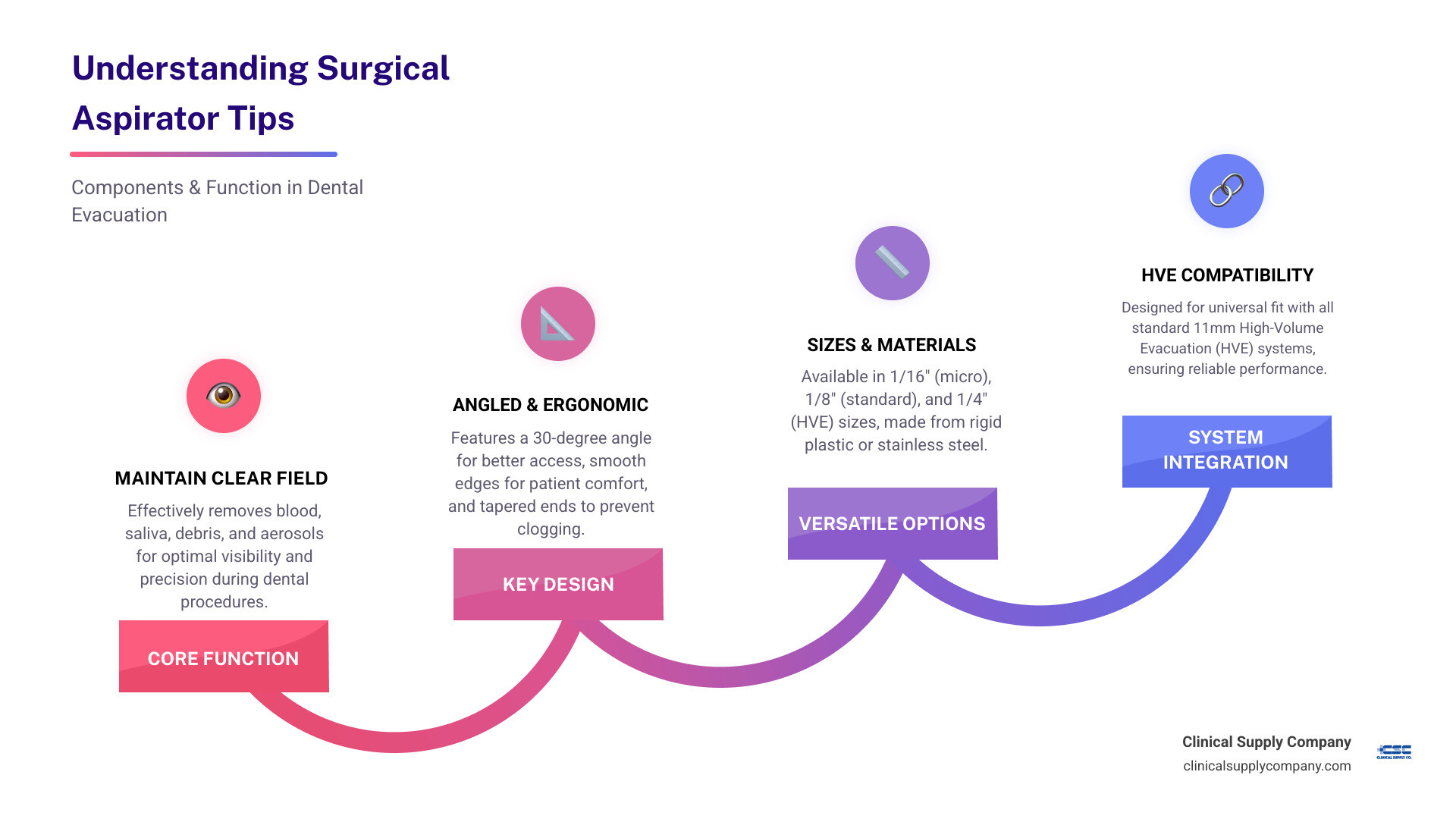
Surgical aspirator tips are specialized suction devices that remove blood, saliva, debris, and aerosols from the oral cavity during dental procedures.
- Primary function: Maintain a clear, dry operating field for improved visibility and precision
- Common materials: Rigid polyethylene plastic or stainless steel
- Standard sizes: 1/16" (micro-aspiration), 1/8" (standard), and 1/4" (high-volume)
- Key feature: Most tips have a 30-degree angle for better access and positioning
- Compatibility: Designed to fit all standard 11mm high-volume evacuation (HVE) systems
- Options: Available in both disposable single-use and autoclavable reusable versions
These small but critical tools do more than just suction. They help with cheek retraction, prevent soft tissue injury with smooth edges, and reduce patient discomfort during procedures. Without effective aspiration, dental work becomes slower, messier, and less safe for both patients and practitioners.
The global surgical aspirator market was valued at $1.1 billion in 2022 and is projected to reach $1.7 billion by 2030. This growth reflects increasing demand across dental offices, oral surgery centers, and specialty practices. As minimally invasive procedures become more common, the need for precise, reliable aspiration continues to rise.
Choosing the right aspirator tips means understanding your specific procedural needs, sterilization protocols, and cost considerations. Different procedures require different tip sizes and designs—endodontic work demands smaller micro-tips, while oral surgery needs larger, high-volume options.
I'm Adam Schuh, President and CEO of Clinical Supply Company, where I've spent years ensuring dental practices have access to reliable, FDA-compliant supplies that meet real-world clinical demands. My experience with medical-grade manufacturing and quality control has shown me how the right surgical aspirator tips can improve both procedural efficiency and patient outcomes.
The Essential Role of Aspirator Tips in Dental Procedures
Every dental procedure, from a simple cleaning to complex oral surgery, depends on one fundamental thing: a clear, dry working area. That's where surgical aspirator tips become absolutely essential. These specialized tools work hand-in-hand with your high-volume evacuation (HVE) system, constantly removing saliva, blood, water, and debris from the patient's mouth.
Think about it—without effective aspiration, you're essentially working blind. The constant flow of liquids and aerosols would make precision work nearly impossible. Surgical aspirator tips give you the visibility you need to work confidently and efficiently, whether you're placing a restoration, performing endodontic therapy, or conducting oral surgery.
But these tips do much more than just keep things dry. They're designed with patient safety at the forefront. By continuously removing fluids and debris, they prevent patients from accidentally aspirating materials into their airway—a serious risk that's eliminated with proper evacuation. The smooth, rounded edges of quality tips also help with gentle cheek retraction, giving you better access without causing irritation or discomfort.
Most surgical aspirator tips feature a pre-bent 30-degree angle that naturally fits the contours of the mouth. This thoughtful design means less awkward positioning and more comfortable procedures for your patients. And because they're designed to fit standard 11mm suction holders, they integrate seamlessly with virtually any HVE system you're already using.
For more insights on how proper evacuation systems contribute to a better patient experience, check out our article on Dental Saliva Ejectors: Patient Comfort. And if you've ever dealt with frustrating suction issues mid-procedure, our guide on Common Problems with Dental Saliva Ejectors offers practical solutions.
How Aspirator Tips Improve Patient Safety and Comfort
The difference between a mediocre aspirator tip and a great one often comes down to the details. Those smooth, rounded edges we mentioned? They're not just nice to have—they're critical for preventing soft tissue trauma during longer procedures. Nobody wants to finish a successful crown prep only to have the patient complain about irritation from the suction tip.
Many quality surgical aspirator tips include subtle tissue relief slots or vents in their design. These clever features prevent the tip from creating a seal against soft tissue and accidentally grabbing or pulling on delicate areas like the tongue or cheek lining. It's a small design element that makes a big difference in patient comfort.
The rigid construction of well-made plastic tips also allows for effective cheek retraction without needing an extra instrument. This gives you better access and visibility while keeping one hand free—a real advantage during complex procedures. For patients with a sensitive gag reflex, proper positioning of the aspirator tip can make the difference between a tolerable procedure and a difficult one.
In today's practice environment, aerosol management has become a top priority. High-volume evacuation with properly designed surgical aspirator tips dramatically reduces the spread of airborne particles, protecting both your team and your patients. And because quality tips are made from latex-free materials, you can use them confidently with all patients, eliminating concerns about allergic reactions.
Integrating with Your Dental Evacuation System
One of the best things about surgical aspirator tips is their universal compatibility. Most tips are specifically designed to fit standard 11mm suction holders, which means they'll work seamlessly with virtually any HVE system on the market. No need to worry about whether your new tips will fit your existing equipment—they just work.
The connection between the tip and your HVE valve needs to be secure to maintain optimal suction power. A loose fit can cause air leaks that reduce effectiveness and create that annoying whistling sound. Quality tips are manufactured to precise specifications, ensuring a snug connection every time. For specialty procedures or unique equipment setups, adapters are readily available to bridge any compatibility gaps.
Clogging is one of the most common frustrations during procedures, and tip design plays a huge role in preventing it. Tapered tips are engineered to reduce debris buildup and maintain consistent suction throughout the procedure. The smooth interior surface and strategic sizing help materials flow freely through the evacuation system rather than getting stuck partway through.
These practical design considerations might seem minor, but they add up to smoother procedures with fewer interruptions. When your surgical aspirator tips work reliably, you can focus on the dentistry instead of fighting with your equipment.
A Guide to the Different Types of Surgical Aspirator Tips
Not all surgical aspirator tips are the same, and for good reason. Just like a skilled craftsperson chooses the right tool for each job, you need different tips for different procedures. Let's walk through what's available and why it matters for your practice.
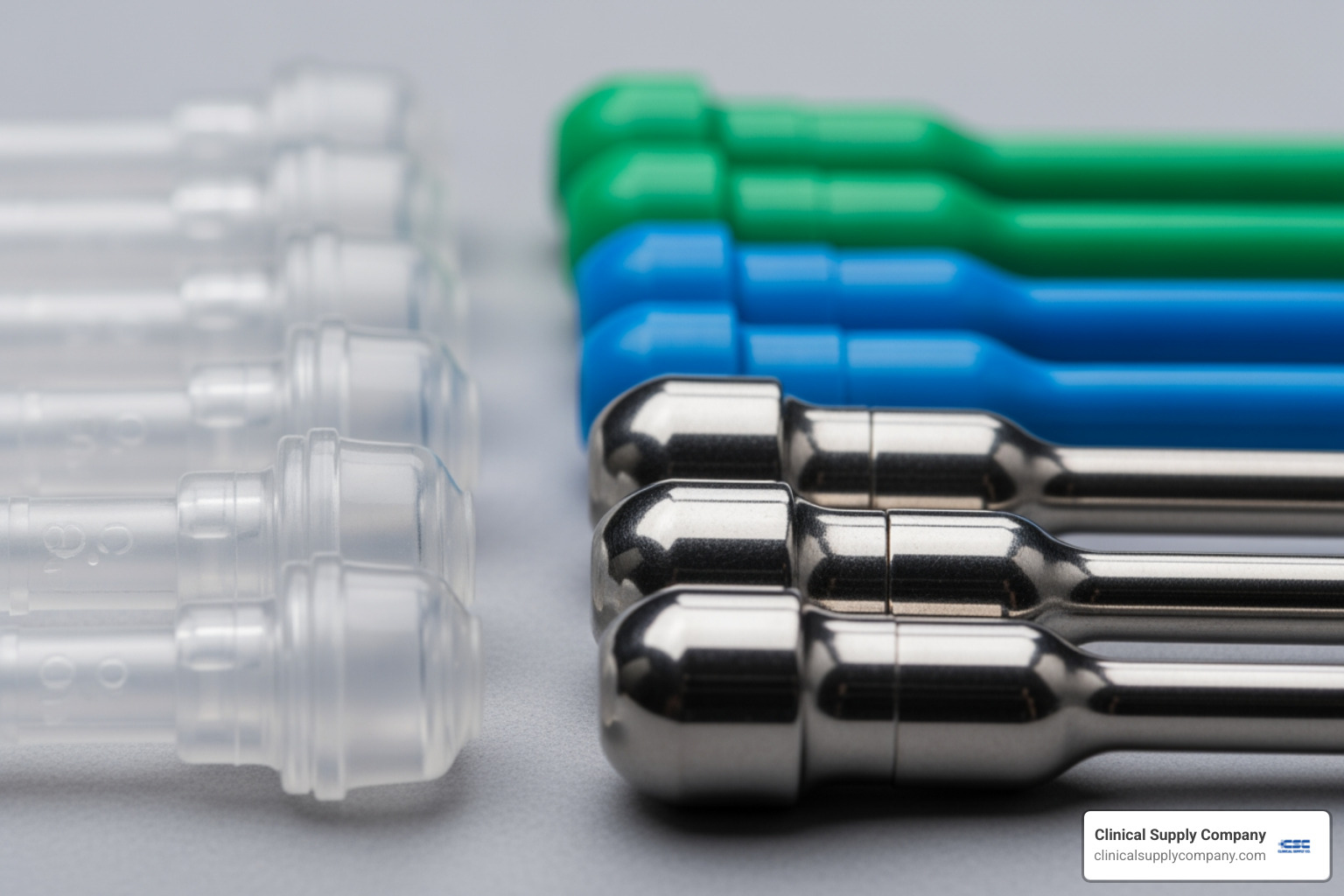
The first thing you'll notice when comparing surgical aspirator tips is the material. Most tips you'll encounter are made from rigid polyethylene plastic. These are the workhorses of most dental practices—lightweight, cost-effective, and disposable. They simplify your infection control protocols since you can use them once and toss them. The rigidity isn't just about durability; it actually helps with cheek retraction during procedures. You'll often see these in different colors, which makes size identification quick and easy.
Then there are stainless steel tips, which are less common for everyday use but have their place. These are the marathon runners of aspirator tips—built to last and designed for repeated sterilization. They're particularly popular in specialized designs like the classic Frazier style, which features a fine-point opening perfect for precise, controlled suction. While they require thorough cleaning and sterilization between uses, their durability makes them a solid investment for specific applications.
Beyond materials, the design variations really show how thoughtful engineering meets clinical needs. The 30-degree angled tip isn't just a random bend—it's carefully calculated to give you optimal access throughout the oral cavity. This angle improves your visual field and makes maneuvering easier, which is why you'll find it on most tips regardless of material.
You'll also encounter vented versus non-vented designs. Vented tips have a small hole that you can cover with your finger to increase suction precisely when and where you need it. This gives you variable control—perfect for delicate work. Non-vented tips deliver continuous, powerful suction throughout the procedure.
Frazier style tips deserve special mention. These stainless steel beauties feature a small, fine-gauge opening that's ideal for intricate surgical work. When you need to clear small amounts of fluid without any risk of aspirating tissue, these are your go-to option.
Sizing and Design: What's the Difference?
Size is a critical feature when selecting surgical aspirator tips. The diameter of the tip opening determines what you can accomplish with it, and choosing the right size can make the difference between a smooth procedure and a frustrating one.
Micro-aspiration tips at 1/16" (approximately 1.6mm) are your precision instruments. When you're working in tight spaces during endodontic procedures or performing micro-surgical work, these slender tips give you the control you need. They're perfect for intricate root canal work or detailed periodontal surgery where every millimeter counts.
The standard 1/8" (approximately 3.2mm) diameter is what most practices reach for daily. These tips strike a nice balance between suction power and maneuverability. They handle restorative work, routine extractions, and general procedures with ease. You'll typically find these color-coded white, making them easy to grab without a second thought.
For those bigger jobs, 1/4" (approximately 6.4mm) diameter tips bring the heavy-duty suction. Oral surgery, impacted wisdom tooth extractions, or any procedure generating significant fluid and debris—these green-coded tips handle it all. When you need volume, this is your size.
The color-coding system is one of those simple innovations that makes your life easier. No more squinting to check sizes or grabbing the wrong tip mid-procedure. White for standard, green for high-volume—it becomes second nature.
Specialty tips expand your options even further. Some are specifically engineered for endodontics, designed to reach difficult canals without bending. Others are crafted for micro-surgical procedures, often used alongside microscopes or loupes when magnification demands absolute precision.
Key Features to Look for in Surgical Aspirator Tips
Not all surgical aspirator tips are created equal, and knowing what separates good from great helps you make smarter purchasing decisions for your practice. We've seen it all, and these are the features that truly matter.
Material rigidity is more important than you might think. A rigid plastic tip maintains its shape under pressure, which means reliable cheek retraction and consistent performance throughout the procedure. Flimsy tips that bend or collapse? They're more frustrating than helpful.
Smooth, rounded edges aren't just nice to have—they're essential. Your patients will appreciate the difference, especially during longer procedures. These rounded edges prevent soft tissue injury and make the entire experience more comfortable. A smooth tip glides effortlessly where a rough one causes irritation.
For practices using reusable tips, autoclavable properties are non-negotiable. Quality tips withstand repeated sterilization cycles at temperatures up to 135°C (275°F) without degrading or losing their shape. This durability is crucial for maintaining your infection control standards over time.
Universal fit means less hassle and more consistency. Tips that fit all standard 11mm high-volume evacuation lines eliminate the frustration of hunting for adapters or dealing with loose connections. They just work, every time.
Finally, look for a tapered design. This isn't just aesthetics—it's functional engineering. Tapered tips resist clogging from debris, maintaining continuous suction throughout your procedure. Fewer interruptions mean smoother workflows and better patient experiences.
Quality really does matter when it comes to your evacuation supplies. We've built our reputation on understanding these details and providing products that meet real clinical demands. If you're interested in learning more about what separates exceptional dental supplies from merely adequate ones, check out our article on Quality Matters: Dental Ejectors. We believe that when you understand what makes a product truly high-quality, you make better decisions for your practice and your patients.
Best Practices for Sterilization and Disposal
Infection control in your dental practice allows no room for compromise. Surgical aspirator tips come into direct contact with blood, saliva, and oral debris, making proper sterilization and disposal protocols absolutely essential for protecting everyone in your practice.
The beauty of disposable single-use tips lies in their simplicity. You use them once during a procedure, then dispose of them as biohazardous waste. Done. There's no worrying about whether the cleaning cycle was thorough enough or if the autoclave reached the right temperature. This straightforward approach eliminates any risk of cross-contamination and frees up your staff from the time-consuming reprocessing workflow.
For autoclavable reusable tips, the process requires more attention but can be highly effective when done correctly. These tips are engineered to withstand the rigors of high-temperature sterilization, typically up to 135 C (275 F). The key is following a systematic approach: thorough pre-cleaning to remove all visible debris, proper drying to prevent moisture-related issues, careful packaging to maintain sterility until use, and finally, autoclaving according to the manufacturer's specific instructions. For a concise overview of steam sterilization principles, see Autoclave.
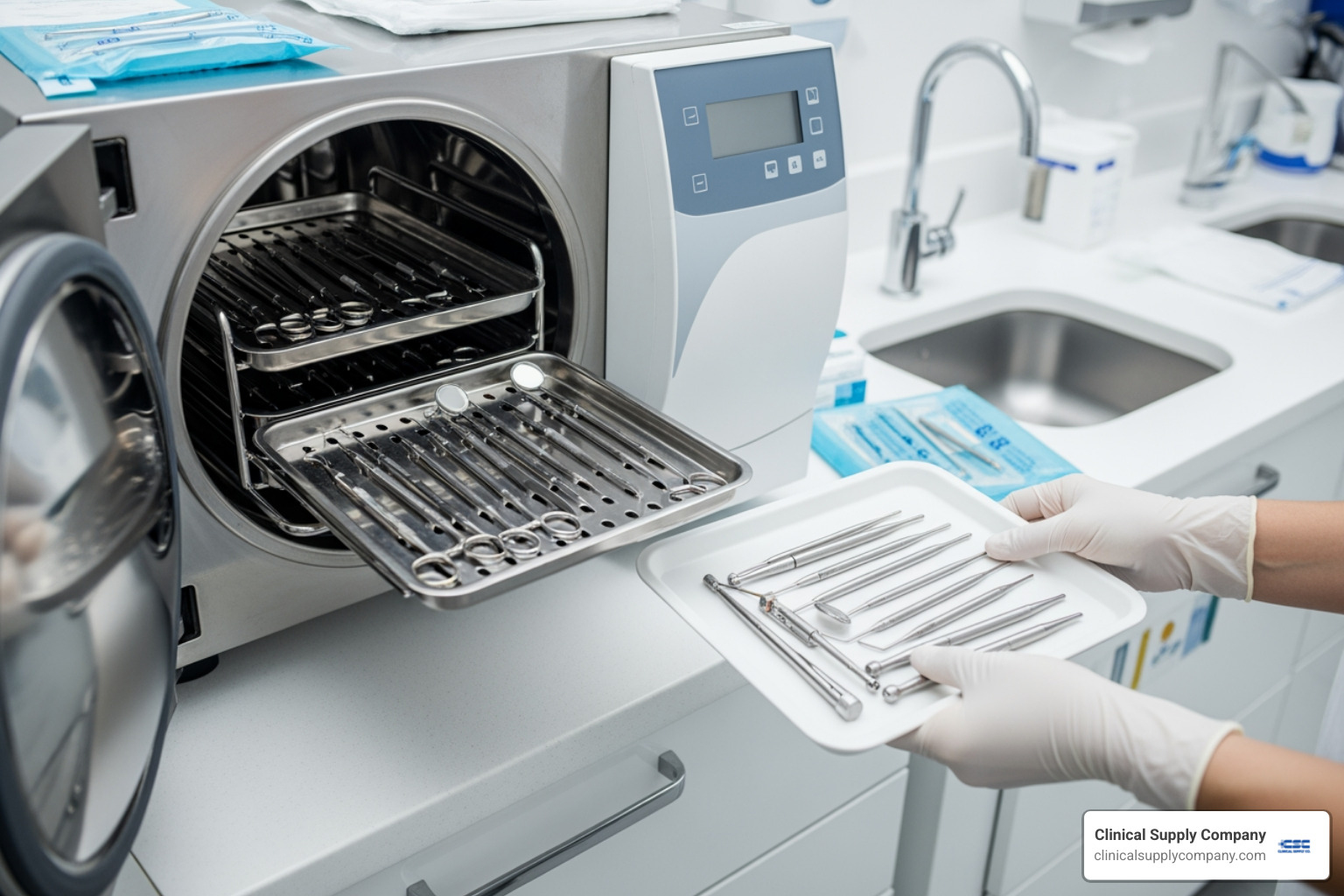
Whether you choose disposable or reusable options, all surgical aspirator tips that have contacted bodily fluids must be handled as biohazardous waste. This means placing them in properly labeled biohazard containers and following all local, state, and federal regulations for collection and disposal. It's not just about following rulesit's about keeping your team safe and maintaining the trust your patients place in you.
Autoclavable vs. Disposable: Which is Right for Your Practice?
We've worked with dental practices across the Midwest for years, and we've seen that the choice between autoclavable and disposable surgical aspirator tips really depends on your practice's unique priorities. Some practices value the absolute certainty of single-use products, while others prefer the long-term economics of reusable options.
| Feature | Disposable Surgical Aspirator Tips | Autoclavable Surgical Aspirator Tips |
|---|---|---|
| Cost-Effectiveness | Lower upfront cost per unit, but higher long-term cost due to continuous repurchase. | Higher upfront cost per unit, but lower long-term cost as they are reusable. |
| Convenience | High. No cleaning or sterilization required. Simply use and discard. | Moderate. Requires thorough cleaning, packaging, and autoclaving after each use. |
| Environmental Impact | Higher waste generation, contributing to landfill volume. | Lower waste generation if properly maintained and reused many times. |
| Infection Control | Excellent. Zero risk of cross-contamination as they are single-use. | Excellent, if proper reprocessing guidelines are strictly followed. Risk if protocol lapses. |
| Durability | Designed for single use, typically made of rigid plastic. | Designed for multiple uses, often made of durable plastic or stainless steel. |
For many busy practices, disposable tips offer peace of mind that's hard to beat. There's no second-guessing whether your sterilization protocol was followed to the letter, no risk of human error in the reprocessing cycle, and no staff time spent on cleaning and packaging. The convenience factor alone makes them worth considering, especially as patient volumes increase.
On the other hand, if your practice is committed to reducing waste and you have a rock-solid instrument reprocessing system in place, autoclavable tips can be more economical over time. The key word there is "rock-solid"any lapses in your sterilization protocol can compromise patient safety and put your practice at risk.
We've seen the market shift toward disposable options in recent years, and it's no surprise. The demand for reliable, single-use surgical aspirator tips continues to grow as practices prioritize both safety and efficiency. Whatever you choose, always follow manufacturer instructions for use and adhere to established instrument reprocessing guidelines. Your patients trust you with their health, and proper sterilization practices are how you honor that trust every single day.
Sourcing and Selection: Finding the Right Tips for Your Practice
When you're ready to stock up on surgical aspirator tips, you'll find plenty of manufacturers competing for your attention. Many established brands are in the industry, each bringing their own approach to design and materials. With so many options, it can feel overwhelming to determine which products will truly serve your practice best.
Here at Clinical Supply Company, we've done the hard work of sorting through the options for you. We've built our inventory around surgical aspirator tips that consistently deliver on quality and reliability. We know that when you're in the middle of a procedure, the last thing you need is equipment that doesn't perform as expected. That's why we focus on products that meet the rigorous demands of real-world dental practice, day in and day out.
Pricing matters to your bottom line. You'll typically find surgical aspirator tips priced anywhere from around $15 to $80 or more for packages of 25-100 units, depending on factors like material quality, design complexity, brand reputation, and order quantity. Those price differences aren't arbitrary—they reflect real variations in manufacturing standards and product performance.
For practices that go through supplies quickly, bulk purchasing can deliver substantial savings on your per-unit costs. We're happy to discuss volume discounts and contract pricing options that make sense for your specific usage patterns. There's no one-size-fits-all approach here, and we believe in working with you to find pricing that fits your budget without compromising on quality.
Where to Purchase High-Quality Surgical Aspirator Tips
Most dental professionals source their surgical aspirator tips through specialized dental supply companies or online retailers. The landscape includes large national distributors like Henry Schein, but here's what we've noticed: bigger doesn't always mean better when it comes to service. Larger distributors often struggle with response times, and you might find yourself navigating complex ordering systems or dealing with frustrating backorders right when you need supplies most.
That's precisely where Clinical Supply Company takes a different approach. We're a Midwest-based company that serves dental professionals nationwide, and we've built our reputation on being genuinely responsive to your needs. When you call us, you're not navigating an endless phone tree—you're connecting with people who understand the urgency of keeping your practice running smoothly.

We've designed our ordering process to be straightforward and efficient, eliminating the delays and runarounds that can disrupt your day. Think of us as your reliable partner rather than just another vendor. When you're choosing a supplier for surgical aspirator tips and other essential supplies, consider more than just the price on the invoice. The real value comes from consistent product quality, reliable inventory availability, and service that actually supports your practice rather than creating extra headaches.
A dependable supplier means you can confidently focus on patient care instead of constantly monitoring your supply closet or chasing down backorders. We're committed to being that partner for your practice—whether you're here in Ohio with us or anywhere else across the country. Our goal is simple: keep your practice fully stocked with quality supplies so you can do what you do best.
Innovations Shaping the Future of Dental Aspiration
The world of dental aspiration isn't standing still. As procedures become more refined and technology advances, surgical aspirator tips are evolving right alongside them. These innovations aren't just about fancy features—they're about making your work more precise, your patients more comfortable, and your days a little easier.
One of the most exciting developments is the rise of micro-surgical tips. If you've invested in a dental microscope or high-quality loupes, you know how critical it is to maintain visibility at high magnification. These ultra-fine tips are engineered specifically for that environment. They can aspirate the tiniest amounts of fluid from a micro-endodontic procedure or delicate periodontal surgery without blocking your magnified view. For procedures where every fraction of a millimeter matters, these specialized surgical aspirator tips are truly game-changing.
Ergonomics is another area where we're seeing real progress. Let's be honest—after a long day of procedures, hand fatigue is real. Manufacturers are now designing tips with the clinician's comfort in mind, creating shapes and grips that reduce strain during extended use. Some newer designs even feature integrated vacuum control right on the tip itself. Imagine being able to adjust suction intensity instantly with your fingers, without having to reach for the HVE valve or ask your assistant to make adjustments. It's these small improvements that can make a big difference in your workflow.
Material science is also contributing to better surgical aspirator tips. We're seeing improved materials that offer greater flexibility, allowing you to steer challenging angles and hard-to-reach areas with ease, while still maintaining the strength needed for effective cheek retraction. These advanced materials can withstand repeated autoclaving without degrading, which is particularly valuable for practices committed to reusable instruments.
Design refinements continue to address those everyday frustrations we all know too well. More sophisticated tapered designs minimize clogging, keeping suction consistent throughout your procedure. Improved tissue relief slots are becoming more refined, further preventing that annoying soft tissue grabbing that can interrupt your work and cause patient discomfort.
What ties all these innovations together is a focus on the real challenges you face every day. The industry is listening to dental professionals and responding with solutions that genuinely improve patient care. Whether it's the precision of micro-surgical applications, the comfort of ergonomic design, or the reliability of improved materials, these advancements in surgical aspirator tips are making modern dentistry safer, more efficient, and more comfortable for everyone involved.
Conclusion
Surgical aspirator tips are so much more than simple suction devices. They're the quiet workhorses of your dental practice, making every procedure safer, more efficient, and more comfortable for your patients. Think about it: every time you maintain that clear operating field, prevent debris aspiration, or provide gentle cheek retraction with smooth edges, you're relying on these essential tools to do their job flawlessly.
Throughout this guide, we've walked through the landscape of surgical aspirator tips together—from the everyday rigid plastic options to specialized stainless steel Frazier tips, from micro 1/16" designs for delicate endodontic work to robust 1/4" tips for oral surgery. We've explored what really matters when you're choosing tips for your practice: material rigidity for effective retraction, smooth edges for patient comfort, autoclavable properties for infection control, and that universal fit that just works with your existing equipment.
The conversation around sterilization and disposal isn't just about following protocols—it's about protecting your patients and your team. Whether you choose the absolute convenience and zero cross-contamination risk of disposable tips, or you prefer the cost-effectiveness and environmental benefits of autoclavable options, the choice should align with your practice's values and workflow.
Here at Clinical Supply Company, we get it. We know you're not just looking for products—you're looking for a partner who understands the daily realities of running a dental practice. We've built our company right here in Ohio to serve dental professionals like you across the nation, offering that personal touch and reliability that can get lost with the bigger distributors. When you work with us, you won't experience those frustrating backorders or slow response times that can disrupt your schedule and stress out your team.
The innovations we're seeing in dental aspiration—micro-surgical tips for magnified procedures, ergonomic designs that reduce hand fatigue, improved materials with better flexibility and strength—all point toward a future where your work becomes even more precise and efficient. We're excited to bring these advancements to your practice as they become available.
Choosing the right surgical aspirator tips and the right supplier isn't just a purchasing decision. It's an investment in your practice's efficiency, your patients' comfort, and ultimately, the quality of care you provide every single day. We're here to make that easy for you, with the products you need and the service you deserve.
Ready to equip your practice with reliable, high-quality supplies? Find top-quality dental supplies for your clinic and find how Clinical Supply Company can become your trusted partner in delivering exceptional patient care.


