

The End of an Era: Why the Dental World is Moving Beyond Latex
Latex alternative gloves are now the standard in dentistry, driven by widespread allergies and evolving safety regulations. The main alternatives are Nitrile and Polychloroprene gloves, each suited for different tasks.
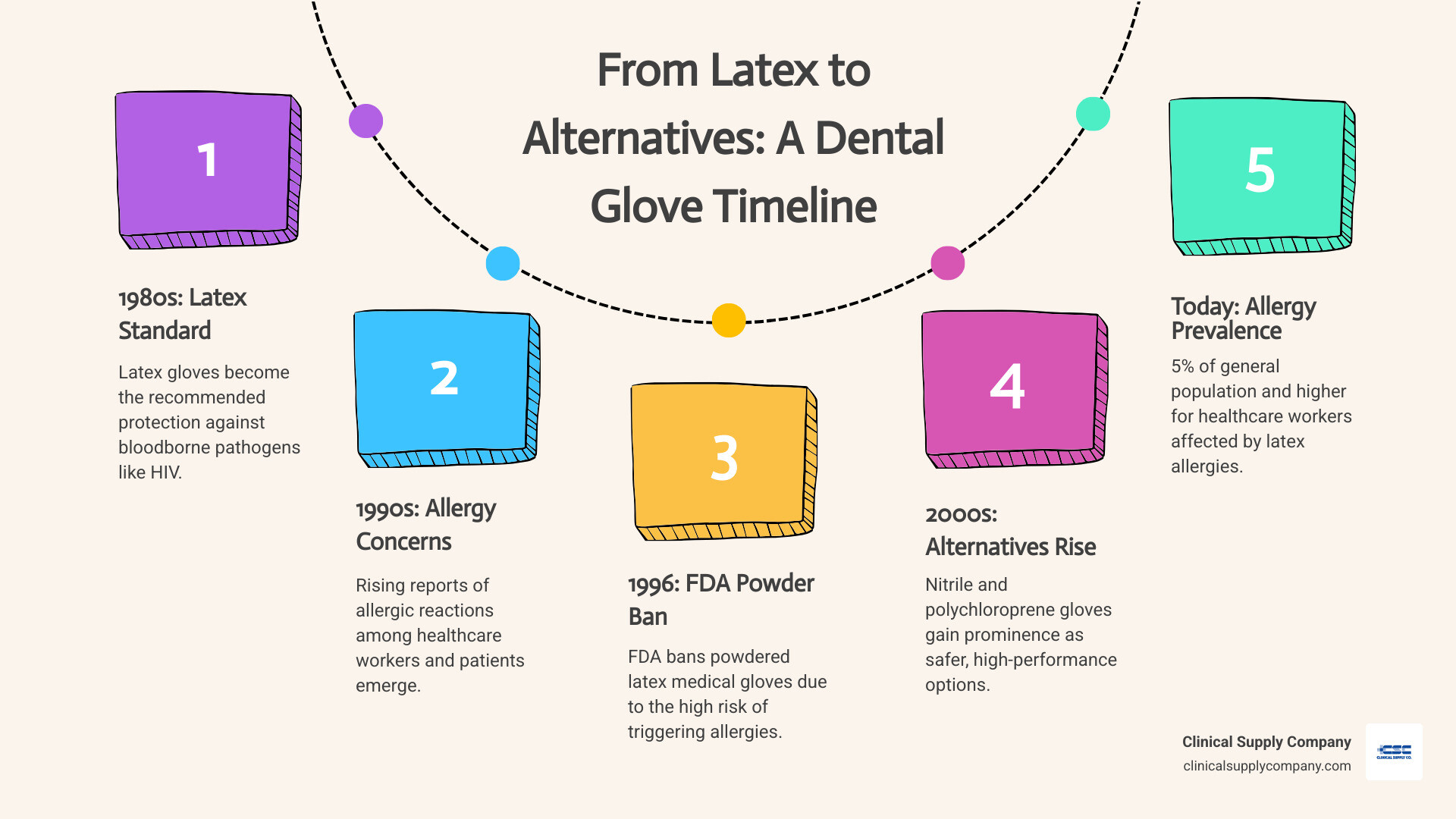
Latex gloves were once essential. As noted by Darwin Brown in Physician Assistant, latex gloves were recommended protection in the 1980s and 1990s against bloodborne pathogens like HIV. However, this protective measure revealed a downside: an increasing number of healthcare workers and patients developed serious allergic reactions. While latex allergies affect about 5% of the general population, the rate is much higher for healthcare workers. Reactions can range from skin irritation to life-threatening anaphylactic shock. In response, the FDA banned powdered latex medical gloves in 1996.
Today, dental practices must choose between a material that poses a risk and modern alternatives that offer equal or superior performance. As Adam Schuh, President and CEO of Clinical Supply Company, I've helped practices transition to safer options, like our accelerator-free nitrile solutions. Understanding the landscape of latex alternative gloves is key to protecting your team and maintaining clinical precision.
The Problem with Latex: Understanding Allergies
The move away from latex is due to allergies. Natural rubber latex contains proteins that trigger Type I hypersensitivity, an immediate and potentially severe immune response. Symptoms range from contact dermatitis (redness, itching) to respiratory issues and, in worst-case scenarios, anaphylactic shock. The high prevalence among healthcare workers, due to repeated exposure, makes this a critical issue for dental practices. At Clinical Supply Company, we're committed to preventing this. Our accelerator-free nitrile solutions are designed to combat contact dermatitis, ensuring comfort and safety for those with sensitivities.
From Gold Standard to Liability
Latex gloves were once the "gold standard" for their elasticity and comfort. However, the rise of allergies turned them into a liability. Beyond staff safety, allergic reactions in patients during procedures pose serious risks. Powdered latex gloves were particularly problematic, as the powder could carry latex proteins into the air, causing reactions without direct contact. This led to the FDA's 1996 ban on powdered medical gloves.
The shift from latex is now a regulatory trend. For instance, an Ohio restaurant latex glove ban shows a broader move to protect people from latex exposure. Dental practices must adapt to ensure compliance and prioritize community well-being. It's clear that Latex or Nitrile Gloves: Powder is Out, and modern dentistry requires latex-free alternatives.
Your Guide to the Best Latex Alternative Gloves
Choosing the right latex alternative gloves is about ensuring your team has the best tools for performance, protection, and comfort. At Clinical Supply Company, we offer a curated range of synthetic materials designed to meet the demanding needs of dental professionals in Ohio and across the nation.
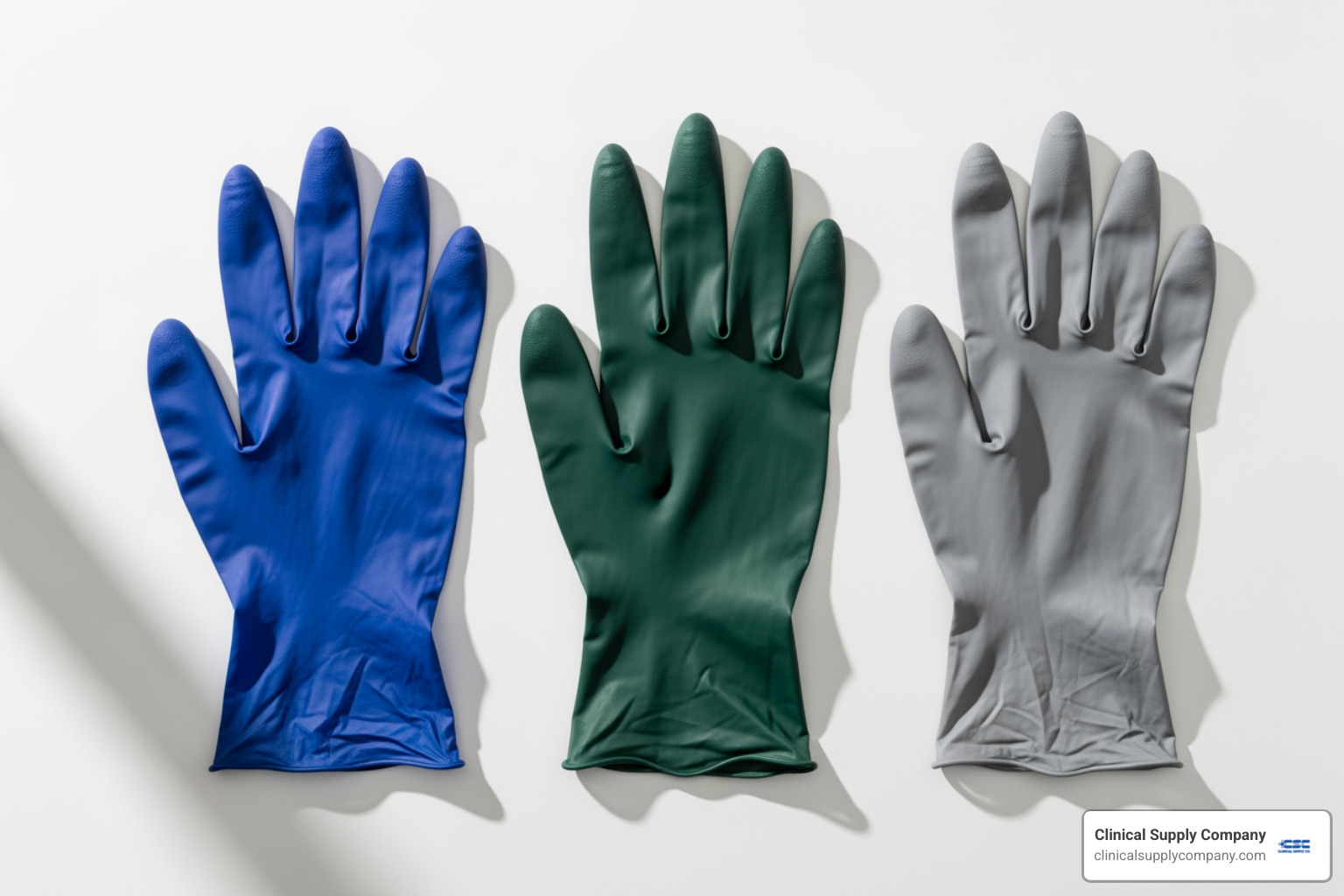
Here’s a quick comparison to help you choose the best option for your dental applications:
| Glove Type | Durability | Elasticity/Fit | Tactile Sensitivity | Chemical Resistance | Allergy Risk (Type I) |
|---|---|---|---|---|---|
| Latex | High | Excellent | Excellent | Moderate | High |
| Nitrile | Very High | High | Good to Excellent | Excellent | Very Low |
| Polychloroprene | High | Excellent | Excellent | Good | Very Low |
Nitrile Gloves: The Durable All-Rounder
Nitrile is the workhorse of latex alternative gloves. Made from synthetic acrylonitrile-butadiene rubber (NBR), they are free of latex proteins, virtually eliminating the risk of Type I latex allergies. Fewer than 1% of users experience allergic reactions to nitrile.
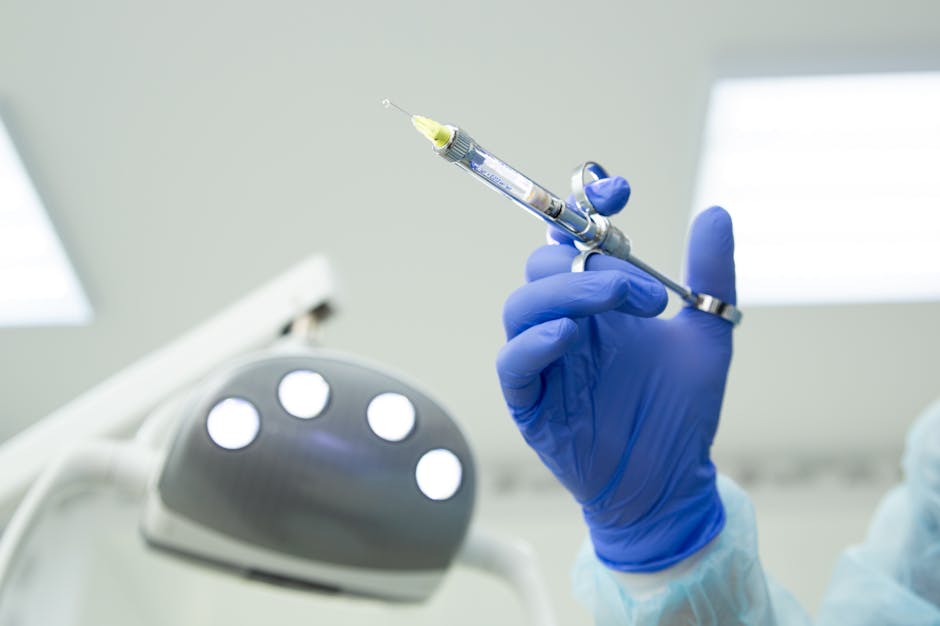
Dental professionals prefer nitrile for its outstanding puncture resistance, providing a vital barrier against sharp instruments. It also offers superior resistance to chemicals and solvents found in dental offices, a significant advantage over latex. Modern nitrile formulations provide impressive elasticity and a snug fit, ensuring excellent tactile sensitivity for precision work. Their durability makes them a cost-effective choice for demanding tasks. We believe nitrile outperforms latex in allergies, durability, and compliance, as detailed in Why Nitrile Outperforms Latex: Allergies, Durability, Compliance. For more, see our In-Depth Guide to Comparing Nitrile Exam Gloves.
Polychloroprene Gloves: The Premium Comfort Choice
For the ultimate in comfort and tactile sensitivity, polychloroprene (neoprene) gloves are an outstanding choice. These synthetic gloves mimic the feel and performance of natural rubber latex without the allergenic proteins. Their unique molecular structure provides high elasticity and flexibility for a supremely comfortable, latex-like fit. This translates to superior dexterity for delicate procedures and reduced hand fatigue during long shifts.
Polychloroprene gloves also offer good chemical resistance and a robust barrier against pathogens. They are a premium choice for surgical procedures or any task requiring a natural-rubber feel and exceptional feedback. Learn more about the Benefits of Polychloroprene Gloves in Dentistry and find out Are Polychloroprene Gloves Hypoallergenic to make a confident choice for sensitive users.
Making the Right Choice for Your Practice
Finding the right latex alternative gloves isn't a one-size-fits-all decision. It's about matching the glove to the procedure, your team's needs, and your patients' safety. Different tasks require different properties. Nitrile's puncture resistance is ideal for surgical work, while polychloroprene's tactile sensitivity is perfect for intricate restorative procedures. You might even stock multiple glove types to optimize performance.
Staff sensitivities are also a key factor. While moving away from latex protects against Type I allergies, some team members may still react to chemical accelerators in standard synthetic gloves. This is where accelerator-free options become essential. Your glove choice is part of a larger infection control system, working alongside face masks, isolation gowns, and surface wipes. For a complete view, see our guide on Beyond the Mask: Best Practices for Dental Office PPE. While budget matters, using a cheaper, lower-quality glove for clinical procedures can create risks that outweigh the savings. The right glove for the right task is the safest principle.
Beyond Latex: Understanding Type IV Allergies and Accelerator-Free Options
Have you switched from latex to nitrile only to see skin irritation return? The culprit is likely a Type IV hypersensitivity, or allergic contact dermatitis. Unlike an immediate Type I latex allergy, Type IV reactions are delayed, appearing 12-48 hours after exposure. They are caused by chemical accelerators (e.g., thiurams, carbamates) used to manufacture synthetic gloves.
These chemicals can cause redness, itching, and blistering. The good news is that accelerator-free nitrile gloves offer a solution. They eliminate these common chemical irritants while maintaining the puncture resistance and durability you expect from nitrile, making them the ultimate hypoallergenic option for sensitive skin. Understanding the Benefits of Accelerator-Free Nitrile Gloves is key to your team's long-term health. Our approach to Preventing and Managing Type 4 Allergies ensures no one has to choose between their career and comfort.
Conclusion: Your Partner in Protection and Comfort
The shift to latex alternative gloves has improved dental safety and performance. Nitrile offers durability, polychloroprene provides comfort and tactile feel, and accelerator-free options protect even the most sensitive skin.
At Clinical Supply Company, we're your partner in building a safer practice. Based in Ohio and serving dental professionals nationwide, we provide a comprehensive selection of supplies. This includes our full range of latex alternative gloves, plus Patient Consumables, Cleaning and Sterilization products, and Protection items like face masks, isolation gowns, and barriers.
Your hands are your most valuable tools. Let us help you protect them with the best gloves available, so you can focus on providing exceptional patient care.