
Why White Disposable Isolation Gowns Matter in Your Practice
White disposable isolation gowns are a cornerstone of infection control in dental practices, medical facilities, and any healthcare setting where fluid exposure is a risk. Whether you're managing a busy dental clinic or stocking supplies for a medical office, choosing the right isolation gown directly impacts both staff safety and patient care.
Quick Guide to White Disposable Isolation Gowns:
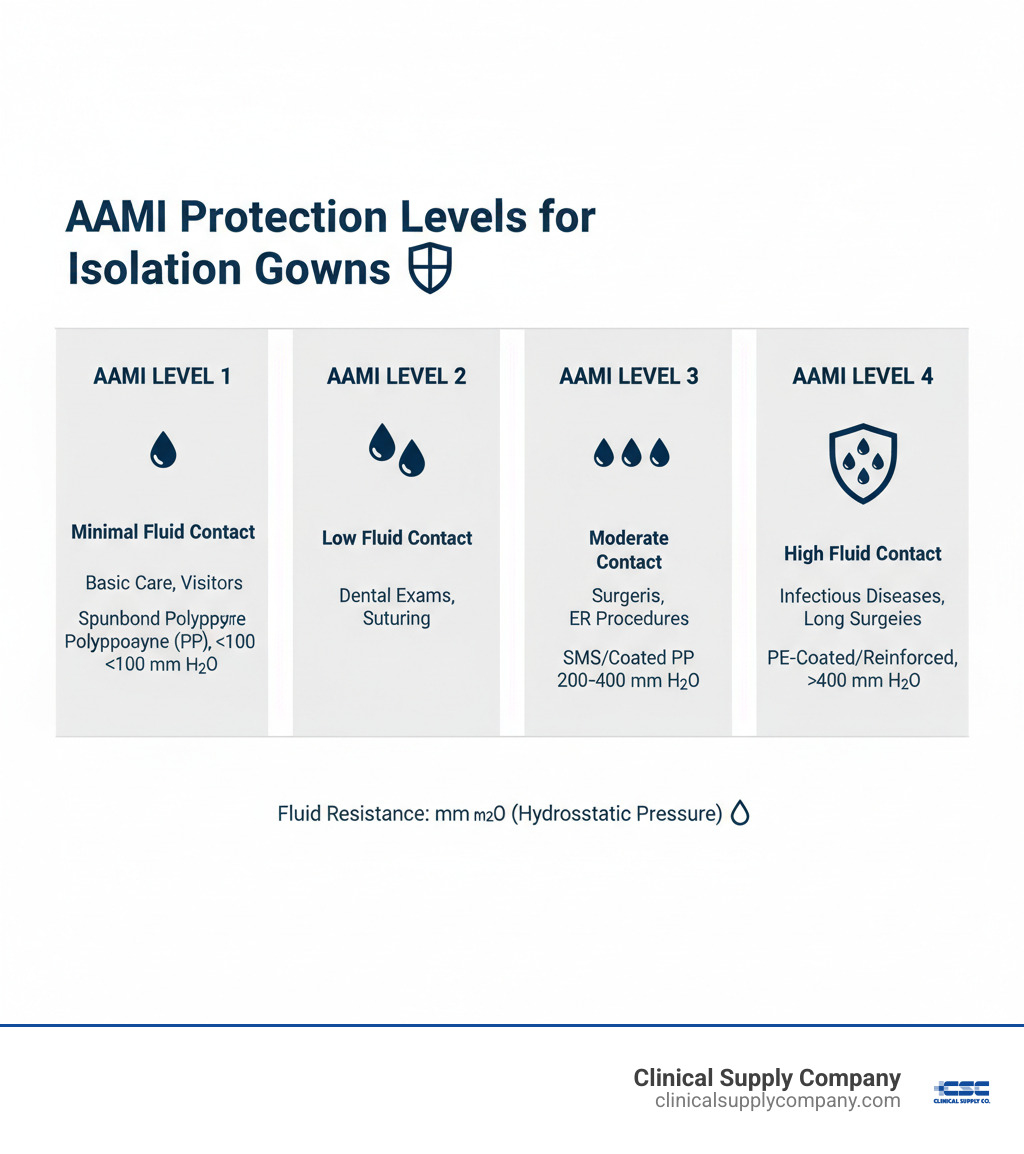
- AAMI Level 1: Basic protection for minimal fluid contact (visitors, basic care)
- AAMI Level 2: Moderate protection for low-risk procedures (dental exams, suturing)
- AAMI Level 3: High protection for fluid-intensive procedures (surgeries, emergency care)
- Key Materials: Polypropylene (PP), SMS fabric, Polyethylene (PE) coating
- Essential Features: Knit or elastic cuffs, neck/waist ties, full coverage
- Typical Pricing: $0.50–$2.00 per gown depending on protection level and bulk ordering
The global market for disposable isolation gowns reached an estimated $1.5 billion by 2027, driven by increased awareness of infection control—especially after the COVID-19 pandemic exposed critical gaps in PPE supply chains. Today, 90% of healthcare-associated infections are preventable through proper use of personal protective equipment, making gown selection a decision that directly affects patient outcomes.
White gowns remain the most popular choice because contamination is immediately visible, helping staff identify when a gown has been compromised. They're cost-effective, widely available in bulk packs of 10 to 50, and come in various protection levels to match your specific clinical needs.
I'm Adam Schuh, President and CEO of Clinical Supply Company, where I've spent years navigating global supply-chain challenges and tariff surges to keep dental practices stocked with FDA-compliant, reliable PPE. My team and I work directly with dental professionals to ensure white disposable isolation gowns meet both safety standards and the practical demands of daily use.
Choosing Your Shield: Key Factors for Selecting White Disposable Isolation Gowns
Choosing the right white disposable isolation gowns is a critical decision for the safety of your team and patients. It's about more than just price; it's about understanding the key factors that ensure effective protection. Let's break down what truly matters when selecting gowns for your practice.
Decoding the Material: From Polypropylene to PE Coating
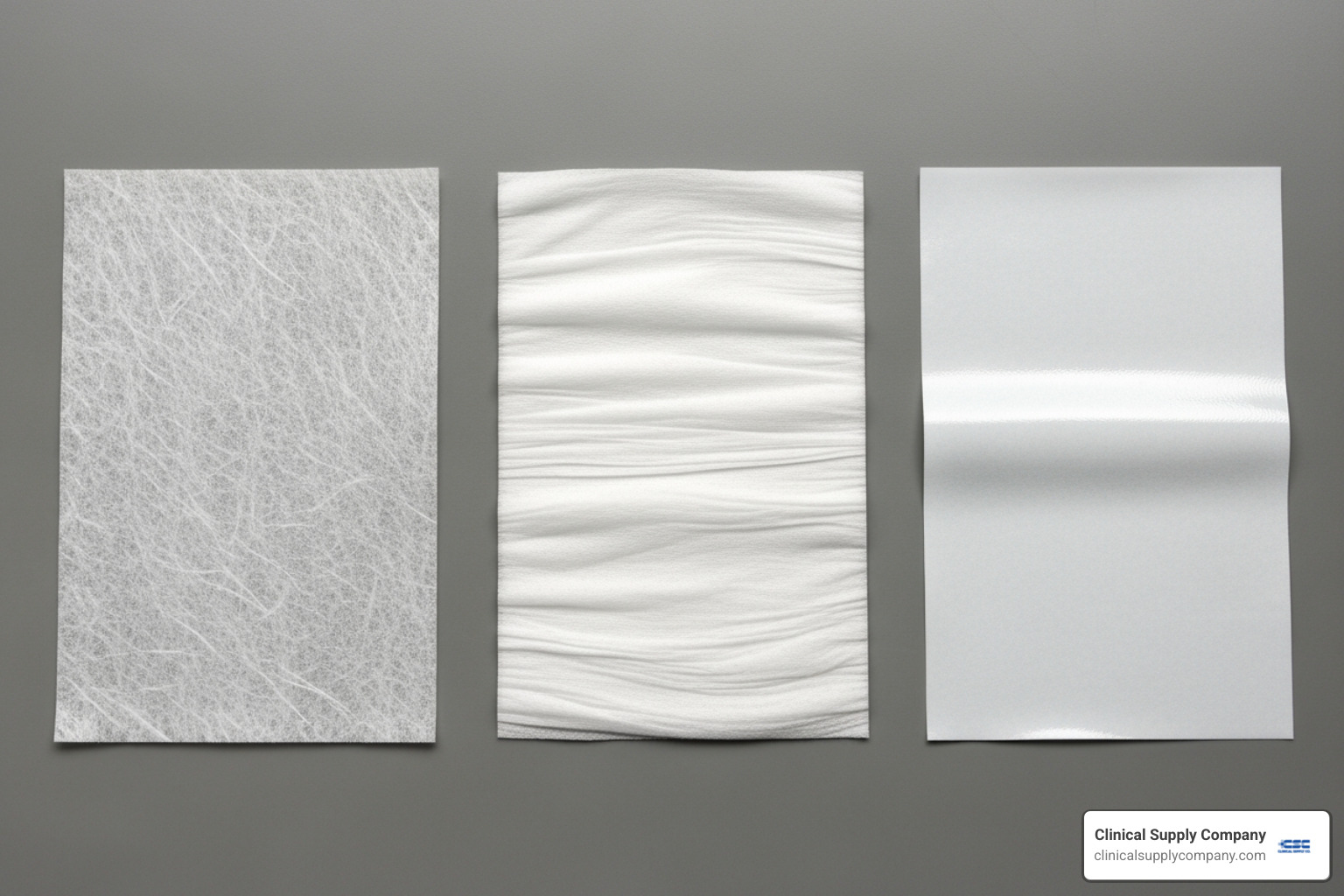
The fabric of your isolation gown is where protection begins. For white disposable isolation gowns, you'll typically encounter three main material types.
Polypropylene (PP) is the standard for disposable gowns. This non-woven fabric offers a balance of breathability and basic fluid resistance, making it ideal for general use. Most are made from 25-gram spunbond fabric, providing comfort and protection without a high cost.
Spunbond-Meltblown-Spunbond (SMS) fabric offers improved protection. This three-layer material sandwiches a meltblown fluid barrier between two soft spunbond layers. The result is a gown that is breathable, flexible, and strong—a great middle-ground for more robust protection.
Polyethylene (PE) coating provides serious fluid resistance. Laminated onto polypropylene, a PE coating creates a gown that handles splashes and sprays effectively. Newer microporous technology even allows the material to block liquids while remaining breathable, preventing staff from overheating. These gowns offer maximum protection and are a cost-effective alternative to materials like Tyvek.
Understanding these material differences helps you match the gown to your actual needs. For a deeper dive into material selection, check out our guide on the best materials for gowns.
Understanding AAMI Protection Levels
The Association for the Advancement of Medical Instrumentation (AAMI) provides a standardized classification system that removes the guesswork from selecting gowns. These levels define the degree of fluid resistance, which is crucial for protecting your team. All our gowns meet FDA certification requirements, as regulatory compliance is non-negotiable.
| AAMI Level | Description | Test Methods | Appropriate Clinical Uses |
|---|---|---|---|
| Level 1 | Minimal fluid barrier protection. Gowns provide a slight barrier to small amounts of fluid penetration. | AATCC 42 (Water Impact) and AATCC 127 (Hydrostatic Pressure) | Basic care, standard medical units, visitors, laundry and housekeeping tasks, minimal fluid contact. |
| Level 2 | Low fluid barrier protection. Gowns provide a barrier to larger amounts of fluid penetration through splatter and some fluid exposure. | AATCC 42 and AATCC 127 | Blood draws, suturing, dental procedures, pathology labs, ICU, where there is a low risk of fluid exposure. |
| Level 3 | Moderate fluid barrier protection. Gowns provide a barrier to even larger amounts of fluid penetration through splatter and continuous fluid exposure. | AATCC 42 and AATCC 127 (higher performance required) and ASTM F1670 (Synthetic Blood Penetration) | Arterial blood draws, inserting IVs, emergency room, trauma cases, moderate risk of fluid exposure. |
| Level 4 | Highest fluid barrier protection. Gowns provide a barrier to all fluid penetration for a specified period, typically indicating viral barrier protection. | AATCC 42, AATCC 127, and ASTM F1671 (Viral Penetration) | During fluid-intensive, long procedures, infectious diseases, or when pathogen resistance is needed. |
For most dental practices, Level 2 gowns are the ideal choice, handling the moderate fluid exposure common in daily procedures. Level 1 gowns are sufficient for basic care or visitors. For more intensive procedures, Level 3 or 4 may be required. The key is to match the protection level to the risk. If you're unsure, our guide on how to choose the right gown can help.
Essential Features to Look For
Beyond material and AAMI level, design details significantly impact a gown's functionality and comfort during a long day.
Knit cuffs are soft and prevent sleeves from riding up. Elastic cuffs offer a snug fit to block splashes. Thumb loops provide maximum coverage by anchoring sleeves over the hands, ensuring wrists remain protected under gloves.
For closures, neck and waist ties secure the gown. Look for extra-long waist ties that fasten in the front for convenience, allowing staff to gown up without assistance. Sewn seams are also more durable than glued ones.
Sizing in white disposable isolation gowns ranges from universal to specific sizes (S-7XL). The goal is full coverage of the torso, arms, and legs without restricting movement. Ensure the gown is long enough and provides ample room to move comfortably and safely.
These details determine whether a gown is a help or a hindrance. When chosen and used correctly, isolation gowns are a critical protective tool. Learn more in our guide: Do isolation gowns really protect you?
Our Top Picks for White Disposable Isolation Gowns
Finding the right white disposable isolation gowns for your practice shouldn't be complicated. At Clinical Supply Company, we understand dental professionals need reliable, comfortable, and affordable protection. Based in Ohio, we maintain dependable supply lines to serve practices nationwide, ensuring you don't face shortages or quality issues.
For cost savings, bulk purchasing is key. Buying cases of 50 or 100 gowns offers significant savings over smaller packs, helping you manage your practice's budget while keeping your supply closet stocked.
Best for Basic Protection: Level 1 White Disposable Isolation Gowns
Level 1 gowns provide straightforward protection for minimal fluid exposure, such as for visitor use or basic patient care. Made from lightweight, breathable spunbond polypropylene, these white disposable isolation gowns prioritize comfort. They feature secure neck and waist ties, elastic or knit cuffs, and are non-sterile and latex-free. For reliable, budget-friendly basic protection, our Level 1 Disposable Isolation Gown is an excellent choice designed for the practical needs of a dental office.
The All-Rounder: Level 2 PP+PE Coated Gowns
Level 2 gowns are the all-rounders for most dental practices, ideal for procedures with low to moderate fluid exposure like cleanings, exams, and suturing. Our Level 2 white disposable isolation gowns are made from PP+PE coated material (around 40gsm), offering a crucial fluid barrier with good breathability and durability. Features like comfortable knit cuffs and extra-long front-tying waist ties add convenience for busy staff. Our Level 2 Disposable Isolation Gown is the workhorse for daily dental work, providing solid protection at a great value.
Improved Barrier: Advanced White Disposable Isolation Gowns
For more involved procedures or extended wear, advanced gowns offer superior protection and comfort. While not always Level 3 or 4, they use innovative materials like multi-layer SMS fabric or microporous laminated polypropylene. This "breather barrier" technology blocks fluids while allowing moisture vapor to escape, preventing overheating. These gowns provide protection comparable to more expensive materials like Tyvek but at a better price point, improving staff comfort and focus. Our comprehensive selection at Clinical Supply Company isolation gowns includes these advanced options, available in various quantities to suit any practice size.
The Protocol: Proper Use, Disposal, and Environmental Impact
Stocking the right white disposable isolation gowns is only the first step. True protection comes from proper donning, doffing, and disposal protocols. Following these procedures is critical for maintaining a safe dental environment.

Donning and Doffing: A Step-by-Step Guide
Donning (putting on) and doffing (taking off) PPE are critical procedures. Most contamination occurs during removal, so follow the correct steps every time.
To safely don your gown: First, perform hand hygiene. Inspect the gown for any defects. Slide your arms into the sleeves and secure the neck ties, then the waist ties. Ensure the gown fully covers your torso and clothing. Finally, put on gloves, pulling them over the gown's cuffs to create a seamless barrier.
To safely doff your gown: The outer surface is contaminated, so avoid touching it. First, remove your gloves using the proper technique and dispose of them. Next, untie the gown's waist and neck ties. Grasp the gown at the shoulders and pull it away from your body, rolling the contaminated outer surface inward. Hold the bundled gown away from your body and dispose of it in a biohazardous waste container. Immediately perform hand hygiene.
We know these steps might seem excessive, but they work. They're the reason why gowns are crucial for a clean dental office, and following them consistently protects everyone in your practice.
Responsible Disposal and Environmental Considerations
Used isolation gowns are considered biohazardous waste and must be disposed of in clearly marked biohazard containers. These are collected by specialized medical waste services that follow all regulations, ensuring pathogens are contained and safely processed. This prevents the spread of contamination. For more details, see our guide on how to discard isolation gowns safely.
The environmental impact of disposable PPE is a valid concern. Made from petroleum-based plastics, these gowns contribute to landfill waste. While essential for infection control, we acknowledge this challenge. Reusable gowns are an alternative, but they have their own drawbacks, including high upfront costs, intensive laundering, and potentially lower protection for high-risk procedures.
Recycling contaminated gowns is currently impractical due to contamination risks and logistical complexity. The most responsible approach is to use the appropriate protection level for each procedure—avoiding overuse—and to follow all medical waste disposal regulations. This minimizes waste while prioritizing safety as we explore more sustainable future solutions.
Frequently Asked Questions about White Disposable Isolation Gowns
Understanding your PPE is key to making informed decisions that protect your team and patients. Here are answers to some of the most common questions we receive about white disposable isolation gowns.
What is the significance of a gown's color?
A gown's color does not determine its protection level. A Level 2 gown offers the same fluid resistance whether it's white, blue, or yellow, as long as it meets AAMI standards. There is no universal color-coding system for protection.
However, white disposable isolation gowns are popular for a practical reason: contamination is immediately visible. Splashes of blood or other fluids are easy to spot on a white background, providing instant visual feedback that a gown may be compromised. While some facilities use color to differentiate roles (e.g., blue for surgeons, yellow for visitors), this is a facility-specific protocol. The key advantage of white is improved safety through visibility.
Are all white disposable isolation gowns fluid-resistant?
No, not all white gowns are equally fluid-resistant. The level of protection depends entirely on the material and its AAMI rating. A basic Level 1 gown made of spunbond polypropylene offers minimal resistance, suitable for scenarios with little to no fluid contact.
For true fluid resistance against splashes and sprays, you need gowns with a polyethylene (PE) coating or a microporous laminate. These materials are used in AAMI Level 2, 3, and 4 gowns, which provide increasing levels of barrier protection. Always check the product specifications for the AAMI level to ensure it matches the risk of your procedure. A generic "disposable gown" label is not enough. To learn more, read our guide: do isolation gowns really protect you.
How do I choose the right size gown?
Proper sizing is crucial for both comfort and safety. An ill-fitting gown can tear or leave skin exposed. The goal is full coverage: the gown should cover your torso, extend to at least your knees, and have sleeves that reach your wrists to allow for overlap with gloves.
Many gowns are available in universal or "unisize" options, which are convenient but may not fit all body types. For a better fit, look for specific sizing like Small, Large, X-Large, L/XL, 2X-Large, and even up to 7X-Large. Always consult the manufacturer's sizing chart, which provides key measurements like gown length and width.
A well-fitting gown allows for a full range of motion without pulling or riding up. This ensures your protective barrier remains intact, letting you focus on patient care. If you need help with sizing, our team is here to assist.
Conclusion: Stay Protected with the Right Choice
Throughout this guide, we've walked through the essential considerations for selecting white disposable isolation gowns that truly protect your team and patients. From understanding the differences between polypropylene, SMS fabric, and PE-coated materials to navigating AAMI protection levels and identifying must-have features like knit cuffs and secure ties—every detail matters when it comes to infection control in your dental practice.
The choice you make about isolation gowns isn't just a line item on a supply order. It's a commitment to safety, a reflection of your practice's standards, and a daily tool that helps prevent healthcare-associated infections. We've seen how the right PPE makes a difference in busy dental offices across Ohio and throughout the Midwest, where practitioners face everything from routine cleanings to complex procedures requiring higher fluid protection.
White disposable isolation gowns offer that crucial visual advantage—contamination shows up immediately, alerting your team when a gown has been compromised. But color alone doesn't determine protection. The real shield comes from choosing the appropriate AAMI level for your specific procedures, understanding whether you need basic Level 1 protection or the robust barrier of Level 2 and beyond, and ensuring the material construction matches your clinical needs.
At Clinical Supply Company, we've steerd supply chain challenges and regulatory requirements to bring you FDA-compliant, reliable PPE that meets the practical demands of daily dental practice. We're here in the Midwest, understanding the unique needs of practices like yours, and we're committed to being your trusted partner for high-quality dental supplies. Whether you're ordering your first case or restocking for the season ahead, we've got you covered with bulk options that make sense for your budget and your team's safety.
If you're ready to dive deeper into isolation gowns and ensure you're making the best choice for every situation your practice encounters, explore our comprehensive resource: Learn all about the different types and uses of isolation gowns. Your team's protection starts with informed decisions, and we're here to help you make them confidently.


