

Your First Line of Defense in Dental Safety
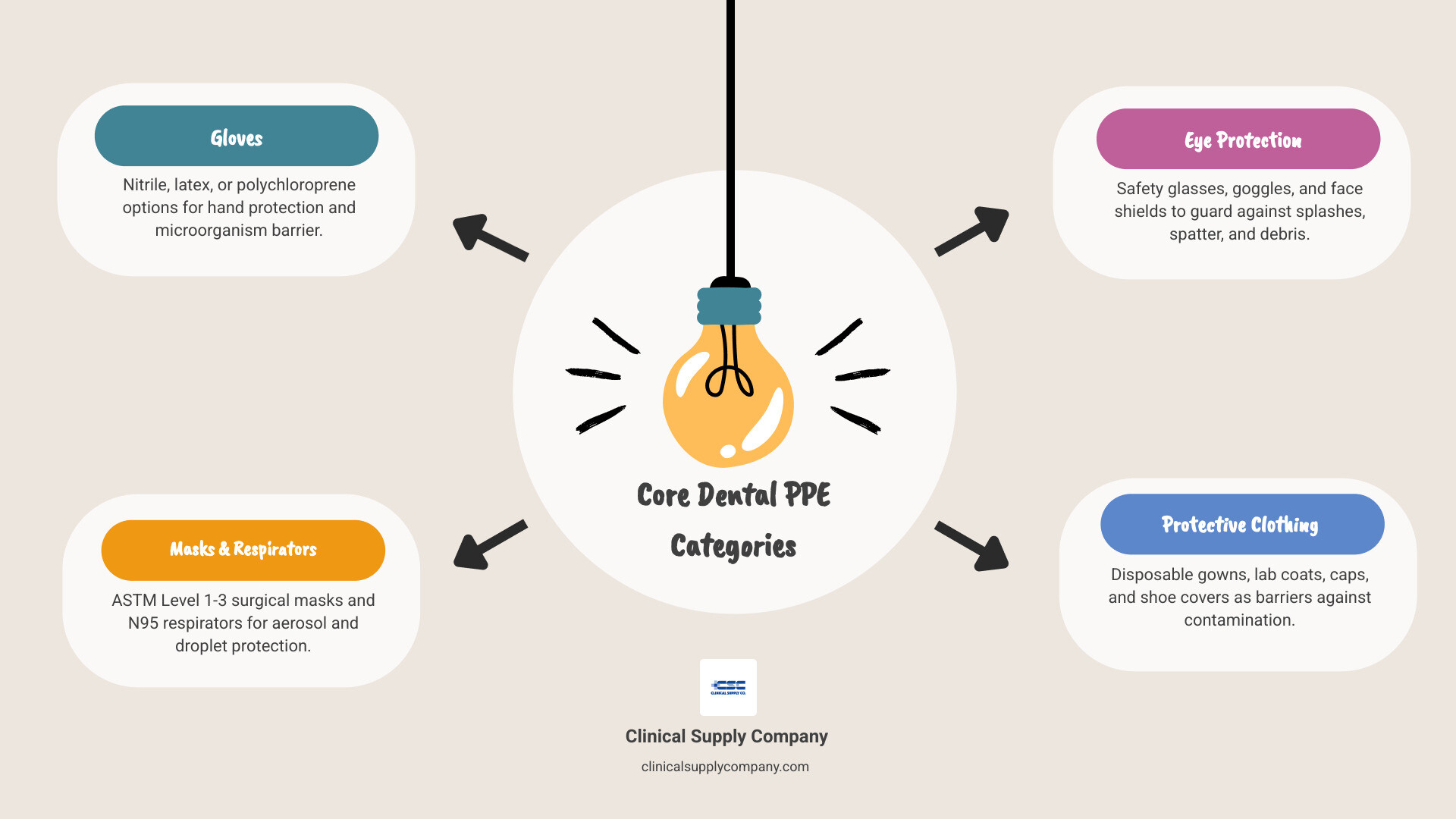
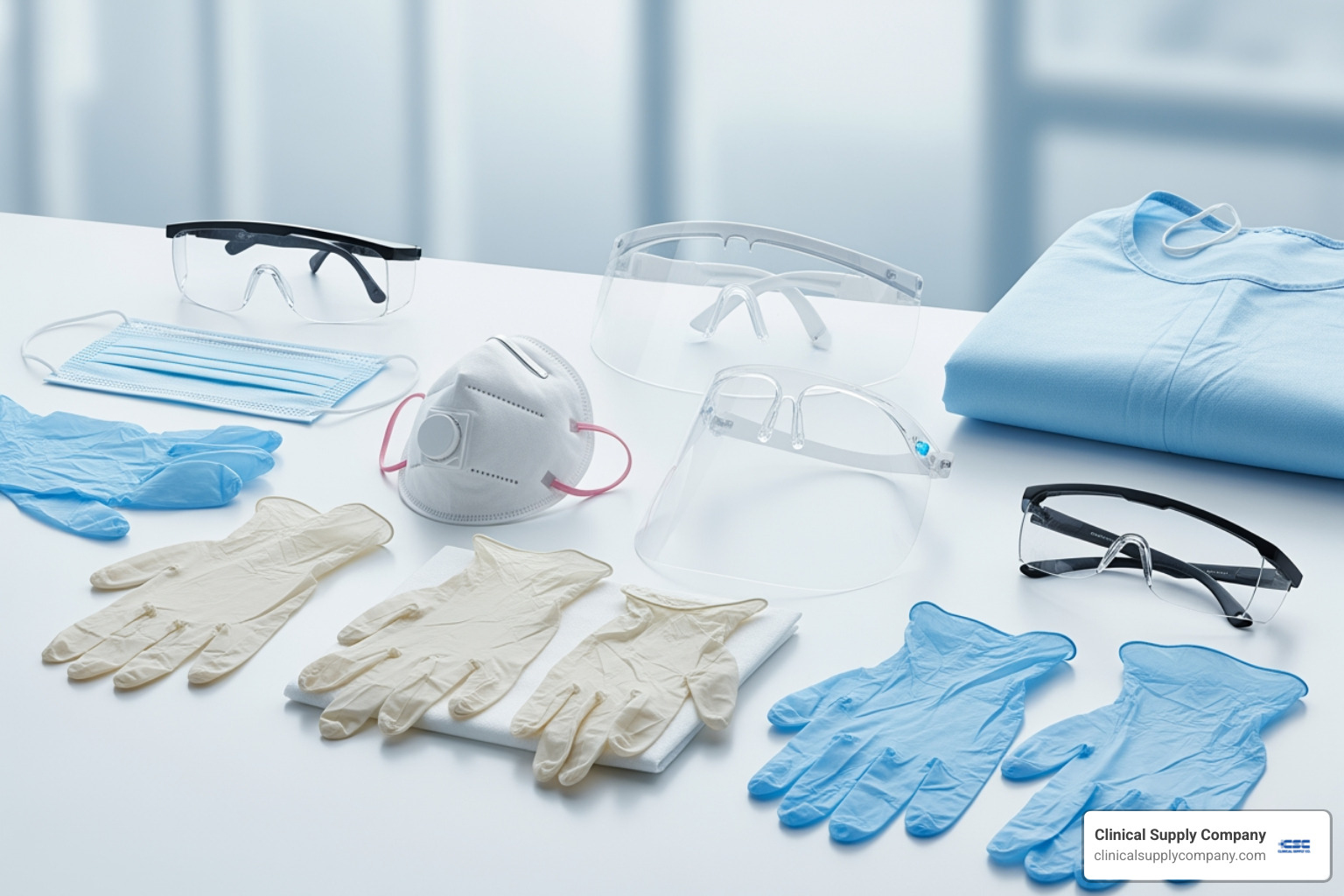
Dental PPE supplies are the essential equipment—gloves, masks, eye protection, and gowns—that shield dental professionals and patients from infectious agents, blood, saliva, and aerosols. Here's what every dental practice needs:
Core Dental PPE Supplies:
- Gloves – Nitrile, latex, or polychloroprene exam and surgical gloves
- Masks & Respirators – ASTM Level 1-3 surgical masks and N95 respirators
- Eye Protection – Safety glasses with side shields, goggles, and face shields
- Protective Clothing – Disposable isolation gowns, lab coats, surgical caps, and shoe covers
- Hand Hygiene Products – Alcohol-based sanitizers and antimicrobial soap
Dental professionals face daily exposure to blood, saliva, and infectious materials. Procedures using handpieces and ultrasonic scalers create sprays and aerosols that can transmit disease. The COVID-19 pandemic reinforced a critical truth: proper PPE is not optional—it's your first line of defense.
However, having supplies is only half the battle. The right PPE must be selected for the procedure, worn correctly, and disposed of safely. Each task carries different risks, and following proper protocols protects everyone in your practice.
I'm Adam Schuh, President and CEO of Clinical Supply Company. I've dedicated my career to ensuring practices like yours have reliable access to high-quality dental PPE supplies. We focus on FDA-verified products and resilient pricing to prioritize patient safety and practitioner comfort—because your protection shouldn't be a gamble.
A Head-to-Toe Guide to Essential Dental PPE Supplies
Choosing the right dental PPE supplies means building layers of protection. Each piece serves a specific purpose, and understanding your options helps you make confident decisions for your practice. Let's review what you need, why it matters, and how to select products that protect your team.
Dental Gloves: The Foundation of Hand Protection
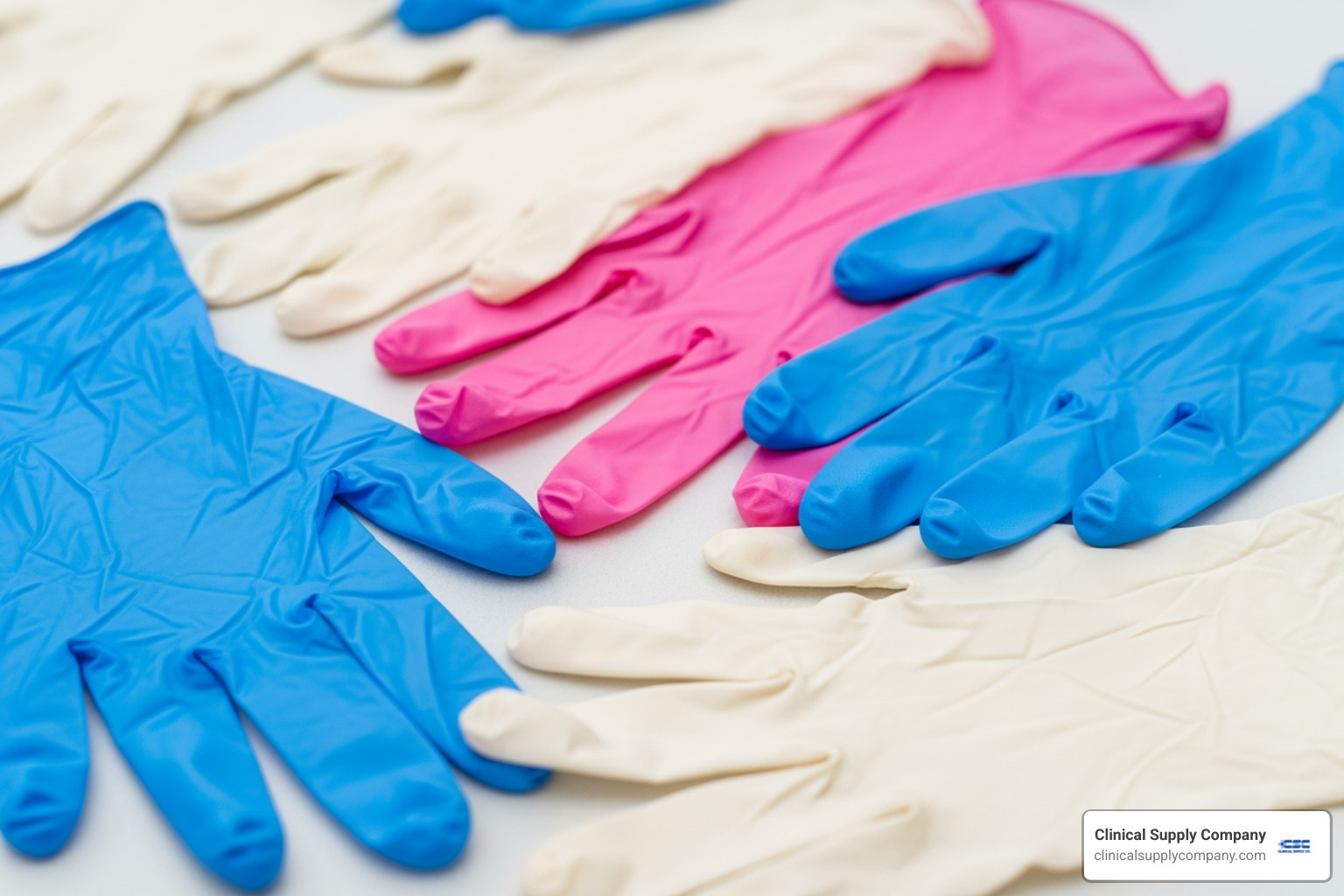
Gloves create a critical barrier between you and potentially infectious materials. The type you choose makes a significant difference.
Examination gloves are used for routine exams, prophylaxis, and any procedure involving contact with blood, saliva, or mucous membranes. These single-use gloves must be changed between every patient.
- Nitrile gloves are the go-to choice for their excellent puncture resistance and chemical durability. They are also latex-free, eliminating allergy concerns. Our Amadex Nitrile Gloves offer this protection, often for as low as $8.00 per box. Learn more in Why Nitrile Outperforms Latex: Allergies, Durability, Compliance.
- Latex gloves, while offering good tactile sensitivity, are no longer a preferred option for many practices due to the significant risk of latex allergies for both staff and patients.
- Polychloroprene gloves are a synthetic alternative that mimics the fit of latex without the allergy risk. While they offer good chemical resistance, many professionals still prefer the superior durability and proven performance of nitrile. See if they're right for your practice in Are Polychloroprene Gloves Suitable for Allergen-Sensitive Users?.
For staff with chemical sensitivities, accelerator-free nitrile gloves can prevent contact dermatitis. Surgical gloves are required for sterile procedures like extractions or implants, as they are thicker and meet stricter FDA sterility standards. Utility gloves are reusable, heavy-duty gloves for cleaning instruments and handling contaminated sharps, and should never be used for patient care.
To help prevent dryness and irritation from constant glove use, consider aloe-infused gloves. Gloves with aloe vera and Vitamin E can combat contact dermatitis. Read more in Protecting Hands, Protecting Careers: How Aloe Shield Gloves Stop Contact Dermatitis in its Tracks.
Face Masks & Respirators: Guarding Against Aerosols
Dental procedures create a cloud of aerosols and spatter. Masks and respirators protect your respiratory system from airborne contaminants.
Surgical masks are your standard defense. These disposable masks block large droplets and splashes. Their protection level is rated by ASTM standards:
- ASTM Level 1: Basic protection for low-risk procedures (e.g., routine exams).
- ASTM Level 2: Moderate barrier for procedures with some spatter (e.g., basic restorative work).
- ASTM Level 3: Maximum barrier for procedures with heavy aerosols or spatter. Our Criterion Earloop Masks ASTM Level 3 provide this superior protection, with quality masks starting as low as $0.13 each.
N95 respirators create a tight facial seal and filter at least 95% of airborne particles, including smaller aerosols that masks can miss. They are essential for high-risk, aerosol-generating procedures and require fit-testing to be effective. A poorly fitted N95 offers false security.
The key difference: surgical masks protect others from you and shield you from splashes, while N95 respirators protect you from inhaling hazardous airborne particles. The FDA guidance on N95 Respirators and Surgical Masks clarifies these distinctions. For more help, see our guides: Face Masks in Dentistry: A Quick Guide and Don't Get Masked Around: A Buyer's Guide to Surgical and General Face Masks.
Protective Eyewear & Face Shields: A Clear View of Safety
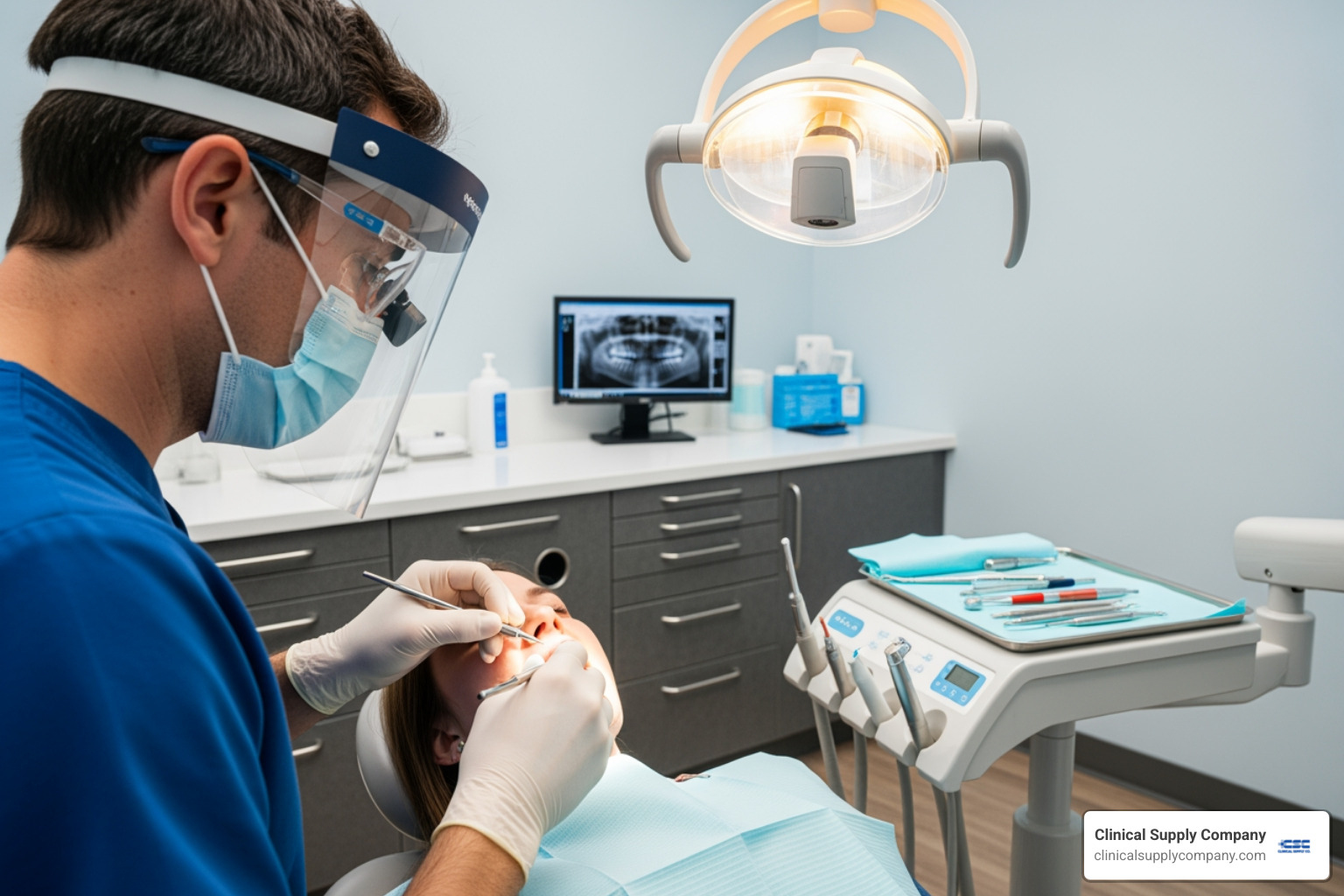
Your eyes and face need protection from biological, physical, and chemical hazards. Personal eyeglasses are not sufficient PPE because they lack side protection. You need safety glasses with side shields or goggles.
Face shields offer a higher level of protection by covering the entire face, but they are not a standalone solution. Always wear a face shield over a mask. We offer reusable headgear with replaceable shields (around $29.99 for a 10-pack of shields) and disposable face shields (as low as $0.08 each).
Don't forget to provide patients with protective eyewear to shield them from splashes, debris, and the operating light.
Protective Clothing: Your Barrier Against Contamination
Protective clothing keeps contaminants off your skin and personal clothes.
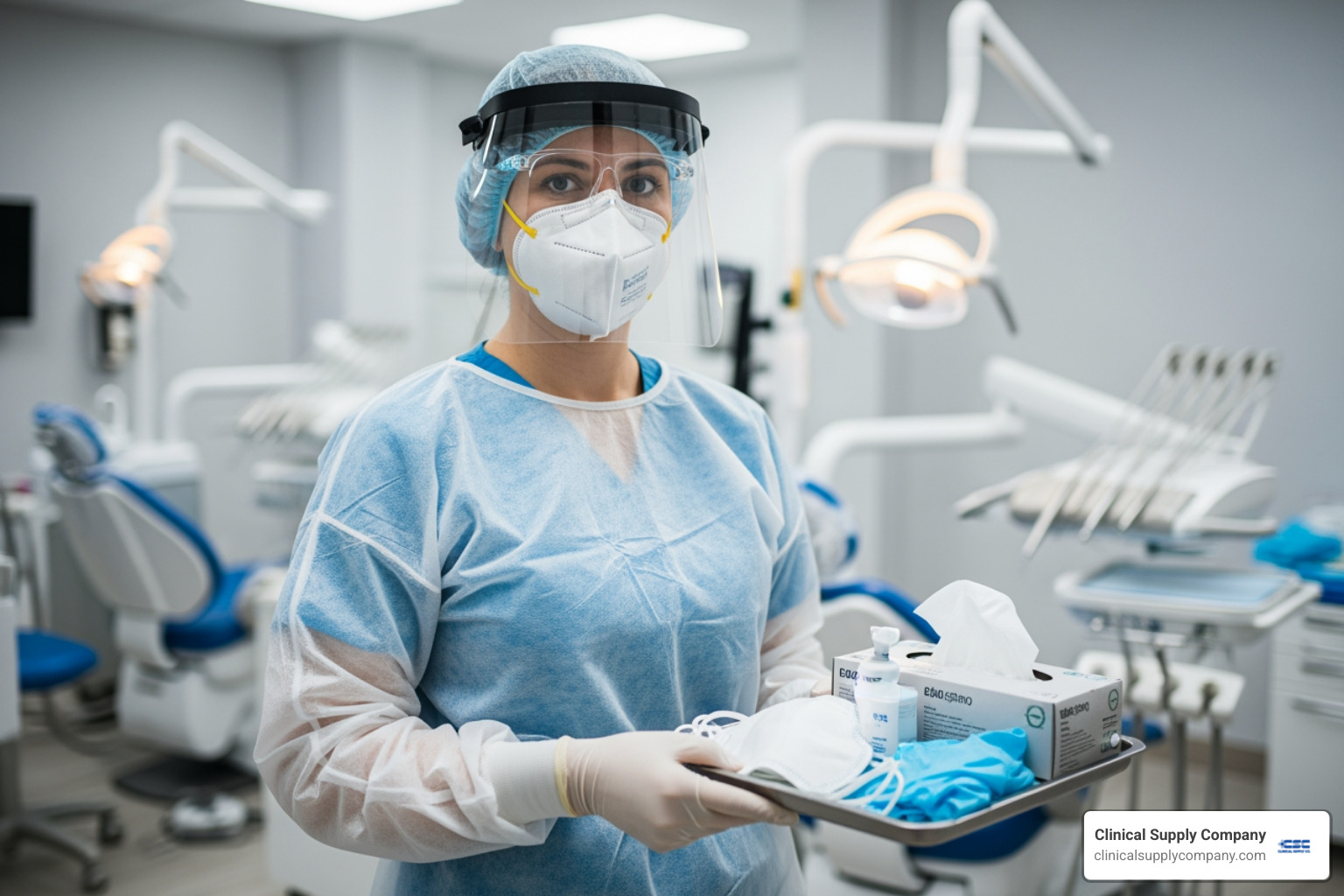
Disposable isolation gowns are your primary barrier during procedures where spatter is likely. They must be changed between patients. Our Isolation Gowns start as low as $0.74 each. For help choosing, see How to Choose Isolation Gowns and All About Isolation Gowns: Different Types and Uses.
Lab coats only qualify as PPE if they are fluid-resistant and cover the forearms, but a gown is generally a better choice. Surgical caps and shoe covers complete your protection by containing hair and preventing the spread of contaminants on floors.
Crucially, scrubs are not PPE. They are a uniform. You must wear a protective barrier over your scrubs whenever there is a risk of exposure. Having the right dental PPE supplies in stock ensures you are always prepared to protect your team and patients.
Mastering Infection Control: Proper PPE Protocols
Having the right dental PPE supplies is essential, but knowing how to use, remove, and dispose of them correctly is just as important. Proper protocols are your strongest defense against cross-contamination. A single misstep during removal can expose you to the very hazards you're trying to avoid.
The Correct Sequence for Donning and Doffing PPE
The order in which you put on (don) and take off (doff) PPE matters. Donning builds layers of protection, while doffing removes the most contaminated items first to prevent self-contamination.
Donning (Putting On) PPE:
- Hand Hygiene: Start with clean hands. Wash with soap and water or use an alcohol-based hand sanitizer.
- Gown: Put on your isolation gown, securing it to cover your torso and arms.
- Mask/Respirator: Position your mask or N95 respirator, ensuring a snug fit. Perform a seal check if using an N95.
- Eyewear/Face Shield: Put on your safety glasses or face shield.
- Gloves: Perform hand hygiene again, then pull on gloves, extending them to cover the cuffs of your gown.
Doffing (Taking Off) PPE: The goal is to avoid touching the contaminated exterior of your PPE with bare skin.
- Gloves: Remove the first glove by peeling it off from the wrist, turning it inside out. Hold it in your gloved hand. Slide a finger under the wrist of the remaining glove and peel it off, turning it inside out over the first glove. Discard both.
- Gown: Untie the gown and pull it away from your body, touching only the inside. Roll it into a bundle, inside out, and discard.
- Hand Hygiene: Clean your hands immediately.
- Eyewear/Face Shield: Remove by grasping the headband or earpieces from behind. Avoid touching the front.
- Mask/Respirator: Remove by grasping only the straps or ear loops. Discard immediately.
- Final Hand Hygiene: Wash or sanitize your hands one last time to remove any remaining contaminants.
For innovative solutions that can make doffing safer, see Protecting Healthcare Workers: The Role of EZDOFF in Infection Control.
Hand Hygiene: The Critical Step Before and After
Gloves are not a substitute for handwashing. They can have microscopic defects, and hands can become contaminated during removal. Hand hygiene is the single most important infection control measure.
Perform hand hygiene:
- Before putting on gloves.
- Immediately after removing gloves.
- Between every patient interaction.
- After touching potentially contaminated surfaces.
Wash with soap and water for at least 20 seconds or use an alcohol-based hand sanitizer with at least 60% alcohol. Frequent washing can dry out hands, which is why we offer products designed for comfort. Our article Protecting Hands, Protecting Careers: How Aloe Shield Gloves Stop Contact Dermatitis in its Tracks explores how the right gloves can protect your skin.
Safe Disposal of Used dental PPE supplies
Proper disposal is critical to prevent exposing your team to contamination. The golden rule is that disposable PPE is for single use only. Never reuse, wash, or "decontaminate" items like masks, gloves, or gowns. The FDA confirms this damages their protective barrier, making them ineffective.
Discard PPE immediately after use in the patient care area. Most used PPE (gloves, masks, non-saturated gowns) can be disposed of as general medical waste. However, PPE that is visibly saturated with blood or other infectious materials must be treated as regulated medical waste. This means placing it in designated biohazard bags or containers according to local regulations. For more guidance, see How to Discard Isolation Gowns Safely and Prevent Cross-Contamination in Dental Clinics.
Risk Assessment and Regulatory Compliance
Not all dental procedures carry the same risk. A routine exam differs greatly from implant surgery. Understanding risk assessment and regulatory guidelines helps you select the right dental PPE supplies for each situation, ensuring safety and compliance.
Choosing the Right PPE for the Procedure
One size does not fit all for PPE. Selection depends on the procedure, specifically the risk of aerosol-generating procedures (AGPs), splashes and spatter, and direct contact with blood or body fluids. AGPs, like ultrasonic scaling, require the highest level of protection (N95s, face shields, gowns). The key is to match your protection level to the actual risk.
This table shows how PPE requirements shift across different procedures:
| Procedure Type | Gloves | Mask/Respirator | Eyewear/Face Shield | Protective Clothing |
|---|---|---|---|---|
| Routine Exam | Examination (Nitrile/Latex) | Surgical Mask (ASTM Level 1 or 2) | Safety Glasses (for professional) | Clinical Attire (scrubs) |
| Prophylaxis (Scaling) | Examination (Nitrile/Latex) | Surgical Mask (ASTM Level 3) | Safety Glasses + Face Shield | Fluid-Resistant Gown (e.g., Isolation) |
| Restorations (Filling) | Examination (Nitrile/Latex) | Surgical Mask (ASTM Level 3) | Safety Glasses + Face Shield | Fluid-Resistant Gown (e.g., Isolation) |
| Extractions | Examination (Nitrile/Latex) | Surgical Mask (ASTM Level 3) | Safety Glasses + Face Shield | Fluid-Resistant Gown (e.g., Isolation) |
| Implant Surgery | Sterile Surgical (Nitrile/Latex) | N95 Respirator (if AGP) or Surgical Mask (L3) | Safety Glasses + Face Shield | Sterile Surgical Gown, Surgical Cap |
| Radiographs | Examination (Nitrile/Latex) | Surgical Mask (ASTM Level 1) | (Optional, unless risk of splash) | Clinical Attire (scrubs) |
For example, a routine exam may only require exam gloves and a Level 1 mask, while implant surgery requires sterile gloves, an N95 respirator, and a sterile surgical gown.
Navigating CDC and OSHA Guidelines for dental PPE supplies
Regulatory compliance is the foundation of a safe practice. The Centers for Disease Control and Prevention (CDC) provides the gold-standard recommendations for infection control in dental settings. Their guidelines are the go-to resource for preventing disease transmission through proper PPE use, hand hygiene, and sterilization. You can find the full guidelines here: CDC Guidelines for Infection Control in Dental Health-Care Settings.
Meanwhile, the Occupational Safety and Health Administration (OSHA) legally mandates PPE use to protect employees under its Bloodborne Pathogens Standard. This federal law requires dental practices to maintain an exposure control plan detailing PPE use and staff training. Compliance protects your team and your practice from penalties.
The COVID-19 pandemic highlighted the importance of these protocols, making N95s and face shields essential for AGPs. This vigilance remains critical for protecting staff and patients from all respiratory illnesses. When you combine proper PPE protocols with effective sterilization, as covered in The Complete Guide to Dental Sterilization Equipment: Protecting Patients and Your Practice, you build a practice where everyone can feel confident and protected.
Frequently Asked Questions about Dental PPE
We hear many of the same questions about dental PPE supplies. Let's clear up some common points of confusion.
Are scrubs considered PPE?
No, scrubs are not PPE. They are a work uniform or clinical attire. Scrubs lack the fluid resistance and barrier protection required during dental procedures. Protective clothing, such as a fluid-resistant isolation gown, must be worn over your scrubs to create a true barrier against infectious materials.
Can disposable PPE like masks or gowns be reused?
Absolutely not. Disposable PPE is engineered for single use only. The FDA is clear that washing or attempting to decontaminate these items damages their protective barrier, rendering them ineffective. Reusing single-use PPE creates a significant risk of cross-contamination, endangering yourself, your team, and your patients.
What PPE should patients wear when visiting the dental office?
Patient PPE policies can vary, but some standards apply. Patients may be asked to wear a face mask in the waiting area, especially if they have respiratory symptoms or during periods of high community transmission.
Once in the chair, all patients should be provided with protective eyewear. This is a standard best practice to guard their eyes against splashes, spatter, and debris from the procedure. It's a simple step that demonstrates your commitment to their safety and well-being.
Ensuring Your Practice is Always Prepared
Running a dental practice means balancing patient care, staff management, and keeping your supply closet stocked with the dental PPE supplies needed to keep everyone safe. The COVID-19 pandemic taught a hard lesson about supply chain vulnerabilities, showing that a reliable supplier is critical to a practice's resilience.
At Clinical Supply Company, we understand these challenges. As a Midwest-based national supplier, we've built our reputation on reliability. We maintain a comprehensive selection of vetted, top-tier dental PPE supplies because we know that running out isn't an option. Your team's safety and your patients' trust depend on it.
To ensure you're always prepared, maintain a strategic inventory of your most-used items. A buffer of gloves, masks, and gowns protects you from sudden demand spikes or supply chain disruptions. Partner with suppliers who prioritize consistency and value. Our goal is to be your reliable partner year-round, ensuring you have access to quality products at fair prices.
Remember to consider patient and front-desk staff needs as well. Patients should always be given protective eyewear during procedures, and administrative staff may need PPE based on their exposure risk.
Maintaining a robust infection control program requires balancing quality, efficiency, and preparedness. By understanding the types of dental PPE supplies you need, following proper protocols, and adhering to regulatory guidelines, you create a safer environment for everyone. It's about building trust with your patients and protecting the team that makes your practice run.
We're here to help you manage The Juggling Act: Balancing Efficiency and Quality in Dentistry. With Clinical Supply Company as your partner, you can focus on what you do best: providing excellent patient care. We'll make sure you have the supplies to do it safely, every single day.