

Why PPE Dental Office Standards Matter More Than Ever
PPE dental office requirements are your first line of defense against infection. They include gloves, gowns, surgical masks or N95 respirators, and eye protection (goggles or face shields). This equipment is mandatory whenever there's potential contact with blood, saliva, or other potentially infectious materials (OPIM), especially during aerosol-generating procedures.
Key PPE Requirements for Dental Offices:
- Gloves: Required for all patient contact; must be changed between patients.
- Gowns/Protective Clothing: Must be long-sleeved and fluid-resistant; change when soiled or after aerosol-generating procedures.
- Masks/Respirators: Surgical masks for routine care; N95 respirators for aerosol-generating procedures.
- Eye Protection: Goggles with solid side shields or face shields that cover the eyes completely.
- Regulatory Standards: OSHA mandates PPE under its Bloodborne Pathogens Standard (29 CFR 1910.1030), while the CDC provides advisory guidelines.
Dental health care personnel (DHCP) are routinely exposed to infectious materials. Instruments like handpieces and ultrasonic scalers produce sprays and aerosols, placing DHCP in OSHA's 'high' and 'very high' risk categories. Proper PPE protects your team from hepatitis B, HIV, and respiratory infections like COVID-19, while also preventing transmission to patients. However, research shows 90% of healthcare workers' doffing practices don't follow CDC guidelines, creating a significant risk of cross-contamination.
This guide provides clear, practical strategies for building a compliant PPE program. We'll cover OSHA requirements, CDC recommendations, proper PPE selection, and correct donning and doffing procedures.
I'm Adam Schuh, President and CEO of Clinical Supply Company. I've spent years helping dental practices steer PPE dental office requirements, developing FDA-verified product lines and implementing quality controls to protect both practitioners and patients.
The Foundation: Understanding PPE Regulations and Standards
Navigating PPE dental office regulations involves understanding the roles of federal agencies and state boards. The Occupational Safety and Health Administration (OSHA) creates mandatory, legally enforceable rules, while the Centers for Disease Control and Prevention (CDC) provides evidence-based recommendations that represent best practices. State dental boards may add their own specific requirements.
The first step in compliance is a hazard assessment to identify where your team might encounter blood, saliva, or other infectious materials. This assessment determines the specific PPE needed for each task. The CDC's Guidelines for Infection Control in Dental Health-Care Settings—2003 remains a foundational resource for these principles.
CDC vs. OSHA: What's the Difference?
The distinction is simple:
- CDC: Issues advisory recommendations and best practices. They are not law but represent the standard of care.
- OSHA: Creates mandatory requirements. Failure to comply can result in citations and fines. OSHA's guidance for dentistry workers clearly separates mandatory from advisory rules.
Two key OSHA standards govern your PPE program:
- Bloodborne Pathogens Standard (29 CFR 1910.1030): Covers exposure to blood and OPIM (including saliva). It requires employers to provide PPE at no cost, maintain a written Exposure Control Plan, and offer Hepatitis B vaccination.
- Respiratory Protection Standard (29 CFR 1910.134): Applies when N95 respirators are needed. It mandates medical evaluations, fit testing, training, and a written respiratory protection program.
As an employer, you are responsible for meeting all OSHA requirements.
Key Elements of a Compliant PPE Program
An effective PPE dental office program is a system built on several key components:
- Written Exposure Control Plan: An OSHA-required document detailing your PPE selection, exposure procedures, and incident protocols.
- Staff Training and Records: Annual training on PPE use, hazard recognition, and donning/doffing is essential. Document all training sessions.
- Hazard-Based PPE Selection: Your PPE choices must directly correspond to the risks identified in your hazard assessment. Match the PPE to the procedure's risk level.
- Fit Testing: Annual fit testing is mandatory for any staff member required to wear an N95 respirator. An improper fit negates the respirator's protection.
- Regular Program Review: Review and update your PPE program, Exposure Control Plan, and training materials at least annually to adapt to new guidelines and practice needs.
Core Components of PPE in a Dental Office
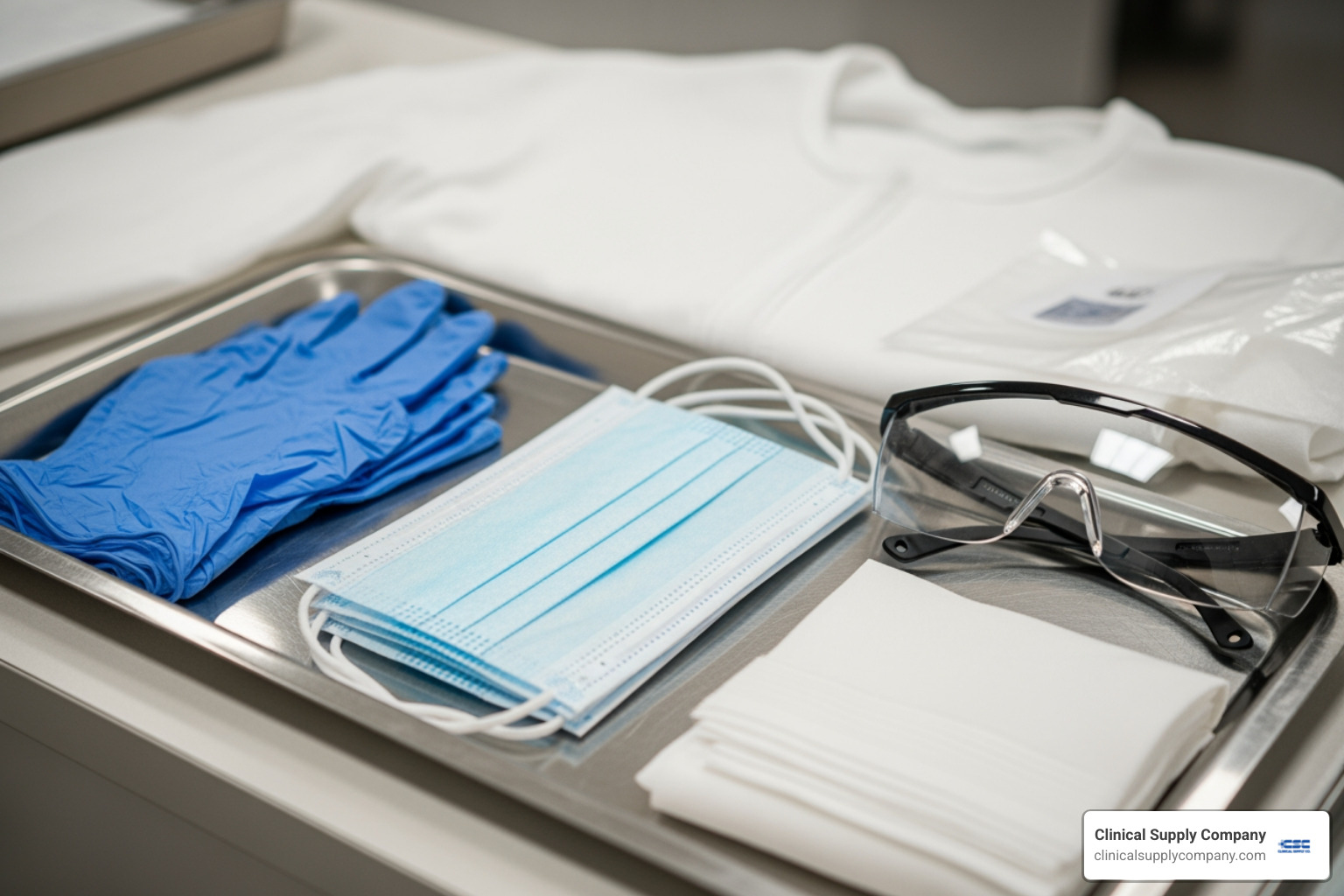
Each piece of PPE in your practice works as part of a coordinated system to create a barrier against infectious materials. Understanding the role of each component is key to an effective infection control strategy. The core components in any PPE dental office are protective clothing, face and eye protection, and gloves.
Protective Clothing: Gowns, Lab Coats, and Clinical Attire
It is critical to understand that everyday scrubs are clinical attire, not PPE. They are not designed to protect against splashes or aerosols.
- Gowns and Lab Coats: To function as PPE, protective clothing must be long-sleeved and fluid-resistant. For procedures generating splashes or aerosols, a proper gown is the best choice. Learn more about Isolation Gowns in Preventing Spread of Infections and How to Choose Isolation Gowns.
- When to Change: Protective clothing must be changed between patients or if it becomes visibly soiled.
- Laundering: Reusable gowns must be laundered on-site or by a professional service, never at home. Disposable gowns are single-use and must be discarded.
Face and Eye Protection: Beyond the Basic Mask
Comprehensive face and eye protection is essential in dentistry.
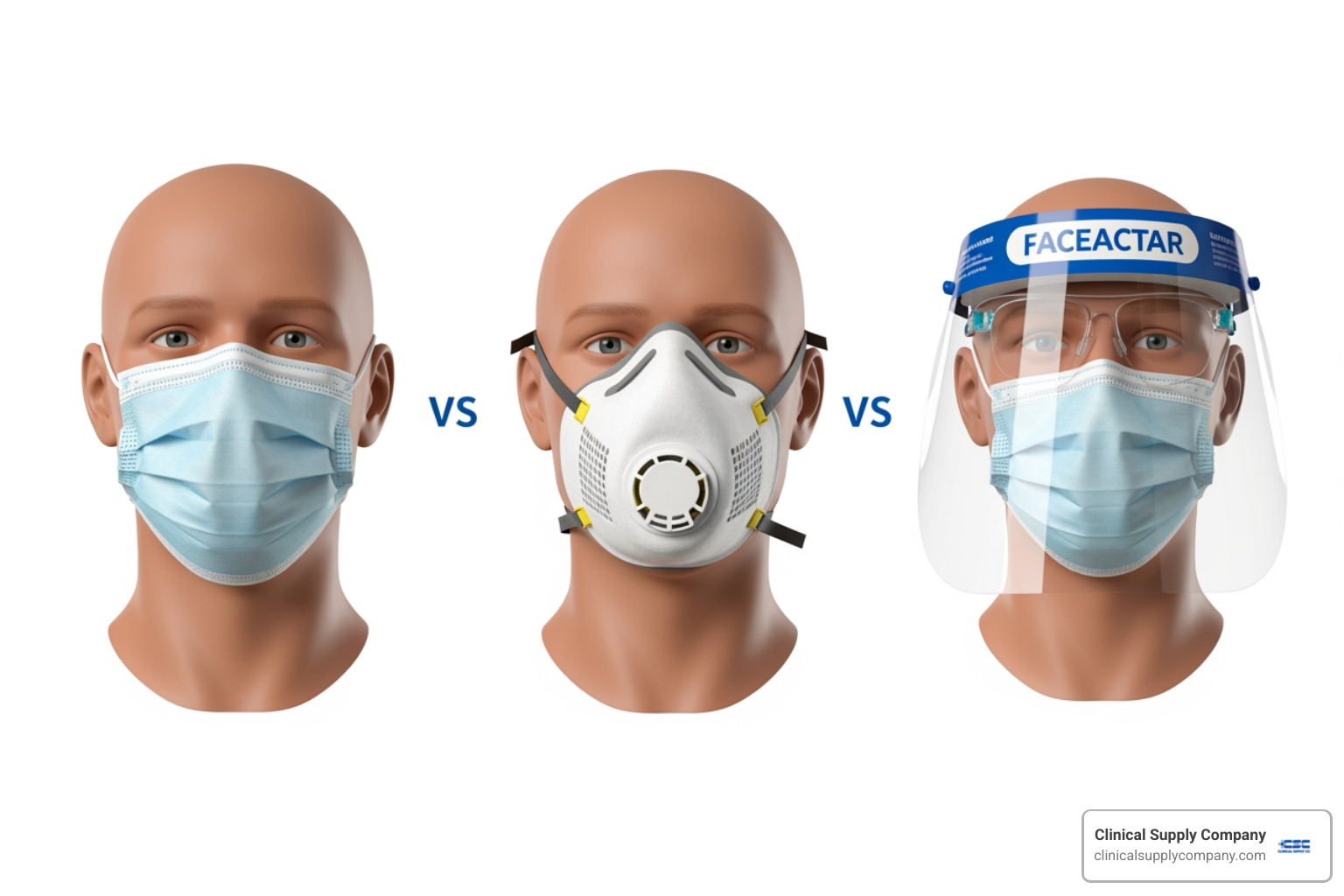
- Surgical Masks: Ideal for routine care, they protect against droplet spatter. They must be changed between patients or if they become wet. Find the right Face Masks for Dentists for your practice.
- N95 Respirators: Required for aerosol-generating procedures (using high-speed handpieces, ultrasonic scalers, etc.). They filter at least 95% of airborne particles and require annual fit testing per OSHA's Respiratory Protection Standard.
- Protective Eyewear: Goggles or safety glasses with solid side shields are mandatory. Personal prescription glasses do not provide adequate protection.
- Face Shields: Protect the entire face from direct splashes but are not a substitute for respiratory protection. Always wear them with a surgical mask or N95 respirator.
The FDA provides detailed information on masks and respirators. During N95 shortages, a Level 3 surgical mask with a full-face shield is a minimally acceptable alternative, but it may not meet all CDC recommendations.
Hand Protection: The Critical Role of Gloves
Gloves are the single most important barrier to disease transmission in a PPE dental office.
- Types of Gloves: Use patient examination gloves for non-surgical procedures, sterile surgical gloves for surgical procedures, and heavy-duty utility gloves for cleaning and instrument processing. See our guide on Nitrile Gloves vs. Other Gloves: Key Differences.
-
Usage Rules:
- Use a new pair of gloves for each patient.
- Change gloves immediately if torn, punctured, or soiled.
- Never wash or reuse disposable gloves. The FDA confirms they are for single use only.
- Hand Hygiene: Gloves do not replace hand hygiene. Perform hand hygiene (washing or hand rub) immediately before donning and after doffing gloves. This is non-negotiable. Learn how to keep your hands healthy while Protecting Your Hands from the Risks of Gloves.
Implementing a Robust PPE Dental Office Program
Having the right equipment is only half the battle; knowing how to use it correctly is what provides real protection. Proper donning (putting on), doffing (taking off), and hand hygiene are the foundation of any successful PPE dental office program.
Protocols for Aerosol-Generating Procedures (AGPs)
AGPs, which include procedures using ultrasonic scalers, high-speed handpieces, and air-water syringes, create a fine mist of particles that can carry infectious agents. The CDC considers performing AGPs a high-risk activity, requiring improved precautions.
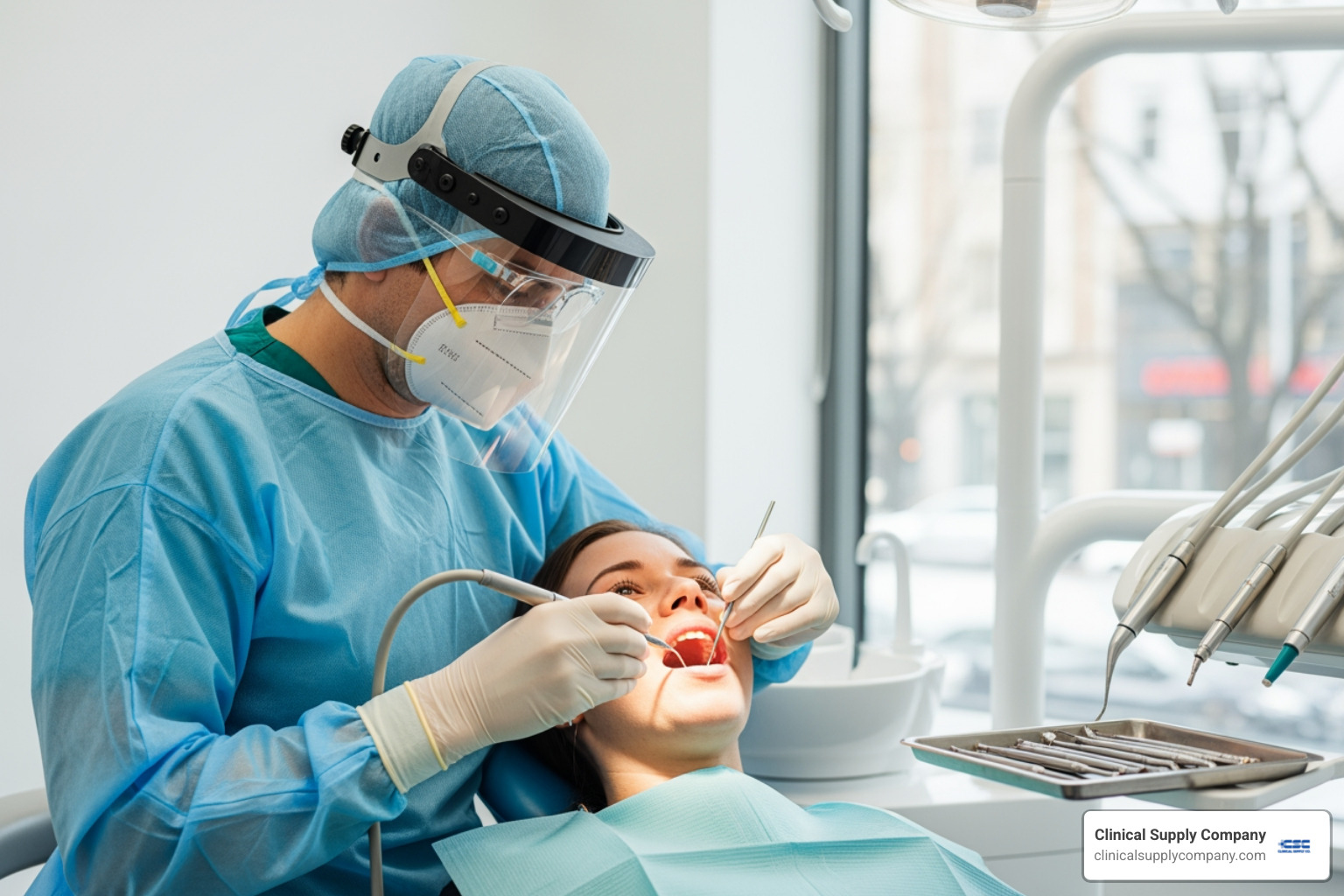
For all AGPs, your team must use:
- An N95 respirator (or higher)
- A full face shield
- A long-sleeved, fluid-resistant gown
- Gloves
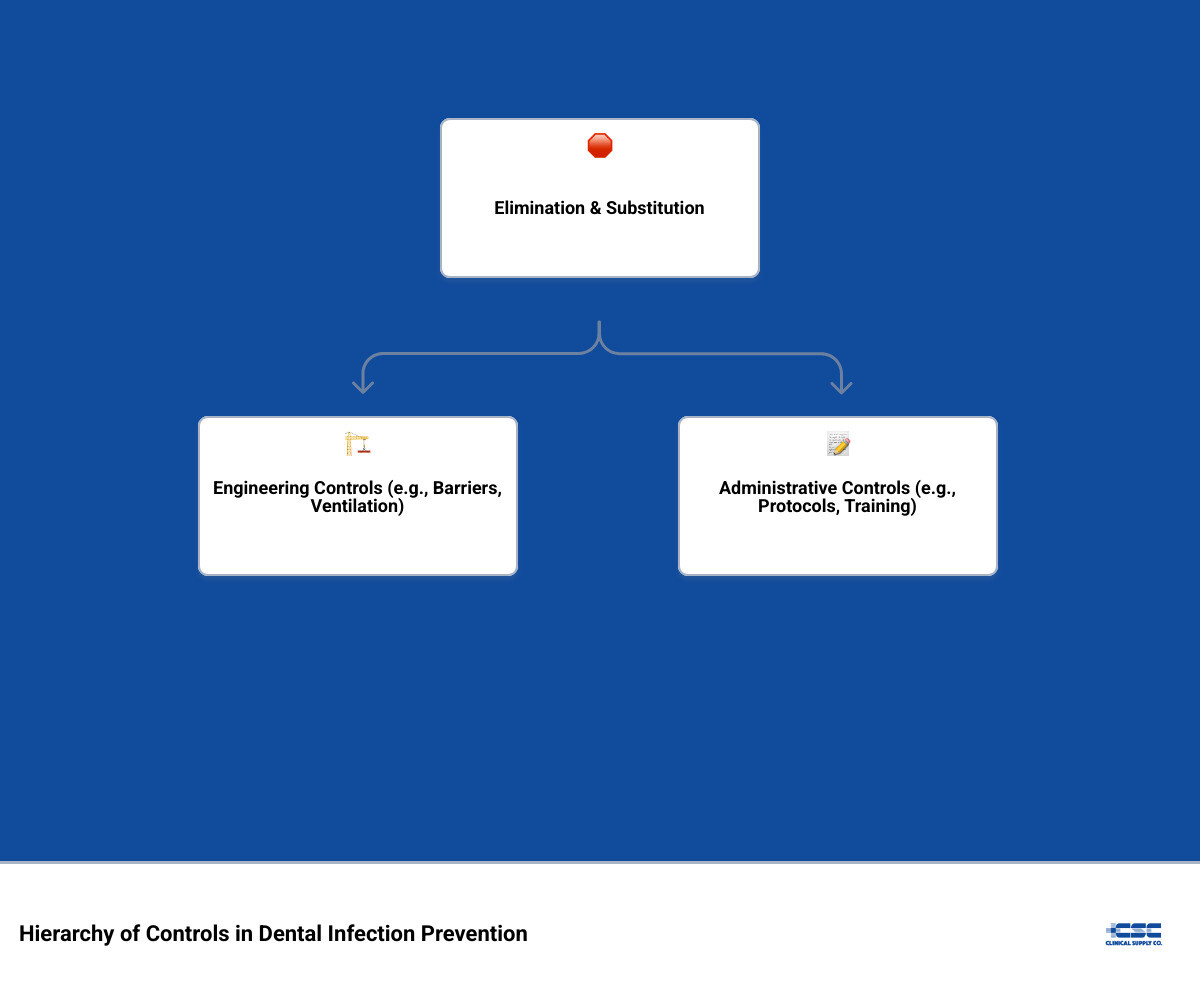
In addition to PPE, use engineering and administrative controls to minimize risk:
- High-Volume Evacuation (HVE): Use HVE systems to reduce aerosols at the source.
- Dental Dams: Isolate the work area to minimize aerosolized saliva and blood.
- Ventilation: Ensure adequate air exchange in treatment rooms, supplementing with portable HEPA filters if needed. After an AGP, allow sufficient time for airborne particles to clear before cleaning, following CDC guidance on aerosol-generating procedures.
The Right Way to Don and Doff PPE
The sequence of donning and doffing is designed to maximize protection and minimize self-contamination.
Donning (Putting On) Sequence:
- Perform hand hygiene.
- Put on the gown, securing all ties.
- Put on the mask or respirator, ensuring a snug fit. Perform a user seal check for N95s.
- Put on eye protection (goggles or face shield).
- Put on gloves, pulling them over the gown cuffs.
Doffing (Taking Off) Sequence:
The goal is to remove the most contaminated items first. Use a designated doffing area.
- Gloves: Peel off the first glove, holding it in the gloved hand. Slide an ungloved finger under the remaining glove's cuff and peel it off, encasing the first glove. Dispose.
- Gown: Untie the gown and pull it away from your body, rolling it inside out. Dispose.
- Eye Protection: Remove by handling the earpieces or headband. Place in a designated bin for reprocessing or disposal.
- Mask/Respirator: Remove by grasping the ties or straps, avoiding the front surface. Dispose.
- Perform hand hygiene immediately. This final step is non-negotiable.
PPE for All Staff: Clinical and Non-Clinical Roles
A complete PPE dental office program includes everyone.
- Non-Clinical Staff (Front Desk): Should wear a surgical mask at all times as part of universal source control, even behind a plexiglass barrier.
- Cleaning and Laundry Staff: Require protection from chemicals and infectious materials. This includes utility gloves, eye protection, masks, and protective clothing when handling contaminated items or laundry.
Universal source control, where everyone consistently uses appropriate PPE, creates a culture of safety that protects the entire team and your patients.
Navigating Special Circumstances and Challenges
A strong PPE dental office program must be flexible enough to handle challenges like treating infectious patients, managing supply shortages, and properly disposing of waste.
Managing PPE for Patients with Suspected/Confirmed COVID-19
When treating patients with suspected or confirmed COVID-19, upgrade your standard protocols.
- Defer non-urgent care until the patient is no longer infectious. For emergencies, isolate the patient.
- Use improved PPE: Wear an N95 respirator (or higher), eye protection, a fluid-resistant gown, and gloves.
- Allow for room turnover time: After treatment, wait for sufficient air changes to clear infectious particles before cleaning, per CDC recommendations for COVID-19 in dental settings.
Always consult local public health guidelines, as requirements can change.
Strategies for PPE Shortages and Conservation
During public health emergencies, PPE supplies can become scarce. The CDC's strategies for optimizing the supply of PPE include:
- Extended Use: Wearing one N95 respirator for multiple patient encounters without removing it, provided it stays clean and undamaged.
- Limited Reuse: Reusing an N95 after decontamination. This is a complex process and requires covering the N95 with a disposable surgical mask.
- Alternative Respirators: Using KN95s or, as a last resort, a combination of a Level 3 surgical mask and a full face shield.
Vetting suppliers is crucial during shortages to avoid counterfeit products. At Clinical Supply Company, we personally vet our suppliers and maintain direct manufacturer relationships. Unlike massive distributors, whose vast supply chains can sometimes allow counterfeit or substandard products to slip through, our rigorous quality control ensures every product you receive is FDA-verified and meets safety standards.
Proper Disposal and Disinfection of Your PPE Dental Office
Proper handling of used PPE is essential for preventing cross-contamination.
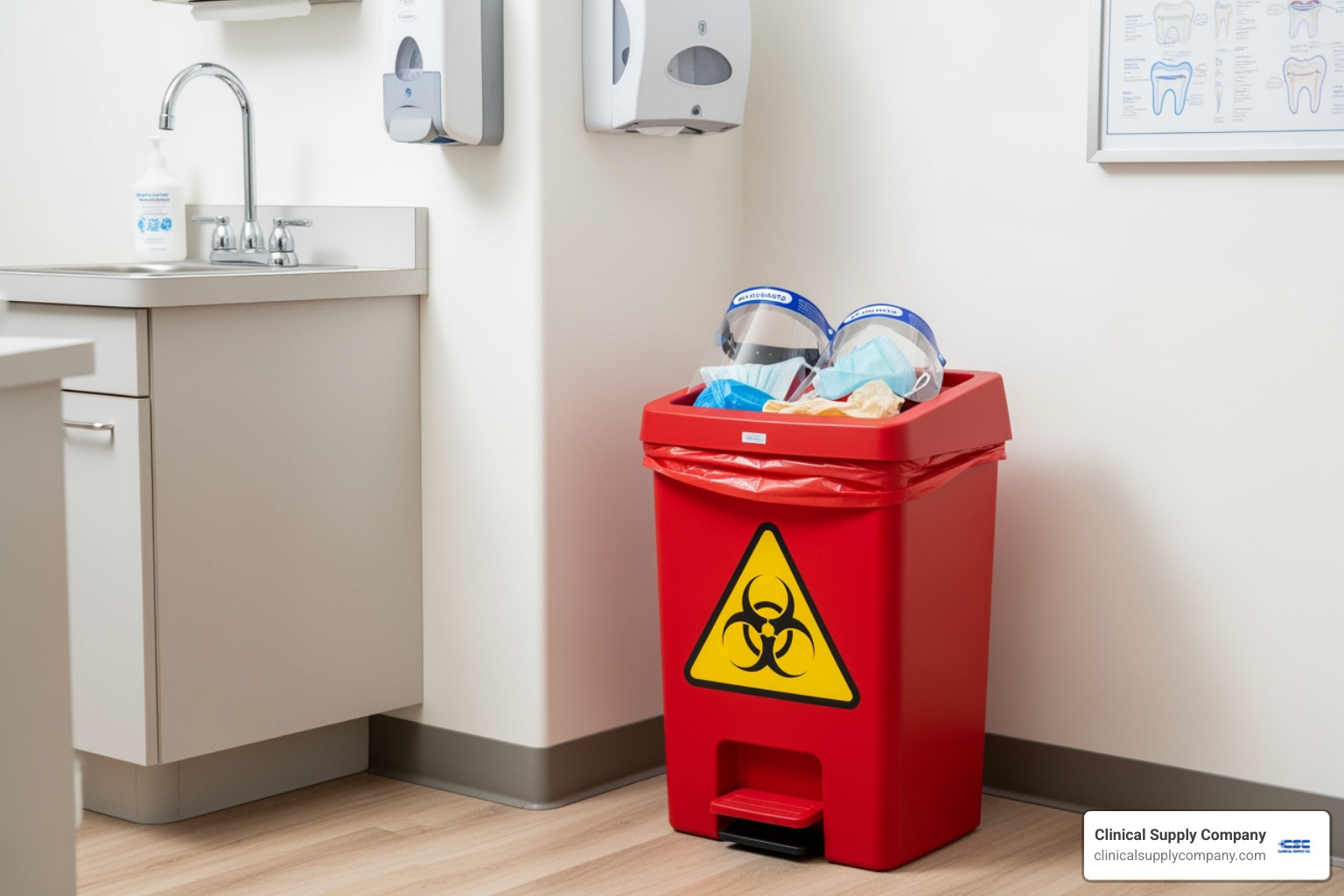
- Waste Disposal: Most used PPE (gloves, masks, gowns) is considered general medical waste. Items saturated with blood are regulated medical waste and require special handling. As the FDA notes, single-use PPE cannot be washed or reused.
- Reusable Items: Clean and disinfect reusable eye protection according to manufacturer instructions. Launder reusable gowns on-site or with a professional service—never at home.
- Environmental Cleaning: Regularly clean and disinfect high-touch surfaces using an EPA-registered, hospital-grade disinfectant. Our Surface Wipes: Dental Office Cleaning can streamline this process.
Frequently Asked Questions about Dental Office PPE
Here are answers to some of the most common questions we receive about PPE dental office requirements.
Are scrubs considered PPE?
No, scrubs are not PPE. They are general work clothes (clinical attire) and are not designed to provide a barrier against splashes, sprays, or aerosols. During patient care, scrubs must be covered with appropriate PPE, such as a fluid-resistant, long-sleeved gown.
Do I need to change my mask between every patient, even if I wear a face shield?
Yes, you must change your mask between patients. A face shield protects from direct splashes, but it does not stop fine aerosols from contaminating your mask. A mask can also become wet from your own breath, reducing its filtration effectiveness. Both the CDC and OSHA require changing masks between patients to ensure proper infection control.
What is the difference between a surgical mask and an N95 respirator?
The key differences are fit and filtration, which determine the level of protection.
Surgical Mask:
- Fit: Loose-fitting.
- Protection: Protects against large droplets and splashes. Provides "droplet protection."
- Use: Standard for routine patient care.
N95 Respirator:
- Fit: Creates a tight seal around the nose and mouth. Requires annual fit testing.
- Protection: Filters at least 95% of airborne particles, including small aerosols. Provides "respiratory protection."
- Use: Mandatory for aerosol-generating procedures (AGPs) and when treating patients with known or suspected airborne infectious diseases, per OSHA's Respiratory Protection Standard (29 CFR 1910.134).
For routine care, a surgical mask is sufficient. For AGPs, an N95 is required. Using a surgical mask for an AGP is not compliant with OSHA standards, even if worn with a face shield.
Conclusion: Building a Culture of Safety
A successful PPE dental office program is about more than just supplies; it's about building a culture of safety. This guide has covered the essentials, from regulatory standards and core PPE components to protocols for AGPs and proper donning and doffing.
PPE is just one layer of infection control. Its effectiveness depends on correct use, consistent hand hygiene, and regular training. Every team member, from the front desk to the operatory, plays a vital role in protecting themselves and your patients.
At Clinical Supply Company, we know that a culture of safety requires reliable access to high-quality products. As a Midwest-based national supplier, we provide FDA-verified dental supplies you can trust. Unlike large distributors, whose complex supply chains can introduce uncertainty about product authenticity, our stringent quality controls and direct supplier relationships ensure you receive authentic, effective products every time.
When you're stocking up on Essential Supplies for a Hygienic Dental Office, know that we are here to support your practice with expert guidance and exceptional service. A culture of safety is built on a shared commitment to protecting one another, and that starts with having a partner you can depend on.