

When Protective Gloves Become the Problem
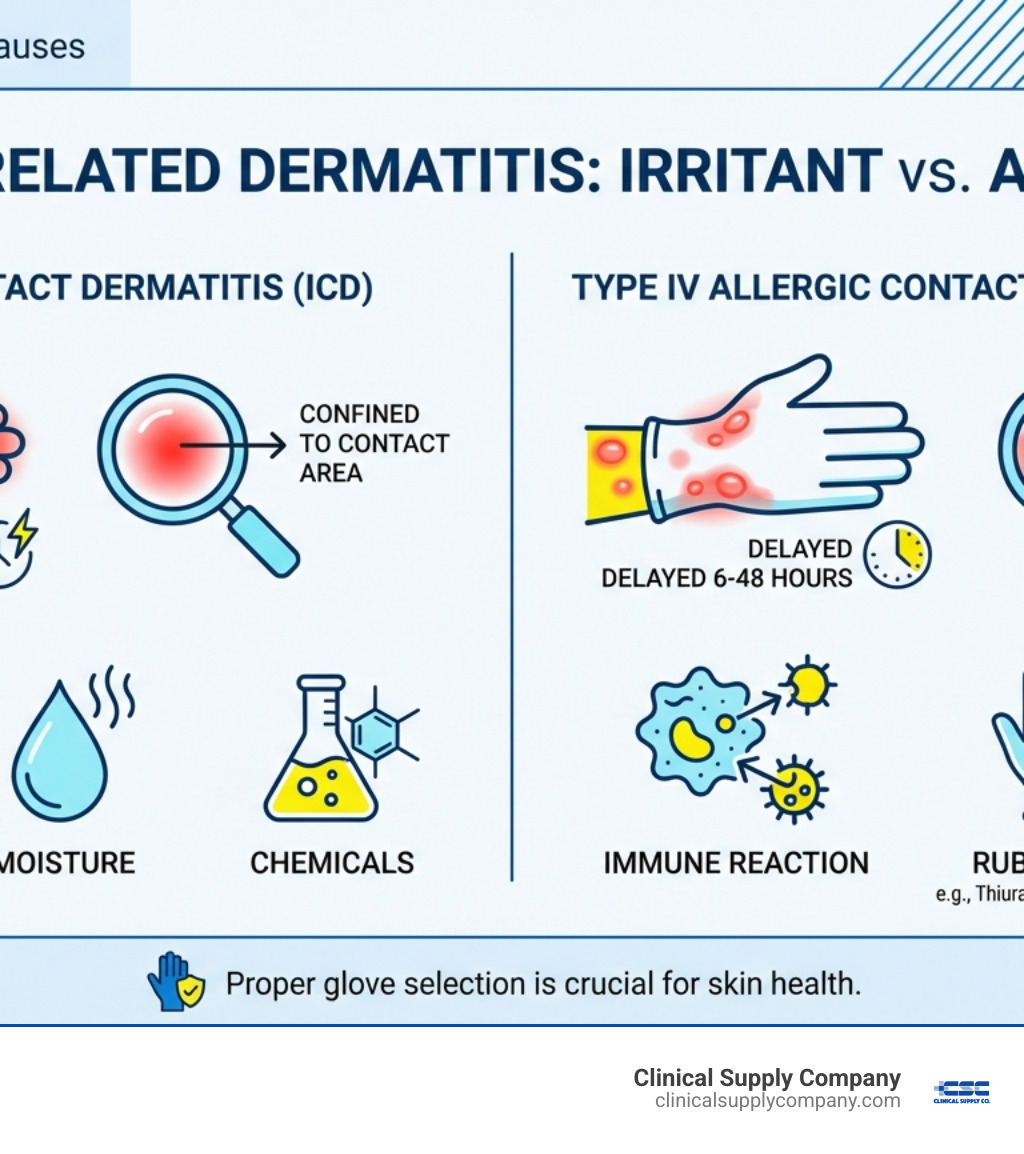
Allergic contact dermatitis gloves can turn essential protective equipment into a source of chronic hand problems. For dental professionals, red, itchy, or blistered skin after glove use points to one of two issues: irritant contact dermatitis (from friction, moisture, or chemicals) or Type IV allergic contact dermatitis (a delayed immune reaction to glove chemicals, appearing 6-48 hours after contact).
Quick Answer for Dental Professionals:
- Primary cause: Rubber accelerators (thiurams, dithiocarbamates, benzothiazoles) cause ~80% of allergic reactions
- Key difference: Irritant dermatitis is immediate; allergic dermatitis is delayed 6-48 hours and can spread
- Solution: Switch to accelerator-free nitrile or polychloroprene gloves
- Diagnosis: Requires patch testing by a dermatologist
Hand dermatitis is a significant occupational risk for dental professionals due to frequent hand washing and glove use. The shift from latex to synthetic gloves didn't solve the problem; it just changed the culprit from latex proteins to chemical accelerators.
I'm Adam Schuh, leader of Clinical Supply Company. My experience has shown me how critical proper glove selection is for practitioner wellbeing and patient safety. We've developed accelerator-free solutions to address this growing occupational health concern.
The stakes are high: research shows 75% of patients with occupational contact dermatitis develop chronic skin disease. Prevention isn't just about comfort—it's about protecting careers and maintaining high standards of patient care.
Understanding and Diagnosing Glove-Related Dermatitis
Understanding the two types of glove-related dermatitis is the first step to finding a solution.
Irritant contact dermatitis is a direct injury to the skin. In dental practice, it's caused by the breakdown of the skin's barrier from trapped moisture under gloves (occlusion), friction from glove changes, and frequent washing with harsh soaps and disinfectants. Symptoms like redness, dryness, and burning appear quickly (minutes to hours) at the site of contact.
Allergic contact dermatitis (Type IV) is a delayed immune system response to a chemical allergen. Symptoms like intense itching, redness, blisters, and swelling appear 6 to 48 hours after contact. The reaction can spread beyond the gloved area. For dental professionals, knowing the difference is crucial for effective management.
What are the Primary Causes of Nitrile Glove Allergies?
A common misconception is an allergy to nitrile itself; true nitrile allergies are rare. The real culprits, causing about 80% of all allergic contact dermatitis gloves reactions, are chemical accelerators used in manufacturing.
These vulcanization accelerators make gloves durable but can leave residues that trigger an immune response. The main chemical groups are:
- Thiurams
- Dithiocarbamates (most common today)
- Benzothiazoles (thiazoles)
- Guanidines (like DPG)
- Thioureas
The switch from latex to nitrile gloves solved Type I latex allergies but increased Type IV chemical allergies. Scientific research on rubber accelerators in gloves confirms a rising trend in skin reactions due to these chemicals. As we explain in our guide to allergy concerns with latex-free exam gloves, "latex-free" does not mean "allergy-free."
How are Glove-Related Skin Reactions Diagnosed?
If you suspect an allergic contact dermatitis gloves reaction, a precise diagnosis is urgent to prevent career disruption. Consult a dermatologist, preferably one specializing in occupational dermatology. They will likely recommend patch testing, the gold standard for diagnosing Type IV allergies.
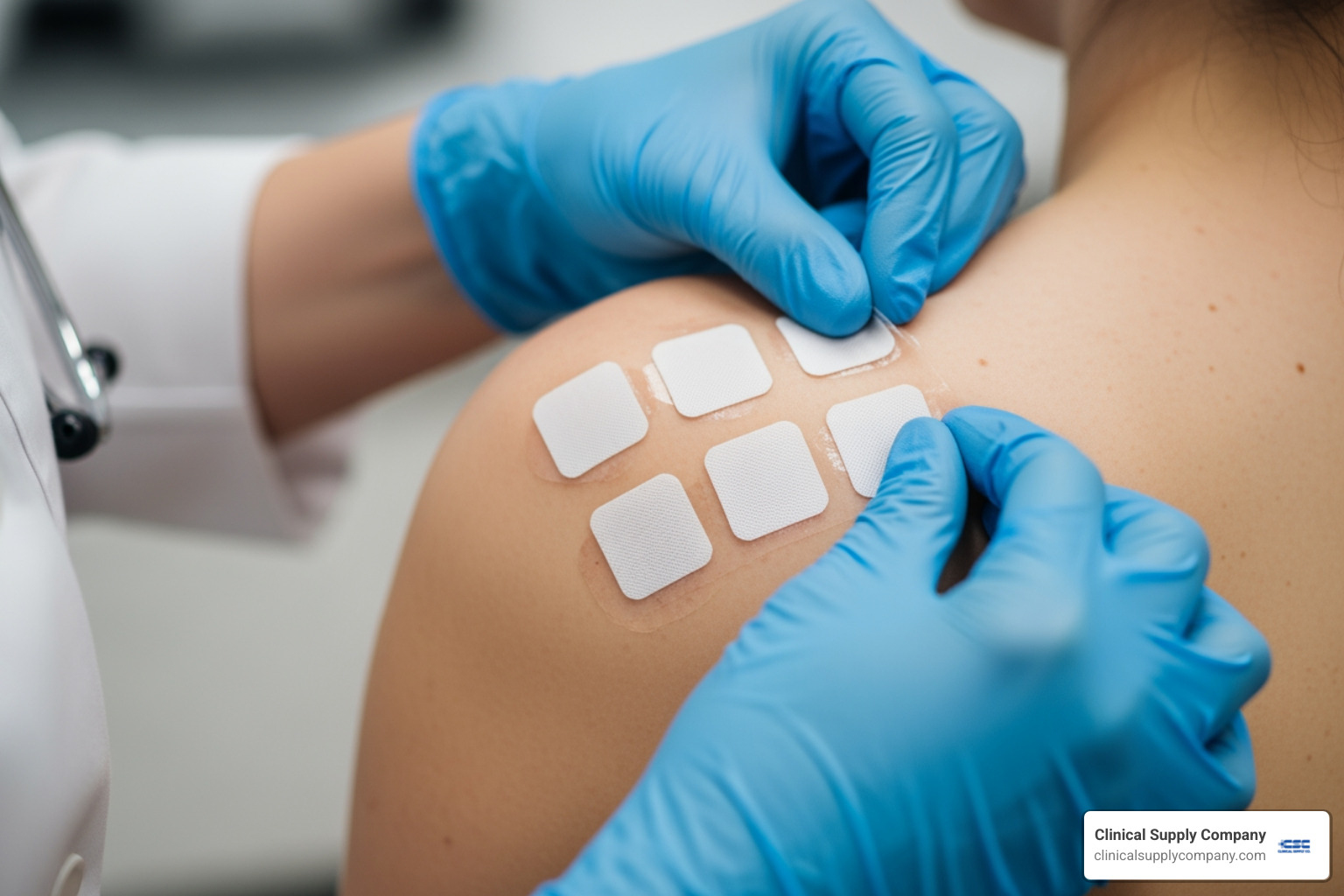
Patch testing involves applying small amounts of suspected allergens (including pieces of your work gloves) to the skin and monitoring for a delayed reaction over 48-96 hours. A comprehensive test includes a rubber accelerator series to identify specific chemical triggers.
Your dermatologist will also take a detailed history of your work environment and symptoms. Pinpointing the exact allergen is crucial. As scientific research on occupational skin disease prognosis shows, 75% of patients develop chronic skin disease without proper diagnosis and avoidance. A timely diagnosis protects your hands and your career.
Managing Allergic Contact Dermatitis from Gloves: Prevention and Solutions
Once an allergen is identified, managing your allergic contact dermatitis gloves reaction involves treatment and prevention through smart glove choices. Dental professionals are at high risk due to constant hand washing and chemical exposure. For practice managers, proper glove selection protocols are essential for a healthy, productive team.

Effective Treatment and Long-Term Management for Allergic Contact Dermatitis from Gloves
Consult a dermatologist for diagnosis and symptom relief.
However, treatment alone is not a long-term solution. The cornerstone of management is strict allergen avoidance. Simply switching to another standard nitrile brand often fails, as most contain similar accelerators. The statistics are sobering: 75% of patients with occupational contact dermatitis develop chronic skin disease. Prevention is critical, as we detail in our guide on protecting your hands from the risks of gloves.
A Guide to Allergic Contact Dermatitis Gloves and Safe Alternatives
The good news is that glove allergies don't have to end your career. The solution is strategic glove selection, and Clinical Supply Company has developed solutions specifically for this challenge.
Accelerator-free nitrile gloves are a breakthrough for allergy-prone users. Manufactured without the common chemical accelerators (thiurams, dithiocarbamates, benzothiazoles) that cause ~80% of Type IV reactions, they offer the protection and feel of premium nitrile without the allergens. Learn more about the benefits of accelerator-free nitrile gloves.
Polychloroprene gloves are another excellent alternative. This synthetic material is latex-free and typically made without common accelerators. It offers a latex-like fit and feel with excellent barrier protection. Learn more about whether polychloroprene gloves are truly hypoallergenic.
Be wary of misleading claims from competitors like Henry Schein and Benco Dental. Many gloves marketed as "hypoallergenic" by these suppliers are only free of latex proteins, but still contain the chemical accelerators that cause Type IV reactions. Our accelerator-free gloves are engineered to eliminate these specific chemical triggers, offering genuine protection that surpasses what competitors provide.
Here's how our top options compare for allergy-sensitive dental professionals:
| Feature | Clinical Supply Company Standard Nitrile | Clinical Supply Company Accelerator-Free Nitrile | Clinical Supply Company Polychloroprene |
|---|---|---|---|
| Material | Nitrile | Nitrile | Polychloroprene |
| Latex-Free | Yes | Yes | Yes |
| Common Accelerators | May contain thiurams, dithiocarbamates, benzothiazoles | Free of common accelerators | Free of common accelerators |
| Type IV ACD Risk | Moderate to High | Significantly Reduced | Significantly Reduced |
| Tactile Sensitivity | Excellent | Excellent | Excellent (latex-like feel) |
| Comfort | Good | Excellent | Excellent |
| Chemical Resistance | Very Good | Very Good | Excellent |
| Best For | General procedures, high-volume use | Sensitive users, long wear times, all procedures | Sensitive users, surgical, high-precision work |
| CSC Advantage | Reliable barrier protection | Superior allergy protection, breakthrough technology | Premium feel and protection, unparalleled comfort |
Protecting Your Team and Your Practice with the Right Glove Choice
Choosing the right allergic contact dermatitis gloves is a strategic decision for your practice's health and efficiency. Hand dermatitis leads to dropped productivity, staff discomfort, and scheduling disruptions.
At Clinical Supply Company, a Midwest-based (Ohio) partner, we provide solutions designed for hand protection and patient safety. Our accelerator-free nitrile and polychloroprene gloves use advanced technology that outperforms alternatives from suppliers like Henry Schein and Benco Dental. We've focused our expertise on what dental professionals truly need.
These gloves are an investment in your team's wellbeing and your practice's success. When your team can work comfortably, you realize the true value of choosing the right protection.
Additional Protection and Prevention Strategies
Beyond gloves, a holistic approach to infection control minimizes risks. As your one-stop shop, Clinical Supply Company offers comprehensive solutions to create a safer environment for your team and patients.
Comprehensive PPE: Equip your team with high-quality Face Masks, Isolation Gowns, and Barriers. Surface barriers also reduce the need for harsh cleaning agents that can cause irritant dermatitis.
Cleaning and Sterilization: Maintain hygiene without compromising skin health with our Surface Wipes, Disinfectant Cleaner, and Sterilization and Cleaning Solutions.
Patient Consumables: Source reliable supplies for a safe practice, including Prophy Angles/Paste, Ejectors/Syringe Tips, Patient Towels, Cups/Mixing Accessories, Cotton Products, Needles, and Tray Covers.
Integrating these elements improves safety and comfort, preventing issues beyond allergic contact dermatitis gloves. Our goal is to provide the quality products and knowledge your practice needs to operate at its peak, whether you're in Ohio, the Midwest, or anywhere in the US.