

Why Nitrile Exam Gloves Matter for Your Practice
Nitrile exam gloves are synthetic rubber gloves that provide superior protection against punctures, chemicals, and pathogens while eliminating latex allergy risks. In a dental practice, the right gloves are essential for protecting your team and patients. A glove failure can lead to exposure to blood-borne pathogens, chemical irritants, or cross-contamination, which is why understanding glove types, thicknesses, and certifications is critical.
Here's what makes nitrile the gold standard:
Key Benefits:
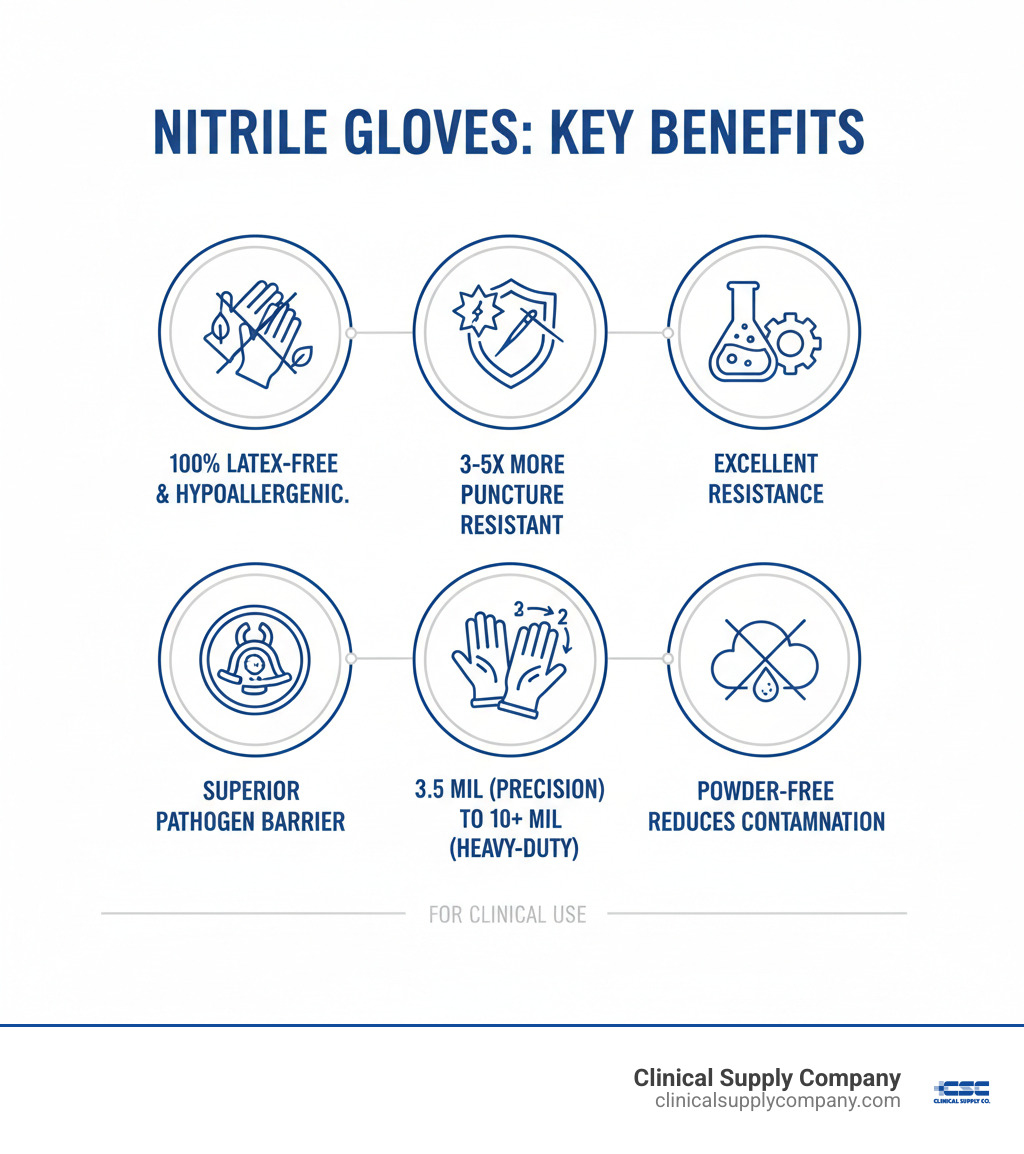
- Latex-free and hypoallergenic: Safe for individuals with latex allergies.
- Superior puncture and tear resistance: 3-5x more durable than latex or vinyl.
- Excellent chemical resistance: Protects against many chemicals, oils, and solvents.
- Improved barrier protection: Guards against bacteria, viruses, and blood-borne pathogens.
- Available in multiple thicknesses: From 3.5 mil for dexterity to 10+ mil for heavy-duty tasks.
- Powder-free options: Reduces contamination risk and respiratory concerns.
This guide will walk you through everything you need to know to choose the right nitrile exam gloves for your practice, covering material properties, thickness, specialty applications, and industry standards.
I'm Adam Schuh, President and CEO of Clinical Supply Company. My team and I have spent years working with dental professionals to source and develop nitrile exam gloves that meet the highest standards for safety and performance, navigating supply chain challenges and FDA compliance to ensure practices like yours have access to reliable, quality-tested gloves.
Why Nitrile Gloves are the Professional's Choice
Walk into any modern dental office, and you'll find nitrile exam gloves are the go-to choice for healthcare professionals. This reputation is earned through a combination of superior protection, safety, and performance that latex and vinyl cannot match.
Superior Protection and Durability
Nitrile exam gloves are made from synthetic rubber, allowing manufacturers to engineer them for specific performance characteristics. This precision-crafted material is designed to protect you and your patients.
The puncture resistance is a key advantage in dental settings where sharp instruments are common. Studies show that nitrile gloves can be 3-5 times more puncture-resistant than latex or vinyl. This is the difference between a glove that holds up during a challenging procedure and one that fails when you need it most.
Tear resistance is equally important. Nitrile gloves maintain their integrity from donning to disposal, reducing the need for glove changes and improving protection throughout your workday. Nitrile also offers excellent chemical resistance, providing a crucial barrier against a broad spectrum of chemicals, solvents, and oils used in dental practices.
Compared to other materials, the advantages are clear. Latex offers good tactile sensitivity but is more vulnerable to punctures and causes allergies. Vinyl gloves are economical but provide weak barrier protection and are not recommended for tasks involving infectious agents. Nitrile delivers strength, durability, and versatility in one reliable package. For a detailed comparison, check out our article: Why Nitrile Outperforms Latex: Allergies, Durability, Compliance.
The Gold Standard for Safety and Allergy Prevention
One of the most significant benefits of nitrile exam gloves is solving the latex allergy problem. Because nitrile is made from synthetic rubber, it contains no natural rubber latex proteins, making it completely safe for individuals with Type I latex allergies, which can cause severe, immediate reactions.
Most modern nitrile exam gloves are also powder-free. In the past, cornstarch powder was used to make gloves easier to don, but it could absorb and aerosolize latex proteins, irritating respiratory systems. Powder-free nitrile eliminates this risk, reducing skin irritation and contamination concerns.
While nitrile eliminates Type I latex allergies, a small number of people can develop a Type IV delayed hypersensitivity reaction to chemical accelerators used during manufacturing. These chemicals can cause contact dermatitis, with symptoms like redness or itching appearing 24-48 hours after exposure. The industry has responded with accelerator-free nitrile gloves, which provide protection without these chemical triggers. Learn more in our guide: Benefits of Accelerator-Free Nitrile Gloves.
Critical Role in Infection Control
Nitrile exam gloves are a front-line defense in infection control. The dense molecular structure of nitrile creates an exceptional physical shield against bacteria, viruses, and other microorganisms. Properly worn, nitrile gloves prevent direct contact between your hands and potential contaminants.
This barrier is critical for preventing cross-contamination—the transfer of harmful microorganisms between people and surfaces. In a busy workflow, high-quality nitrile exam gloves dramatically reduce this risk.
For procedures involving potential exposure to blood or bodily fluids, nitrile's combination of puncture resistance, tear resistance, and barrier properties offers crucial protection against blood-borne pathogens. Proper glove use protects everyone: patients are shielded from infections carried by staff, and healthcare workers are protected from patient-borne infectious agents. For more on this, read our article: Protecting Healthcare Workers: The Role of EZoff in Infection Control.
How to Select the Right Nitrile Exam Gloves for Your Needs
Not all nitrile exam gloves are created equal, which allows you to match the right glove to the right task, balancing protection, comfort, and cost. Here are the key considerations for choosing the best glove for your practice.
Understanding Glove Thickness (Mil) and Its Impact
Glove thickness is measured in "mil" (one-thousandth of an inch) and is a critical factor in performance.

- 3.5 mil gloves are your everyday workhorses. They are thin enough to provide excellent tactile sensitivity—that "bare-hand feel" crucial for detailed examinations and procedures where dexterity is key.
- 5.0 mil gloves offer a balance of protection and sensitivity. They provide improved puncture resistance and a stronger barrier, making them a versatile choice for most general dental situations.
- 6.7 mil and above gloves are built for serious protection. These thicker nitrile exam gloves are designed for high-risk situations like surgical procedures, handling chemotherapy drugs, or deep cleaning with aggressive chemicals. Some decontamination gloves reach 10.2 mil. While you sacrifice some dexterity, the improved protection is worth it for hazardous tasks.
Many practices stock multiple thicknesses to ensure they are prepared for any situation.
Key Features to Consider When Choosing Nitrile Exam Gloves
Beyond thickness, several design features improve a glove's performance.
- Textured fingertips provide a confident grip on wet or slippery dental instruments.
- Beaded cuffs are the rolled edge at the wrist that makes gloves easier to don, prevents them from rolling down, and adds strength to prevent tearing.
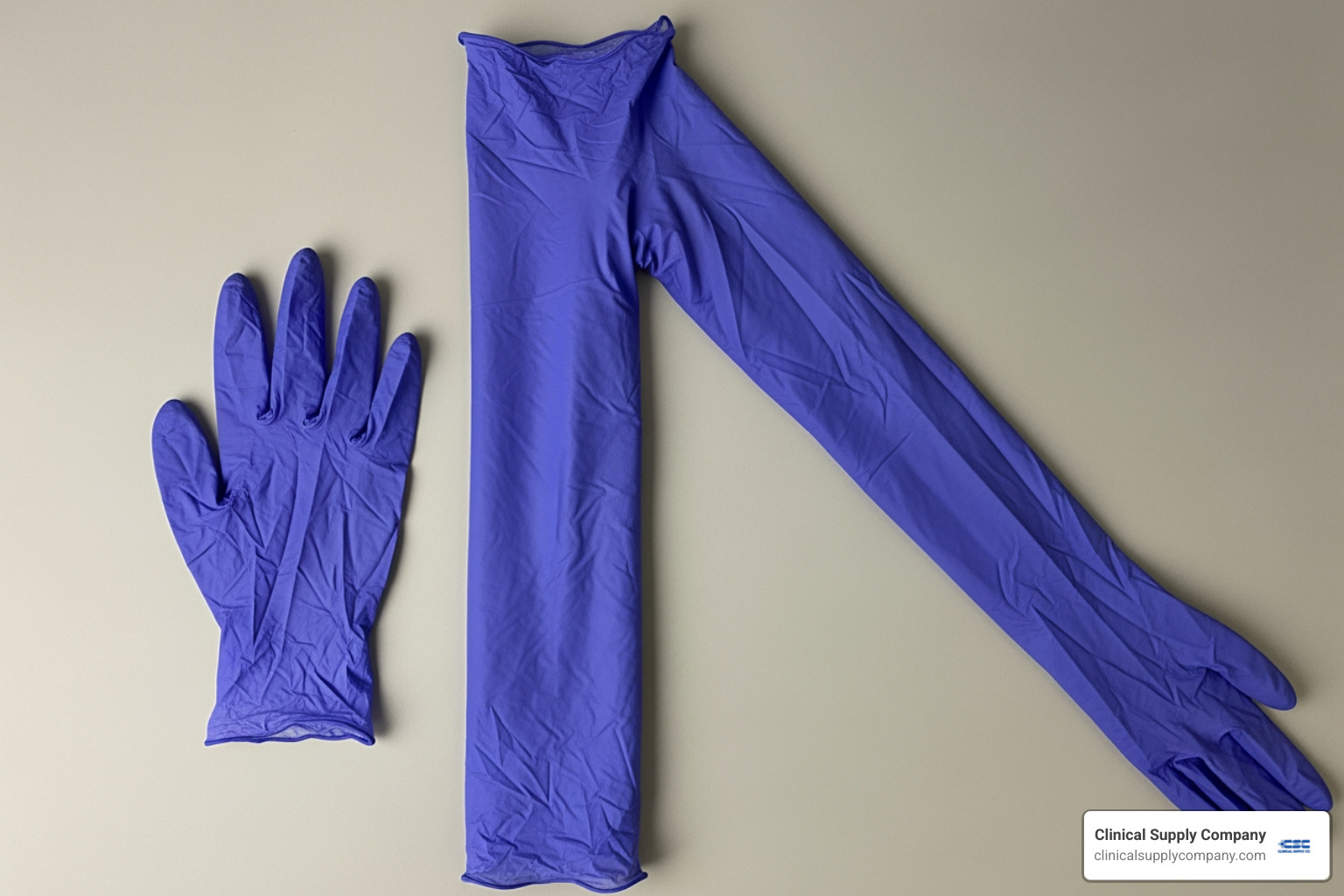
- Cuff length can be standard (just past the wrist) for most exams or extended for extra forearm protection, especially when double-gloving or dealing with splash hazards.
- Ambidextrous design means any glove fits either hand, simplifying stocking and use.
Understanding Specialized Nitrile Exam Gloves for High-Risk Tasks
Some situations demand gloves engineered and tested for extreme protection.
- Chemotherapy-rated gloves are essential for handling these potent drugs. They must meet the ASTM D6978 standard, which tests for resistance against specific chemotherapy agents. This certification is non-negotiable for staff safety.
- Decontamination gloves are thick (often 10.2 mil) and built for sterile processing, handling contaminated instruments, and working with harsh cleaning chemicals. They are tested for high puncture resistance (ASTM F1342).
- Fentanyl protection is a critical feature for first responders and EMS. Some nitrile exam gloves are specifically tested for resistance to fentanyl and other dangerous drugs.
Specialty gloves are vital in oncology, EMS, sterile processing, laboratories, veterinary clinics, and industrial settings where unique risks demand certified protection.
The Function of Color and Sizing
Color and sizing are practical features, not just cosmetic ones.
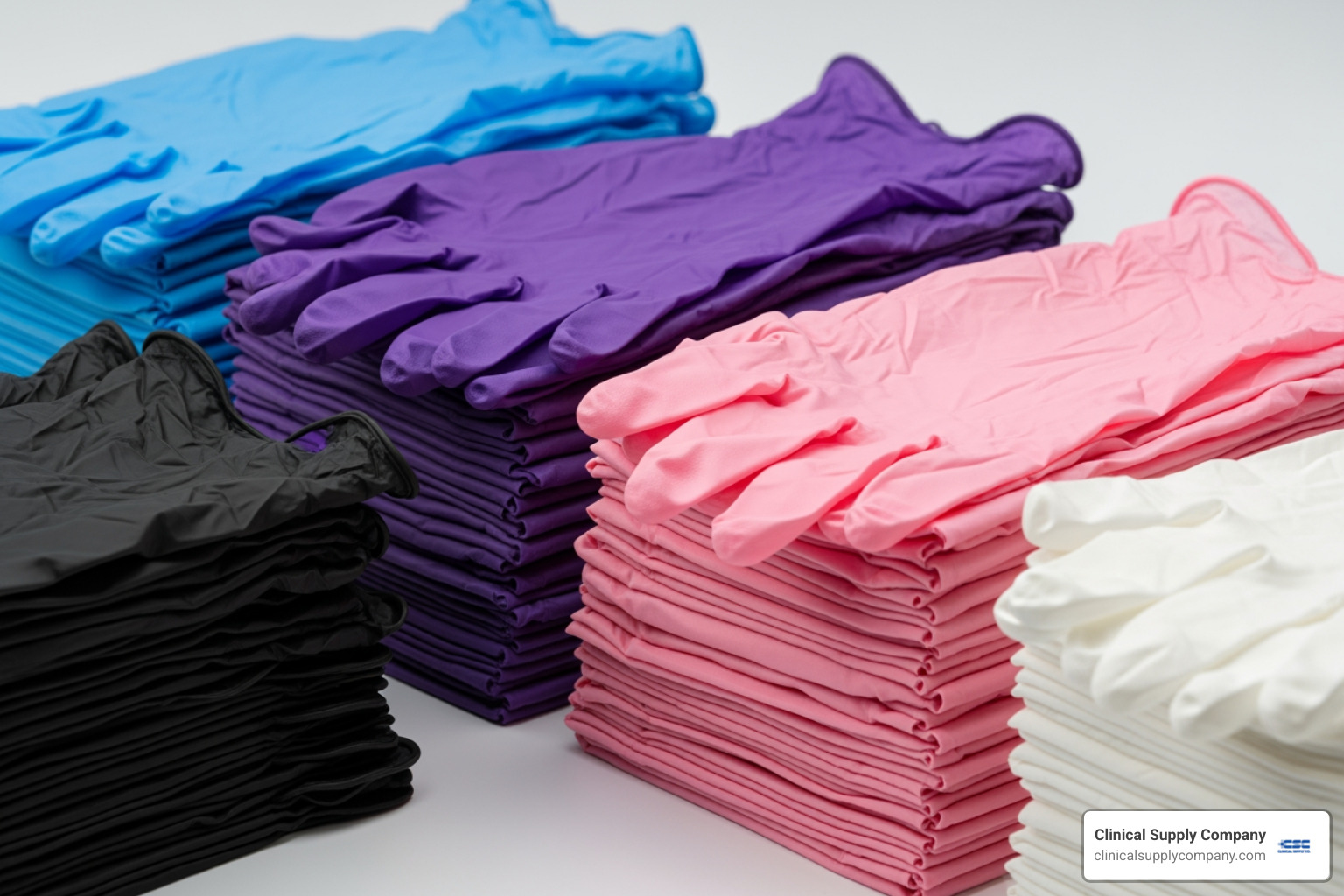
Nitrile exam gloves come in many colors (blue, black, violet, pink), which can be used for color-coding for safety. For example, you might use blue for general care and violet for chemotherapy handling to prevent cross-contamination. When double-gloving, using two different colors provides an immediate visual alert if the outer glove is punctured.
Proper glove sizing (from XS to XL+) is crucial for safety and performance. A glove that's too small can tear and cause hand fatigue, while one that's too large reduces tactile sensitivity and increases snagging risk. The right glove fits like a second skin, allowing for a full range of motion and reducing strain during long procedures.
Navigating Standards, Brands, and Practical Considerations
Understanding the technical aspects of nitrile exam gloves is crucial, but so are the practical considerations of their use, availability, and disposal. Let's explore the certifications that ensure quality and the logistics of managing your glove supply.
Key Industry Standards and Certifications
Industry standards and certifications are quality checkpoints that ensure gloves deliver the protection they promise. They are your assurance of reliability.
In the United States, nitrile exam gloves are regulated by the FDA as Class I medical devices, meaning they must meet specific safety and effectiveness requirements. For an overview, see the FDA: Medical Gloves for Health Care.
- ASTM D6319 is the standard specification for nitrile examination gloves for medical applications. It sets minimum requirements for physical properties like tensile strength, elongation, and freedom from holes.
- ASTM D6978 is the standard for gloves used when handling chemotherapy drugs. It specifically tests a glove's resistance to permeation by these hazardous agents. This certification is essential for protecting staff.
- USP <800> outlines comprehensive safety requirements for handling hazardous drugs, including the use of appropriate PPE like chemotherapy-rated nitrile exam gloves. Read more at USP <800> Hazardous Drugs—Handling in Healthcare Settings.
Other standards like ASTM F739 (chemical resistance) and ASTM F1342 (puncture resistance) apply to heavy-duty or specialty gloves.
Packaging, Storage, and Shelf Life
Properly managing your nitrile exam gloves inventory can save money and space. Most gloves come in boxes of 100 or 200, with 10 boxes per case. Higher-count boxes are a space-saver for busy practices.
Proper storage is key to maintaining glove integrity. Nitrile exam gloves should be stored in a cool, dry place, away from direct sunlight and extreme temperatures. UV light and temperature extremes can degrade the nitrile material, weakening its barrier properties and making it brittle.
Most nitrile exam gloves have a shelf life of 3 to 5 years from the date of manufacture when stored correctly. Always check the expiration date on the packaging. Using expired gloves is a safety risk, as the material may have degraded, increasing the chance of tears or punctures.
Environmental and Disposal Considerations
As single-use products, nitrile exam gloves are critical for infection control but also contribute to medical waste. This is a balance between patient safety and environmental impact.
The single-use nature of these gloves is non-negotiable. Reusing gloves can lead to cross-contamination and undermines their protective function. Once removed, they must be discarded.
Contaminated gloves are considered biohazard waste and must be disposed of in designated bins according to local, state, and federal regulations. This ensures safe handling and prevents the spread of infectious agents.
For now, the infection control benefits of single-use nitrile exam gloves are paramount, but the industry continues to seek innovations that protect both people and the planet.
Frequently Asked Questions about Nitrile Gloves
We've covered a lot of ground, but a few questions about nitrile exam gloves come up frequently. Here are the answers to the most common ones.
Are all nitrile gloves rated for handling chemotherapy drugs?
No. This is a critical distinction. Only gloves that have been specifically tested and certified to the ASTM D6978 standard are recommended for handling hazardous chemotherapy drugs. This testing protocol evaluates a glove's resistance to permeation by these potent agents. Always check the product packaging for the ASTM D6978 certification before using gloves in an oncology setting; it is non-negotiable for safety.
Can you be allergic to nitrile gloves?
While nitrile exam gloves eliminate the risk of Type I latex allergies (immediate, severe reactions), a small percentage of users may experience a Type IV delayed hypersensitivity reaction. This is not an immediate allergy but a form of contact dermatitis that appears 12 to 48 hours after exposure, causing redness, itching, or blistering. It is caused by chemical accelerators used in the manufacturing process. For those with this sensitivity, accelerator-free nitrile exam gloves are available and provide a safe, effective alternative.
How does glove thickness (mil) affect performance?
Glove thickness, measured in mils, directly impacts the balance between dexterity and protection.
-
Thinner gloves (3-4 mil range) offer superior tactile sensitivity and dexterity. They provide a "bare-hand feel" that is essential for delicate procedures requiring fine motor control. The trade-off is less puncture and chemical resistance.
-
Thicker gloves (6-8 mil range and up) are built for durability and maximum protection. They are ideal for high-risk environments involving sharps, hazardous chemicals, or decontamination tasks. While you sacrifice some tactile sensitivity, you gain a more robust barrier against hazards.
Conclusion
The gloves you choose are a critical part of protecting your team and patients. Nitrile exam gloves have become the professional's choice because they deliver superior puncture and chemical resistance, eliminate latex allergy risks, and provide a reliable barrier for healthcare settings.
We've covered the key differences in nitrile gloves, from thickness and texture to specialized certifications like ASTM D6978 for chemotherapy handling. The most important takeaway is that there is no single "best" glove—only the best glove for a specific task. A routine exam requires different protection than handling hazardous drugs or decontaminating instruments.
At Clinical Supply Company, we've built our reputation on helping dental professionals make these critical decisions. We know that reliable PPE is about confidence—knowing that the glove you choose will protect you and your patients without compromise.
To learn more about the science and safety behind these essential tools, explore our comprehensive Nitrile Glove Awareness guide. If you have questions about which nitrile exam gloves are right for your practice, we're here to help. That's what it means to be a true partner in your practice's success.