

Why Surface Wipes with Bleach Matter in Your Dental Practice
Surface wipes with bleach are the gold standard for eliminating healthcare-associated pathogens, including the notoriously difficult C. difficile spores that resist many other disinfectants. If you're comparing bleach wipe options for your dental practice, here's what you need to know:
Quick Comparison: What Makes Bleach Wipes Different
| Feature | Bleach-Based Wipes | Quat-Based Wipes | Alcohol Wipes |
|---|---|---|---|
| Active Ingredient | Sodium Hypochlorite (0.55-0.63%) | Quaternary Ammonium | Isopropyl Alcohol (70%+) |
| Kills C. diff Spores | Yes (3-4 min) | No | No |
| Bacteria Contact Time | 30 seconds | 1-10 minutes | 30 seconds |
| Virus Contact Time | 1 minute | 1-10 minutes | 30 seconds |
| Material Concerns | Can damage some metals/fabrics | Gentle on most surfaces | Dries quickly, safe for electronics |
| Best For | Terminal cleaning, outbreak control | Daily disinfection | Quick wipes, electronics |
Bleach wipes deliver sporicidal power that eliminates 50+ microorganisms in minutes, making them essential for terminal cleaning after contaminated procedures and outbreak situations. They're EPA-registered, CDC-recommended, and OSHA-compliant for healthcare settings. However, they require proper contact times (surfaces must stay visibly wet), can cause eye irritation, and shouldn't be mixed with other chemicals like ammonia or acids.
The main trade-off is efficacy versus convenience. While bleach wipes are more aggressive than quaternary ammonium or alcohol alternatives, they're also more corrosive to certain materials and require careful handling with appropriate PPE. Most dental practices need both bleach-based wipes for high-level disinfection and gentler alternatives for routine cleaning.
As President and CEO of Clinical Supply Company, I'm Adam Schuh. My years of experience sourcing and distributing medical-grade products have given me deep insight into how surface wipes with bleach perform in real-world clinical settings. I know which formulations deliver the best balance of efficacy, safety, and value for your dental practice.
The Power and Pitfalls of Surface Wipes with Bleach
In a dental practice, patient and staff safety are paramount. Surface wipes with bleach are essential because of their robust sporicidal power, effectively killing resistant bacterial spores like C. difficile. This ability to eliminate over 50 microorganisms in 3 minutes or less is critical for preventing healthcare-associated infections (HAIs) and provides true peace of mind.
However, their power requires careful handling. The strong chemical nature of bleach can be corrosive to some metals and fabrics if used improperly. This requires understanding proper application and material compatibility.
Odor is another concern, as traditional bleach is pungent. Fortunately, many modern bleach wipes are formulated with an odor-masking scent. This allows for powerful terminal cleaning—the thorough disinfection of a room after patient use—without an overwhelming smell.
For us at Clinical Supply Company, we understand that reducing infection risks with cleaning wipes is a top priority for dental practices. That's why we champion solutions that offer both superior efficacy and practical application.
Efficacy Showdown: Bleach vs. Other Disinfectants
Disinfectants aren't created equal. Let's compare surface wipes with bleach against their common counterparts: quaternary ammonium (quat) and alcohol wipes.
As our comparison table showed, bleach-based wipes are champions at killing tough pathogens like C. difficile spores. Their active ingredient, Sodium Hypochlorite, breaks down these resilient spores, a sporicidal capability other wipes lack. This makes them indispensable for high-risk areas.
Quaternary ammonium (quat) wipes are great for daily, routine disinfection. They are broad-spectrum and gentler on surfaces but lack the sporicidal power of bleach.
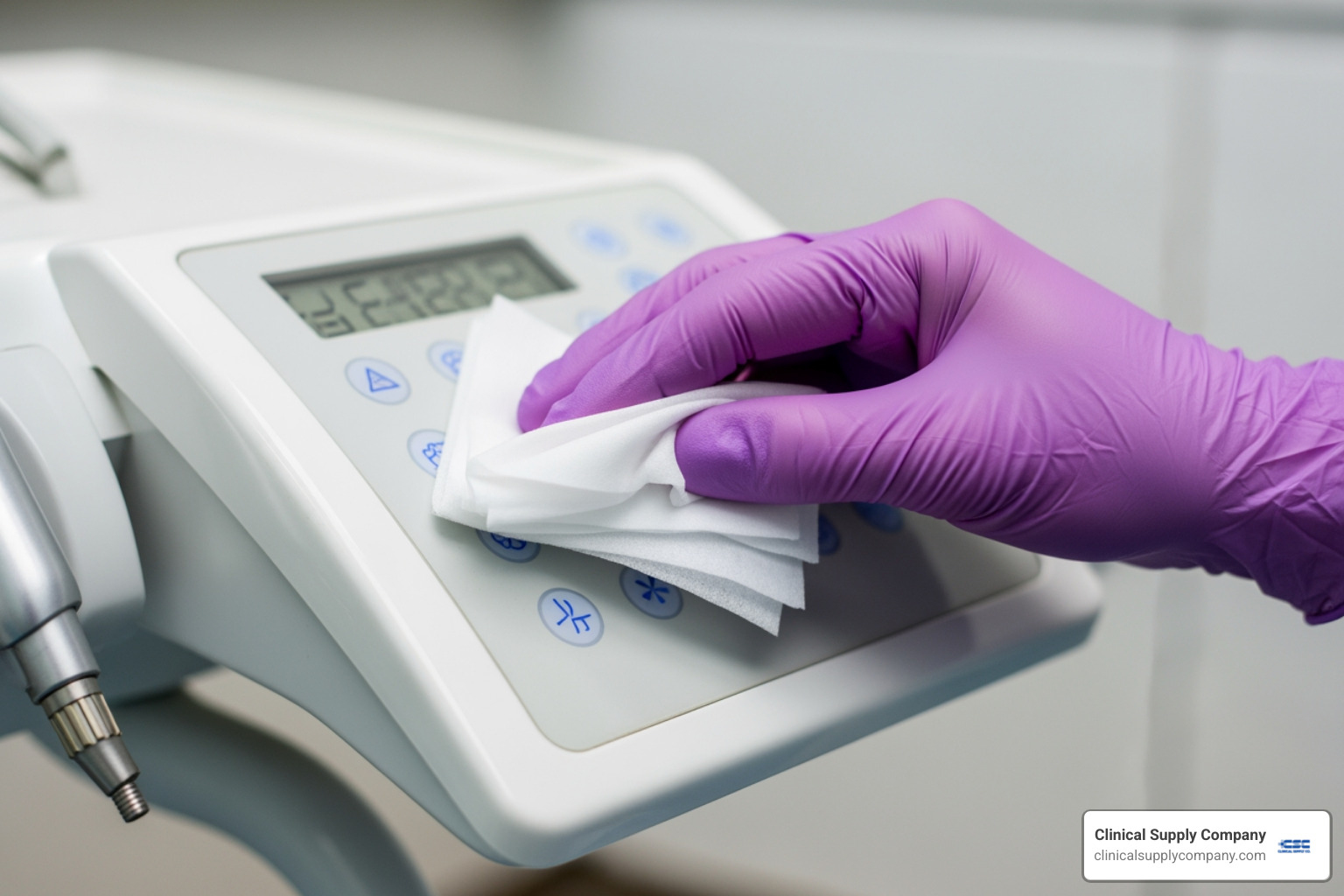
Alcohol wipes (70%+ isopropyl alcohol) are fast-acting and ideal for electronics, but they also lack sporicidal power. Their rapid evaporation can make it difficult to achieve the required wet contact time for full disinfection.
The safety profiles also differ. Quat and alcohol wipes are less irritating, but bleach wipes require more stringent PPE due to potential eye irritation. The trade-off is clear: use bleach for unparalleled sporicidal power and other wipes for routine, less critical disinfection.
At Clinical Supply Company, we believe in helping you make informed decisions when choosing the best disinfectant cleaners for your practice. It's not about one-size-fits-all, but about having the right tool for the right job, and understanding the strengths and limitations of each.
Understanding Active Ingredients and Contact Times
A wipe's effectiveness depends on its active ingredient and contact time. For surface wipes with bleach, the active ingredient is Sodium Hypochlorite, typically in a 0.55% to 0.63% concentration (a 1:10 bleach dilution). This concentration is calibrated for maximum germicidal efficacy while ensuring safety when used correctly.
These formulations are EPA-registered, meaning they've been rigorously tested and approved for their claims against specific pathogens. The EPA registration is your assurance that the product performs as advertised.
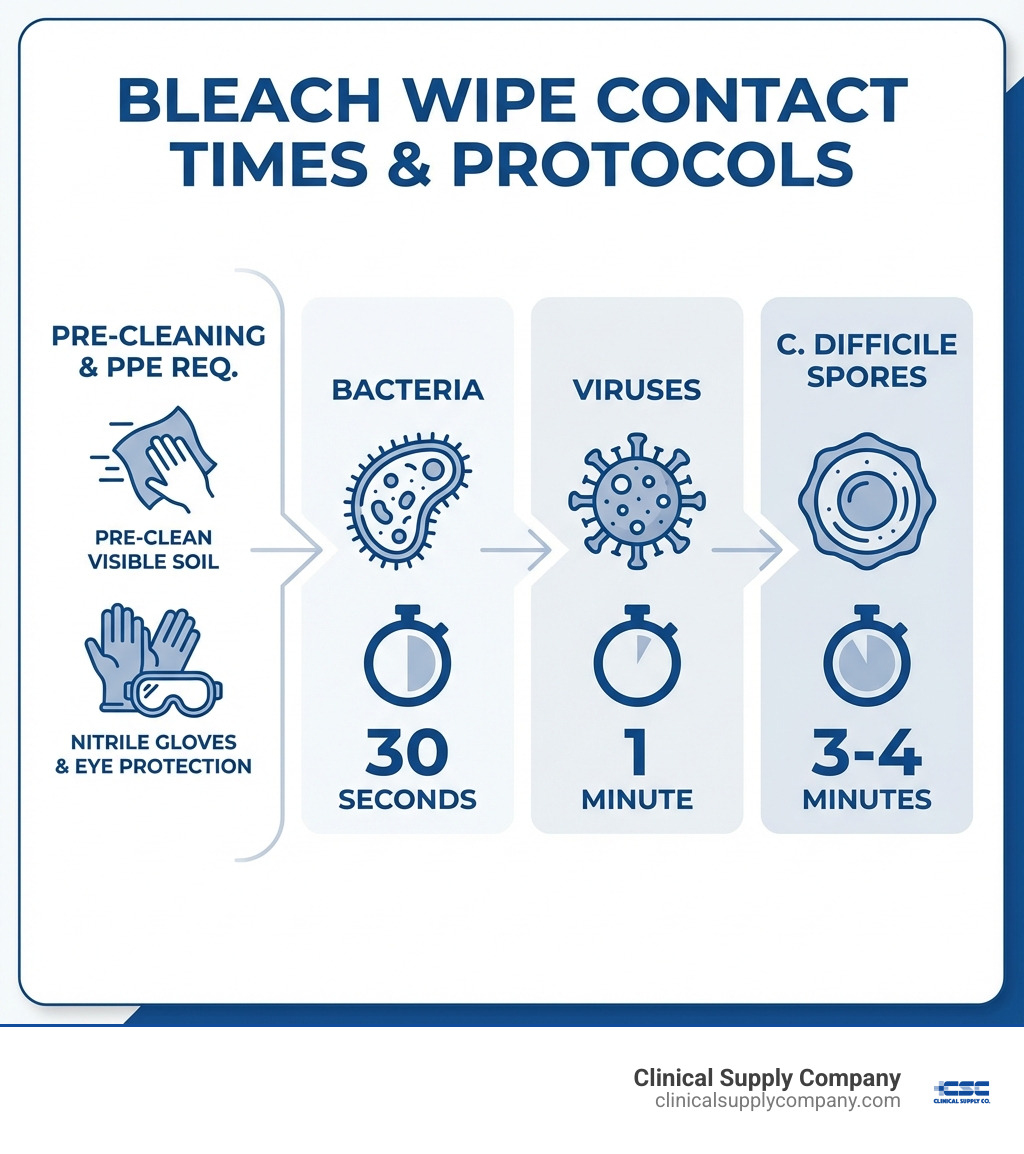
So, how long does it take for these powerhouses to get the job done? The contact time—the duration a surface must remain visibly wet with the disinfectant—is crucial for effective pathogen elimination. Here's what the research tells us for many leading bleach-based wipes:
- Bacteria: A swift 30 seconds is often all it takes for disinfection.
- Viruses: Most viruses can be inactivated in just 1 minute.
- C. difficile spores: The toughest adversary, C. difficile, requires a contact time of 3 minutes or, for some products, up to 4 minutes. This longer contact time is vital for breaking down those resilient spores.
"Visibly wet" is the key. If the wipe dries before the contact time is met, the disinfection process is incomplete. This is why using enough wipes to thoroughly cover the surface and ensuring it stays moist for the entire duration is paramount. For specifics, always refer to the manufacturer's technical data.
Proper Protocol for Using Surface Wipes with Bleach
To ensure maximum efficacy and safety when using surface wipes with bleach, following a proper protocol is essential.
First, pre-cleaning is vital, especially with visible soil or C. difficile. Gross soils like blood or other contaminants must be removed before disinfection, as organic matter can neutralize the disinfectant. Use a cleaning wipe to clear the mess first.
Next, disinfect. Wipe the surface until it is completely wet, ensuring full coverage. The surface must remain visibly wet for the entire recommended contact time (e.g., 30 seconds for bacteria, 1 minute for viruses, 3-4 minutes for C. difficile). Re-wet the surface if it dries prematurely. This wet contact time is non-negotiable.
After the contact time, a post-disinfection residue removal step is recommended to prevent buildup. Simply wipe the surface with a clean, damp cloth to maintain surface integrity.
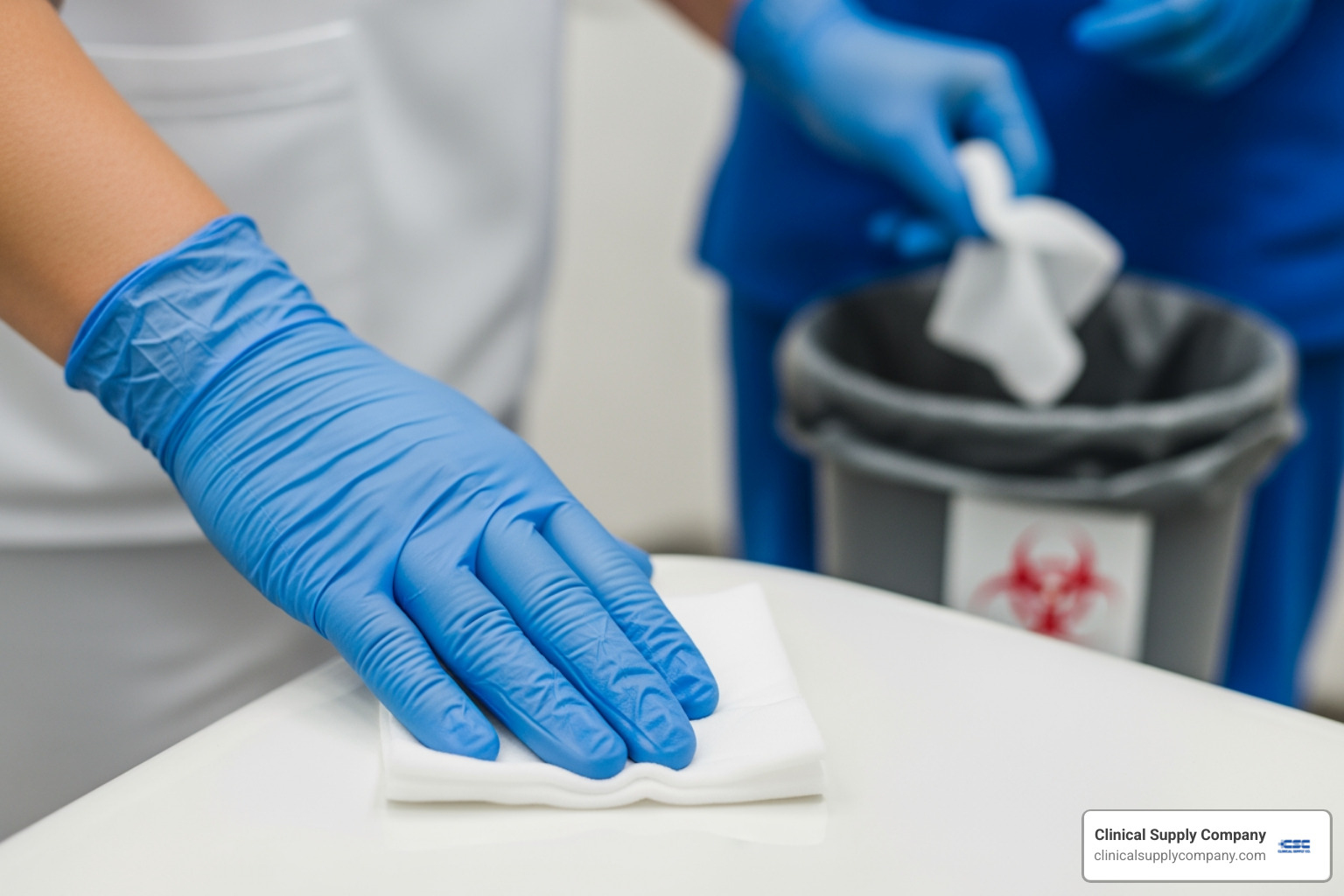
Finally, let's talk disposal guidelines. Used wipes should be disposed of properly according to local regulations for infectious waste. Never flush them down the toilet. Our essential do's and don'ts guide for surface wipes provides further details on best practices for your clinical setting.
Safety First: PPE and Chemical Hazard Awareness
Safety is the top priority when using professional-grade surface wipes with bleach.
The first line of defense is Personal Protective Equipment (PPE). Always wear impervious gloves, like our high-quality Nitrile or Polychloroprene gloves. For tasks with visible contamination or prolonged use, add eye protection, as bleach wipes can cause moderate eye irritation.
A critical warning on chemical interactions: Never mix bleach-based products with other chemicals, especially ammonia or acids. This can release hazardous gases. Always use bleach wipes as directed and ensure proper ventilation. As our article on protecting your practice highlights, proper PPE and disinfectant strategies are essential to safeguard your team and patients.
We know it might seem like a lot to remember, but a few simple precautions go a long way in using the power of bleach wipes safely and effectively. At Clinical Supply Company, we provide a comprehensive range of PPE, including various types of gloves and face masks, to ensure your team is always protected.
Choosing the Right Bleach Wipe for Your Dental Practice
Choosing the right surface wipes with bleach isn't one-size-fits-all. Consider your facility's specific needs, from disinfecting high-touch surfaces to terminal cleaning after complex procedures.
Wipes come in various sizes and packaging, from large canisters for busy operatories to individual packets for portability and spot disinfection.
Cost-effectiveness and supply chain stability are also crucial. While competitors like Henry Schein or Benco Dental offer similar products, Clinical Supply Company's unique advantage is our ability to lock in prices. This provides budget predictability they can't match. We are your reliable partner for high-quality supplies at a price you can trust.
Superior Disinfection with Clinical Supply Company's Bleach Wipes
While many brands of surface wipes with bleach are available, Clinical Supply Company provides a curated selection of superior products chosen for their proven performance in demanding healthcare settings. Our bleach wipes deliver robust germicidal efficacy, ensuring your practice meets the highest standards of infection control.
The surface wipes with bleach we supply are formulated to kill 50+ microorganisms, including resilient C. difficile spores, in 3 minutes or less. They are compliant with OSHA standards and are found on the EPA's List N, confirming their effectiveness against SARS-CoV-2, the virus that causes COVID-19. We offer various sizes and packaging formats to optimize usage, reduce waste, and fit seamlessly into your workflow.
At Clinical Supply Company, we don't just sell products; we provide superior value and partnership. Our price-locking commitment offers budget stability that other suppliers can't match, ensuring your practice in Ohio and the Midwest has a reliable supply of the highest quality surface wipes with bleach at a predictable cost. We help you optimize your infection control strategy with products that deliver unparalleled efficacy and value.
A Holistic Approach to Infection Control
At Clinical Supply Company, we know effective infection control is more than just surface wipes with bleach. It's a complete system of hygiene and safety. As a Midwest-based (Ohio) national dental supply company, we are your one-stop shop for all your infection control needs.
Our commitment to a healthy practice and a happy patient drives us to provide a comprehensive selection of high-quality dental office supplies. This includes not only top-tier cleaning solutions and surface wipes but also a full range of essential items:
- Gloves: From Polychloroprene and Accelerator Free Nitrile to standard Nitrile, we offer the protective barriers your hands need.
- Patient Consumables: Prophy Angles/Paste, Ejectors/Syringe Tips, Patient Towels, Cups/Mixing Accessories, Cotton Products, Needles, and Tray Covers—all designed for single-use safety and patient comfort.
- Sterilization Products: Beyond wipes, we provide everything necessary for instrument reprocessing and maintaining a sterile environment.
- Protection: Face Masks, Isolation Gowns, and Barriers complete our offering, ensuring comprehensive safety for both practitioners and patients.
We're more than a supplier; we're your partner in maintaining the highest standards of dental infection control. Our exceptional service helps you choose products, understand protocols, and optimize your supply chain. We invite you to explore our top dental disinfectant wipes to keep your practice pristine and find how Clinical Supply Company can support your commitment to a sparkling clean and safe environment.
Posted by Adam Schuh Last Updated February 2026 President, Clinical Supply Company