

Why Dental Assistant Gloves Are Your First Line of Defense
Dental assistant gloves are the most critical piece of personal protective equipment (PPE) in any dental practice, protecting both staff and patients from pathogens and cross-contamination.
Quick Answer: Understanding Dental Assistant Glove Usage
- Primary Types: Nitrile (most popular), latex, vinyl, and chloroprene.
- Key Function: Barrier protection against blood, saliva, and other potentially infectious materials (OPIM).
- Why Nitrile?: Superior puncture resistance and eliminates latex allergy risks.
- Regulation: FDA-regulated Class I medical devices.
- Critical Practice: Must be changed between patients and whenever compromised.
- Standard: All medical gloves must be powder-free per a 2016 FDA ban.
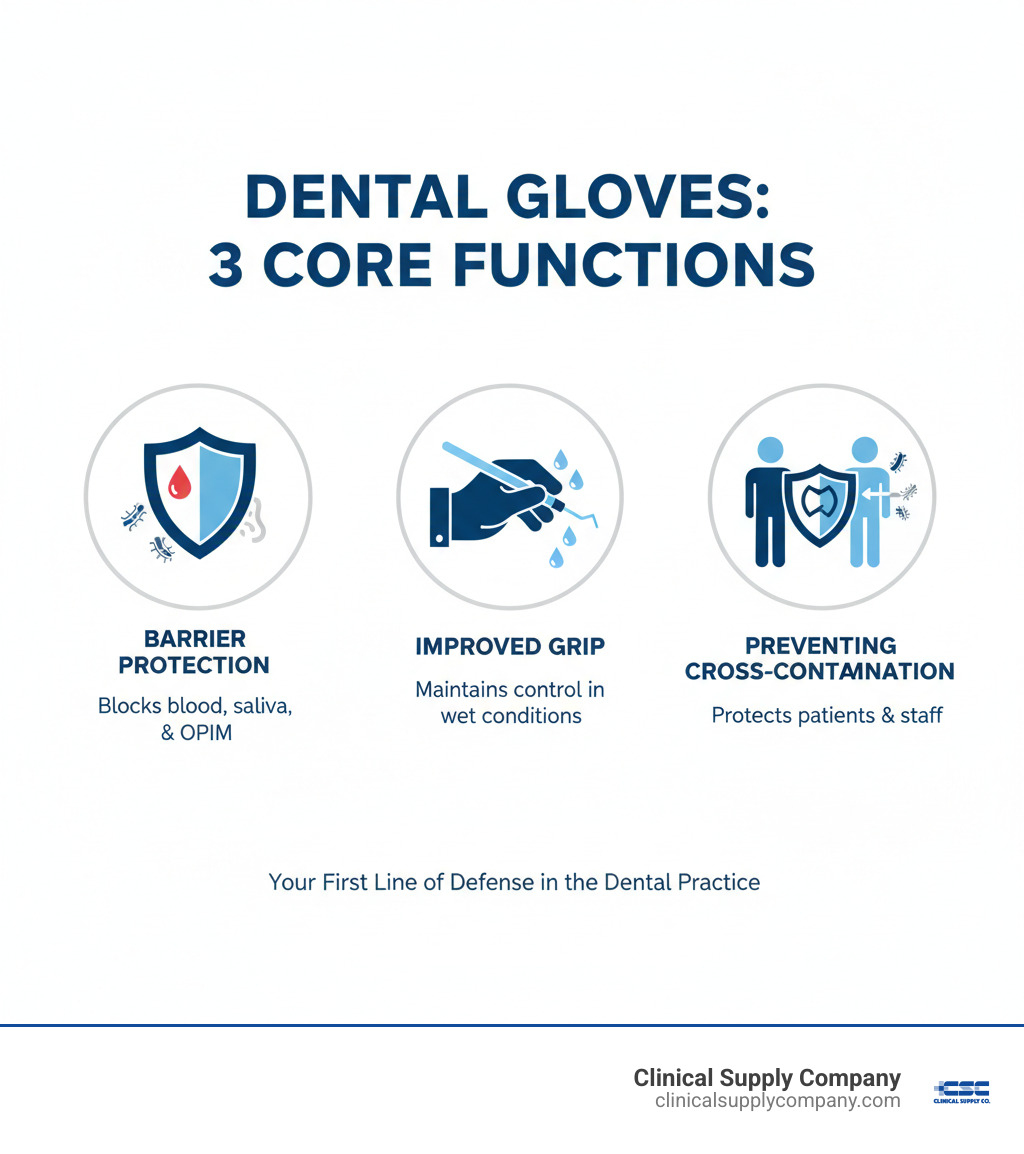
Gloves serve three essential functions: creating a barrier against infectious materials, providing improved grip on instruments, and preventing cross-contamination between patients and your team.
However, not all gloves perform equally. Material, thickness, and fit directly impact safety, comfort, and precision. The wrong glove can fail, cause allergic reactions, or reduce tactile sensitivity. The industry has largely shifted from latex to nitrile due to its durability and the rising incidence of latex allergies, making latex-free options essential.
Understanding glove selection is about protecting your team and patients while maintaining dexterity. This guide covers material differences, infection control, and regulatory requirements.
I'm Adam Schuh, President and CEO of Clinical Supply Company. My team and I work directly with dental professionals to ensure every dental assistant glove meets rigorous safety standards. We developed EZDoff® accelerator-free nitrile gloves to address the contamination risks and skin sensitivities that dental assistants face daily.
Understanding Your Options: Glove Materials Explained
When choosing dental assistant gloves, the material affects protection, comfort, and durability. The right material can mean better grip, less hand fatigue, and confidence in your barrier protection. For a comprehensive look at how different materials compare, check out our guide on Nitrile Gloves vs. Other Gloves: Key Differences.
What are the primary types of gloves used by dental assistants?
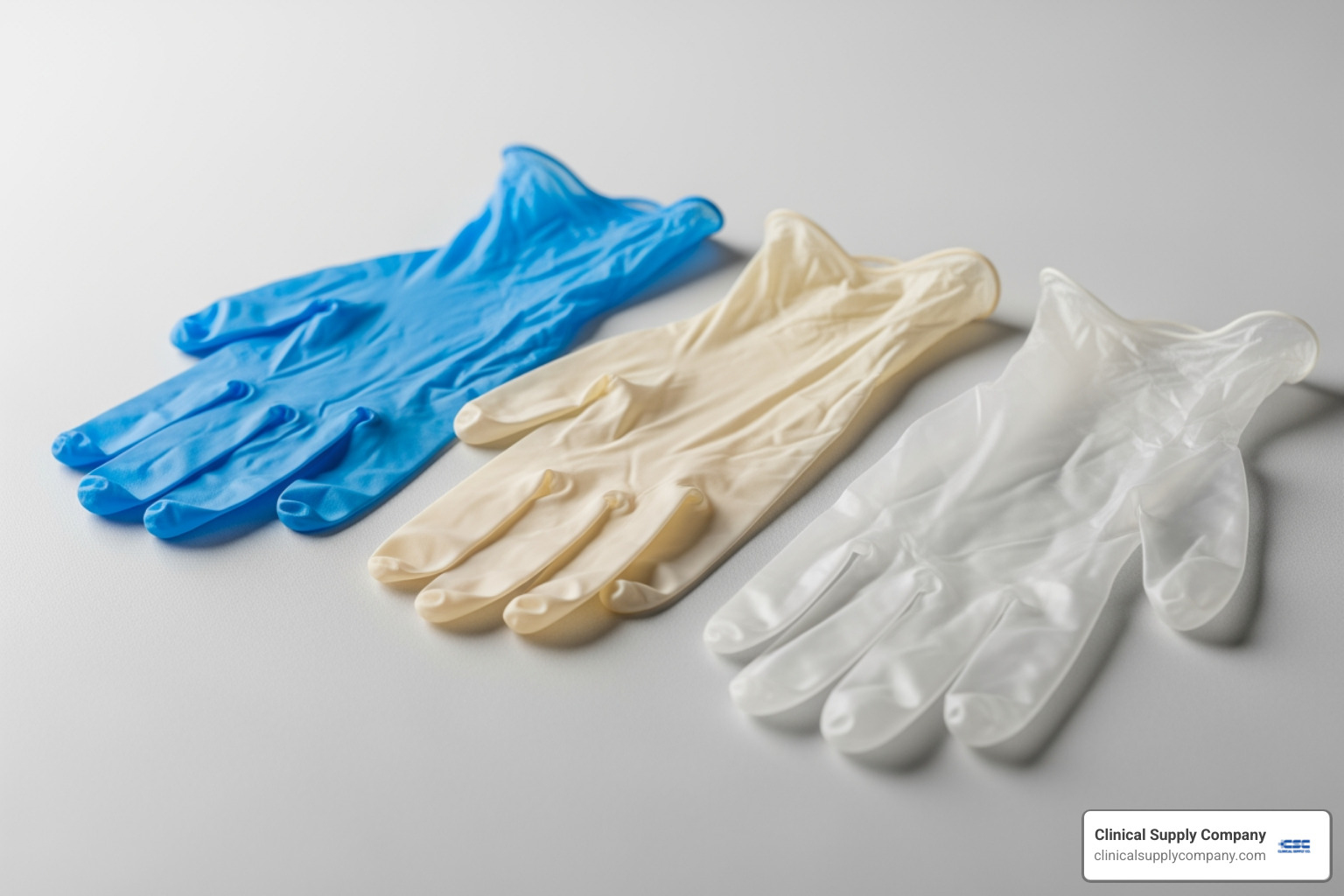
Most dental practices use three main materials: nitrile, latex, and vinyl.
These materials are available as:
- Examination gloves: Non-sterile, single-use gloves for routine procedures, exams, and cleanings. They are the everyday workhorse for preventing cross-contamination.
- Surgical gloves: Sterile gloves for invasive procedures like oral surgery, where a sterile field is essential. They meet stricter quality and performance standards.
The choice between exam and surgical gloves depends on the procedure, but the material choice is where benefits differ.
What are the key differences between nitrile, latex, and vinyl gloves?
Here's how these materials compare for chairside work:
| Feature | Nitrile Gloves | Latex Gloves | Vinyl Gloves |
|---|---|---|---|
| Durability | Excellent—resists punctures and tears even during demanding procedures | Good, but can tear when stretched too thin | Lower—higher failure rates and more prone to tearing |
| Puncture Resistance | Superior protection when handling sharp instruments | Good, but compromises when overstretched | Poor—not recommended for working with sharps |
| Allergy Risk | Latex-free, dramatically reduces allergic reactions | High risk for sensitized individuals | Latex-free with low allergy risk |
| Tactile Sensitivity | Good to excellent, especially in thinner formulations | Excellent—offers the most natural feel and highest sensitivity | Lower—can feel bulky and less responsive |
| Chemical Resistance | Excellent against most dental chemicals and solvents | Limited—can degrade with certain chemicals | Poor—best for non-hazardous materials only |
| Cost | Moderate to higher, but worth the investment | Moderate, with price fluctuations based on rubber markets | Most economical for short-term, low-risk tasks |
Nitrile gloves offer exceptional strength and chemical resistance. Latex gloves provide excellent flexibility and a second-skin feel, but latex allergies are a growing concern. Vinyl gloves are a budget-friendly option for quick, low-risk, non-clinical tasks but sacrifice durability and protection.
Why are nitrile gloves often the preferred choice for dental assistants?
Most modern practices choose nitrile gloves for several key reasons:
- Superior Protection: Nitrile rubber maintains its integrity under stress, with fewer mid-procedure changes. Its puncture resistance is significantly better than latex or vinyl, which is critical when working with scalers and explorers.
- Chemical Resistance: Nitrile stands up to disinfectants, bonding agents, and other chemicals that can degrade other gloves.
- Latex-Free: With latex sensitivities on the rise since the 1980s, switching to nitrile protects both staff and patients from allergic reactions.
- Comfort and Dexterity: Modern nitrile formulations offer excellent tactile sensitivity and conform to the hand, minimizing fatigue. Our EZDoff® line was specifically designed for comfort during long procedures.
Nitrile's combination of superior protection and allergy-friendliness makes it the smart choice for most dental professionals. Learn more in our detailed analysis: Why Nitrile Outperforms Latex: Allergies, Durability, and Compliance.
The Perfect Fit: How to Choose the Right Dental Assistant Gloves
Finding the perfect dental assistant gloves affects your comfort, performance, and safety. When wearing gloves for hours, details like fit and material matter. The right glove can transform your workday, while the wrong one can cause fatigue and risk. Quality standards are the difference between gloves that protect you and gloves that fail. For a comprehensive look, see our guide on Choosing the Right High-Quality Glove for You.
What factors should I consider when choosing dental assistant gloves?
Choosing a glove is like finding the right tool for the job. Key factors separate a great glove from a mediocre one.
- Fit: A properly fitting glove is snug but not tight, covering the wrist and gown cuff to create a continuous barrier. A poor fit compromises grip and comfort.
- Feel: This is about tactile sensitivity. For precise work, you need gloves that feel like a second skin. High-quality exam gloves are engineered for a custom fit and superior comfort, which can minimize hand-muscle fatigue.
- Performance: Does the glove offer adequate barrier protection? Does it resist punctures and chemicals? Nitrile is a strong choice, as it won't easily rip or tear.
- Price: The cheapest glove isn't always the most economical if it tears easily and requires frequent changes. Aim for the best quality at a fair price, which is why wholesale options from trusted suppliers like Clinical Supply Company make sense.
- Skin Sensitivity: For sensitive skin, look for low-dermatitis, accelerator-free formulations. Some gloves include skin-moisturizing coatings to protect hands during long shifts.
- Damp Hand Donning: Some gloves are designed to slide on easily even when hands are damp, saving time and frustration between patients.
- Task Requirements: Match the glove to the task. Routine exams require high tactile sensitivity, while oral surgery demands maximum puncture protection. Heavy-duty utility gloves are needed for instrument cleaning.

How does glove thickness (mil) affect performance for dental assistant tasks?
Glove thickness, measured in "mil" (one-thousandth of an inch), is a balance between sensitivity and protection.
Thinner gloves (2-5 mil) are ideal for procedures requiring a delicate touch, like placing a composite restoration. They maximize tactile sensitivity, similar to surgical gloves. While they may offer slightly less puncture resistance, quality thin gloves provide adequate protection for most dental procedures.
Thicker gloves (5+ mil) offer greater durability and puncture protection. They provide peace of mind when assisting with oral surgery or handling harsh chemicals. While you sacrifice some tactile feedback, the increased protection is worth it for high-risk tasks.
The key is to match the mil rating to the procedure. It's not one-size-fits-all—it's about using the right glove for the right task.
How can I ensure I'm selecting high-quality, reliable gloves?
Quality is paramount for dental assistant gloves. Here's how to ensure you're getting gloves you can trust:
- Check for FDA Regulation: Medical gloves are FDA-regulated as Class I medical devices and must meet specific criteria for leak resistance and biocompatibility.
- Choose Medical Grade: This label indicates the gloves have passed rigorous testing for barrier integrity and are suitable for clinical use.
- Look for ASTM Standards: The American Society for Testing and Materials (ASTM) provides objective benchmarks for quality and performance.
- Partner with Reputable Suppliers: A good supplier stakes their reputation on their products. At Clinical Supply Company, we source from trusted manufacturers and can provide documentation of quality and compliance.
- Perform a Visual Inspection: Before donning any glove, quickly check for visible tears, holes, or defects. This is your last line of defense.
Choosing high-quality gloves is an investment in your practice's safety and efficiency.
Safety First: Infection Control and Regulations for Dental Gloves
Infection control is the foundation of dental care, and dental assistant gloves are at its heart. Proper glove use, combined with thorough hand hygiene, creates a defense system that keeps everyone safe. The guidance from the CDC and OSHA isn't arbitrary; these standards exist because they work. Our commitment to these standards is reflected in resources like The Invisible Shield: How Advanced Gloves Are Redefining Hygiene in Dentistry.

What is the role of gloves in preventing disease transmission in a dental setting?
Gloves create an essential physical barrier that stops pathogens found in blood, saliva, and other potentially infectious materials (OPIM). If microorganisms can't reach your skin, they can't infect you or travel to the next patient. Research confirms that dental gloves protect hands from bacteria and prevent clinicians from becoming vectors of transmission.
This protection is critical because any small cut, hangnail, or crack in the skin is a direct pathway for pathogens. Gloves seal these vulnerabilities and also help maintain a steady grip on instruments, preventing slips that could cause injury or exposure. Studies show that dental professionals wearing gloves significantly decrease the chances of transferring bacteria. It's one of the simplest, most effective infection control measures available.
Why is proper glove donning and doffing so important?
The best gloves are useless if removed incorrectly. The outer surface of a used glove is contaminated. If that surface touches your bare skin during removal, you've defeated the purpose of wearing it. Proper doffing technique prevents hand contamination and the spread of pathogens to other surfaces.
Hand hygiene after glove removal is equally critical. Gloves can develop microscopic tears, and contamination can occur during removal. Washing hands or using an alcohol-based hand rub after every glove change eliminates any breakthrough contamination.
Here is the proper sequence for safe glove removal:
- Grasp the outside of one glove near the wrist.
- Peel it downward, away from your wrist, turning the glove inside out.
- Hold the removed glove in your still-gloved hand.
- Slide the fingers of your bare hand inside the wrist of the remaining glove.
- Peel the second glove off from the inside, creating a bundle with both gloves inside out.
- Dispose of the gloves immediately in the proper waste receptacle.
- Perform hand hygiene right away.
Innovations in glove design can make this process even safer. Our team developed features that reduce contamination risks during removal, which we detail in Revolutionary Glove Removal System Tackles Cross-Contamination in Healthcare.
What do the CDC, OSHA, and FDA say about dental assistant gloves?
Federal regulations for dental assistant gloves are mandatory requirements that save lives.
- FDA: The FDA regulates medical gloves as Class I devices, reviewing them for leak resistance, physical properties, and biocompatibility. In 2016, the FDA published a final rule banning powdered gloves due to risks of illness and injury from the cornstarch powder.
- CDC: The CDC's infection control guidelines state that task-specific gloves must be worn when anticipating contact with blood, mucous membranes, nonintact skin, and OPIM. The CDC also states that gloves should never be washed for reuse, as this compromises their integrity.
- OSHA: The Bloodborne Pathogens Standard (29 CFR 1910.1030) makes glove use a legal requirement whenever employees may have hand contact with blood or other potentially infectious materials.
These regulations create a comprehensive safety framework. At Clinical Supply Company, we ensure every glove we provide meets or exceeds these standards to protect the people who trust us with their safety.
Specialized Needs: Allergies, Procedures, and Advanced Protection
Modern dental practices face challenges beyond basic barrier protection, from managing latex sensitivities to handling aggressive chemicals. The dental assistant gloves we choose must meet these specialized demands. At Clinical Supply Company, we provide solutions for these nuanced needs. For a comprehensive overview, explore our guide on Essential Supplies for a Hygienic Dental Office.
What are the risks of latex allergies and what are the best alternatives?
Latex allergies are a significant occupational health concern. They come in two forms:
- Type I Hypersensitivity: An immediate and potentially dangerous reaction to natural rubber proteins. Symptoms range from hives and itching to severe asthma or life-threatening anaphylaxis.
- Type IV Chemical Allergy: A delayed reaction (contact dermatitis) caused by chemical accelerators used in manufacturing. Symptoms like redness, itching, and blistering appear 24-48 hours after exposure.
Given these risks, latex-free alternatives are essential. Nitrile gloves are the leading alternative, offering excellent barrier protection, puncture resistance, and chemical resistance without the allergy risk. Our EZDoff® accelerator-free nitrile gloves go a step further by eliminating the chemical accelerators that cause Type IV allergies. To learn more, read about how to Prevent Allergic Reactions: Accelerator-Free Exam Gloves.
Why are powder-free gloves the standard in dentistry?
Powder-free gloves are not just preferred—they are mandatory. In 2016, the FDA banned powdered gloves due to serious health hazards. Our position is clear: Latex or Nitrile Gloves: Powder is Out.
The cornstarch powder once used to make gloves easier to don could become airborne, carrying latex proteins that trigger severe allergic reactions when inhaled. The powder itself could also cause airway inflammation. During surgery, powder could enter tissues and cause granulomas or adhesions. By using only powder-free gloves, these unnecessary risks are eliminated.
Are different gloves needed for specific dental procedures or handling chemicals?
Yes, matching the glove to the task is crucial for optimal protection and performance.
- Patient Examination Gloves: These non-sterile, disposable gloves are the workhorse for exams, cleanings, and non-surgical procedures. Nitrile is the preferred choice for its balance of sensitivity, durability, and safety.
- Sterile Surgeon's Gloves: Mandatory for invasive procedures like extractions and implant placements. They are sterilized and meet stricter quality standards to prevent surgical site contamination.
- Heavy-Duty Utility Gloves: Used for instrument reprocessing. These puncture-resistant gloves protect against sharps and harsh disinfectants during cleaning.
- Chemical-Resistant Gloves: For handling aggressive chemicals like certain adhesives or disinfectants, thicker nitrile or specific polymer blends may be required. Always consult the Safety Data Sheet (SDS) for any chemical to determine the appropriate glove material.
Matching the right glove to each task is how we maintain the highest standards of safety and efficiency.
Conclusion
Choosing the right dental assistant gloves is a critical decision that impacts your practice's safety, efficiency, and comfort. We've seen why nitrile is the go-to choice, offering a superior balance of protection, durability, and allergy-free performance. By selecting the proper glove and using it correctly, you create a robust defense against cross-contamination while ensuring compliance with FDA and OSHA standards.
The right glove fits so well and performs so reliably that you forget you're wearing it. The wrong one causes fatigue, fails at critical moments, or triggers skin reactions.
At Clinical Supply Company, we understand these nuances. As a Midwest-based company serving dental professionals nationwide, we listen to practitioners to learn what works in real-world settings. That's why we developed our EZDoff® accelerator-free nitrile gloves—to solve the specific challenges of contamination and skin sensitivity that dental assistants face daily.
We know that quality supplies are about more than inventory; they're about having the right tools to provide excellent care while protecting your team. We're here to help you make informed decisions, whether you're stocking up on wholesale quantities or exploring specialized options.
Ready to upgrade your glove selection? Our team has put together comprehensive resources to guide you. Check out Stock Up Smart: The Ultimate Resource for Wholesale Nitrile and Dental Gloves for bulk ordering insights, or explore our full range of accelerator-free nitrile gloves to find the perfect fit for your practice.
Your commitment to safety deserves supplies that match that dedication. We're proud to be your partner in creating a safer, more efficient dental practice—one glove at a time.