

The Smart Case for Stocking Up
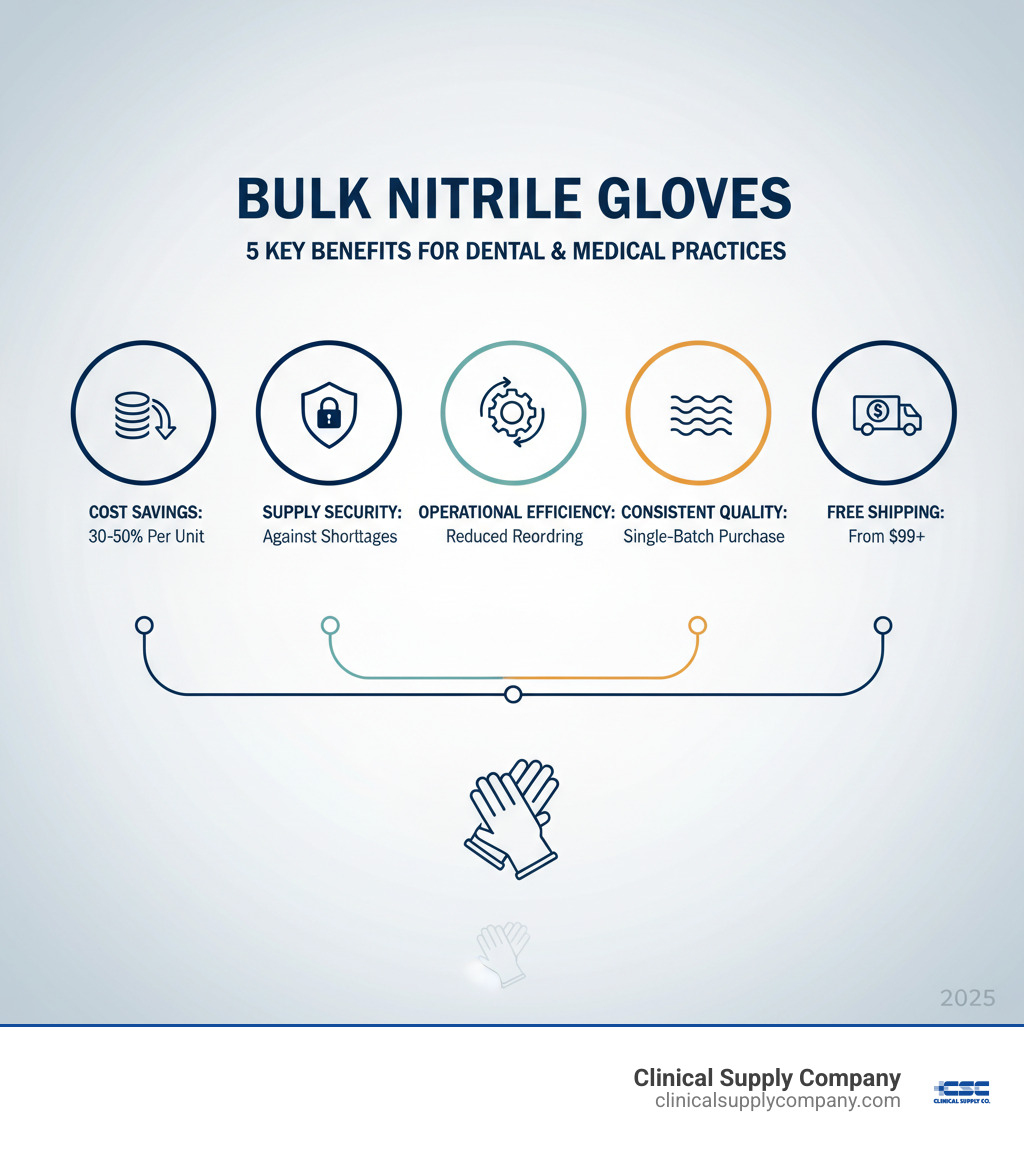
For any dental or medical practice, buying bulk nitrile gloves is a smart strategy. It offers a cost-effective way to ensure consistent hand protection, reducing per-unit costs by 30-50% compared to smaller orders. Here's what you need to know:
Quick Answer: Why Buy Bulk Nitrile Gloves?
- Cost Savings: Cases of 1,000 gloves typically cost $50-$136, versus $4-$24 per 100-count box
- Supply Security: Avoid shortages during demand spikes or supply chain disruptions
- Operational Efficiency: Reduce reordering frequency and administrative time
- Consistent Quality: Single-batch purchasing ensures uniform product performance
- Free Shipping: Most suppliers offer free delivery on orders over $99
Buying gloves in bulk means you're always stocked, paying less per glove, and not scrambling when suppliers run low. Research shows that practices that stock up strategically save money, reduce operational headaches, and maintain better infection control. Nitrile gloves dominate the market because they're stronger than vinyl, safer than latex (no allergy risks), and offer superior puncture and chemical resistance.
However, not all bulk purchases are equal. Thickness, color, and certifications matter. Choosing the wrong supplier can compromise patient safety and staff comfort.
I'm Adam Schuh, President and CEO of Clinical Supply Company, where I've spent years helping dental professionals steer bulk nitrile gloves procurement through market volatility. My focus is on delivering FDA-compliant, cost-stable products that meet the demands of busy practices.
This guide covers why nitrile excels, how to decode its features, what certifications matter, and how to find a trustworthy supplier.
Why Nitrile is the Gold Standard for Disposable Gloves
Over the past decade, bulk nitrile gloves have become the go-to choice for hand protection in dental and medical settings. This shift is a smart evolution based on real performance advantages.

Nitrile is a synthetic material, meaning it's manufactured rather than derived from natural rubber. This single difference eliminates the risk of latex allergies for both staff and patients, preventing reactions that can range from skin rashes to life-threatening anaphylaxis.
Beyond safety, nitrile gloves are tougher. They offer superior puncture resistance, which is critical when working with sharp instruments or needles. They also stand up to a wider range of chemicals and oils than latex or vinyl, creating a reliable barrier in real-world conditions. Even thicker nitrile gloves provide impressive tactile sensitivity, allowing for the dexterity needed for precise work like placing a crown or administering an injection.
When properly certified, nitrile gloves meet medical-grade standards, ensuring they are suitable for clinical settings. For a deeper dive, check out our article on Why Nitrile Outperforms Latex: Allergies, Durability, Compliance.
The Problem with Latex and Vinyl
Latex and vinyl gloves simply can't keep up. Latex, while comfortable, poses a significant allergy risk for 8-12% of healthcare workers, making it unsuitable for bulk purchasing. Vinyl gloves, though cheap, tear easily and provide a poor barrier against chemicals and pathogens, leading to more waste and compromised safety. The initial savings quickly disappear.
Furthermore, powdered gloves of any material are now obsolete. The FDA banned powdered surgical gloves in 2016 due to risks of respiratory irritation and wound contamination, a shift we covered in Latex or Nitrile Gloves: Powder is Out (see the FDA's final rule in the Federal Register: Banned Devices; Powdered Surgeon's Gloves, Powdered Patient Examination Gloves, and Absorbable Powder for Lubricating a Surgeon's Glove). When you weigh durability, safety, and true cost-effectiveness, nitrile is the clear winner.
Superior Protection for Dental and Medical Professionals
In dental and medical settings, gloves are your first line of defense against bloodborne pathogens, biohazards, and sharp instruments. Bulk nitrile gloves excel at creating a strong barrier against viruses and bacteria, preventing cross-contamination and protecting your team from occupational exposure.
Nitrile's puncture resistance is critical when handling sharp explorers, scalers, or surgical blades, significantly reducing the risk of a needlestick injury. For patients, allergen-free nitrile eliminates worries about latex sensitivities, and the glove's durability means fewer mid-procedure changes, improving efficiency and reducing contamination risks.
Compliance with OSHA and CDC guidelines requires proper barrier protection (see CDC Standard Precautions). Quality nitrile gloves help you meet these requirements while maintaining the tactile sensitivity needed for detailed work. As explored in The Invisible Shield: How Advanced Gloves Are Redefining Hygiene in Dentistry, modern nitrile gloves represent a major advancement in hand protection. Choosing bulk nitrile gloves is about protecting your practice, team, and patients with the most reliable option available.
Decoding Nitrile Gloves: A Guide to Thickness, Color, and Features
When browsing bulk nitrile gloves, the details can seem overwhelming. What does "mil" mean? Does color matter? Do you need textured fingertips? These details are crucial, as they determine whether a glove is right for your needs or leaves your team frustrated and inadequately protected.
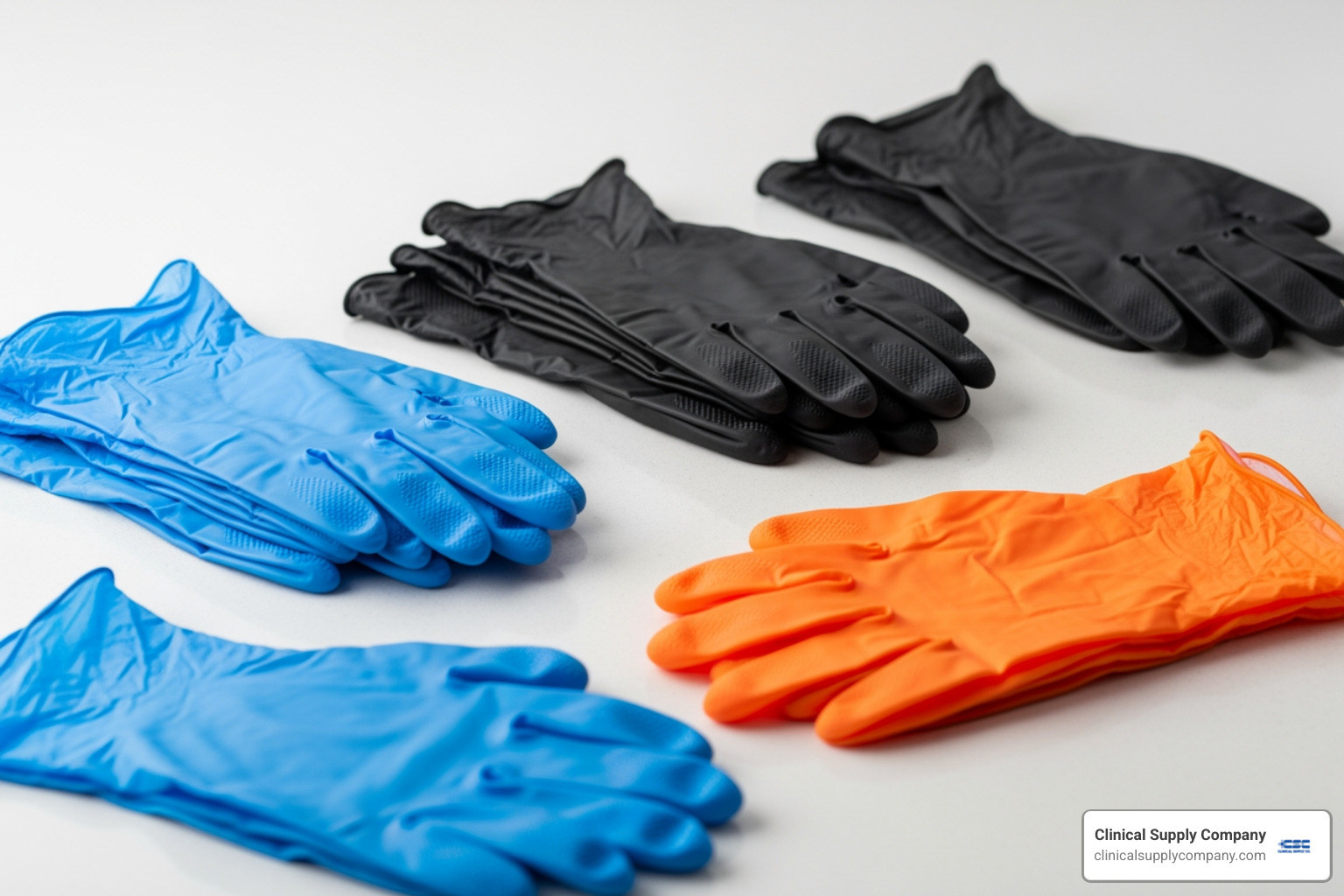
Thickness, measured in "mil" (one-thousandth of an inch), is a key factor. A thinner glove (around 3 mil) offers excellent finger sensitivity for delicate work, while a thicker glove (9+ mil) provides armor against sharp objects and harsh chemicals, albeit with less feel.
Color is more than aesthetic. Blue is the healthcare standard, signaling "medical grade." Black is popular in tattoo and auto shops for its sleek look that hides stains. Bright colors like orange or green often signify heavy-duty industrial use.
Special features can make a big difference. Textured fingertips improve grip on wet instruments, while extended cuffs protect wrists from splashes. Proper sizing is non-negotiable; a glove that's too tight will tear, and one that's too loose compromises control and safety. Finally, powder-free is now the standard, as powdered gloves can cause allergic reactions and contaminate work areas.
Choosing the Right Thickness (Mil) for the Task
The mil thickness is the most important specification, balancing dexterity with protection. Here's a breakdown:
3-4 mil: These lightweight gloves offer maximum tactile sensitivity for high-dexterity tasks like dental examinations, routine check-ups, and lab work. Products like our Blue Nitrile Gloves Powder Free 3 Mil provide precision and a reliable barrier against minor splashes.
5-6 mil: This is the versatile "workhorse" range, balancing protection and dexterity for a wide array of tasks. Options like the Black Nitrile Gloves Powder Free 5 Mil or Hand Armor® Blue Nitrile Gloves Powder Free 5 Mil are ideal for most dental procedures, cleaning, and light mechanical work.
7-9+ mil: When you need serious protection, these heavy-duty gloves are engineered for harsh chemicals, high-risk materials, or extremely sharp instruments. The Hand Armor® Black Nitrile Gloves Powder Free 7 Mil and the Green Nitrile Gloves Powder Free 9 Mil Raised Grip are built for these scenarios. Options like the Hand Armor® Black Nitrile Geotex Grip® Gloves 9 Mil combine maximum thickness with an advanced grip for when you can't afford a slip.
Matching the glove to the task is key. Using a 3 mil glove for heavy chemical work is unsafe, while using a 9 mil glove for routine exams is costly overkill.
Understanding Special Features in bulk nitrile gloves
Once you've chosen a thickness, special features can lift a glove from adequate to ideal. These are not gimmicks; they solve real-world problems.
Textured Grip: This is a universally useful feature, providing better control of wet or slippery instruments. Some gloves have textured fingertips, while others feature full-hand texturing. Advanced patterns like the Geotex Grip® on certain Hand Armor® gloves offer superior control in demanding situations.
Extended Cuffs: An extra inch or two of coverage up the wrist and forearm provides peace of mind during tasks with splash potential. They are popular in labs and during certain dental procedures.
Accelerator-Free Options: Traditional nitrile manufacturing uses chemical accelerators that can cause delayed skin irritation (Type IV allergies). Accelerator-free gloves eliminate these chemicals, allowing sensitive individuals to work comfortably. We've written about the Benefits of Accelerator-Free Nitrile Gloves because they make a huge difference for affected team members.
Fentanyl Resistance: For first responders and certain healthcare professionals, specialized nitrile gloves are engineered and certified to resist penetration by fentanyl and related substances, a critical feature given the ongoing opioid crisis.
Your Playbook for Purchasing Bulk Nitrile Gloves
Purchasing bulk nitrile gloves is a strategic decision that impacts your budget, efficiency, and the safety of your staff and patients. At Clinical Supply Company, we guide customers to ensure they get the best value and quality.

The primary advantage of buying in bulk is the significant reduction in cost per unit. A case of 1,000 gloves, costing $50-$136, is far more economical than individual 100-count boxes at $4-$24 each. Always calculate the per-glove cost to see the real savings.
Beyond price, a supplier's reputation is crucial. You need a partner who consistently delivers high-quality, certified products, especially during supply chain disruptions. Certifications are non-negotiable for medical use, ensuring gloves meet strict safety and performance standards. Don't overlook shipping costs; many companies, including ours, offer free shipping on orders over a certain threshold (e.g., $99), which adds up on large orders.
Good customer service and effective inventory management are hidden benefits. A reliable supply reduces administrative tasks and ensures you're never caught off guard. Choosing the right supplier makes all the difference in your overall experience.
How to Select a Reliable Supplier
Choosing the right supplier for your bulk nitrile gloves is foundational. As a Midwest-based national dental supply company in Liberty Township, Ohio, Clinical Supply Company is proud to be a reliable partner for professionals nationwide. Here's what to look for:
- Industry Specialization: A dental supply company understands the specific tactile and barrier needs of dentistry.
- National Distribution: Ensure the supplier can reliably deliver orders to your location on time.
- Comprehensive Product Range: A one-stop shop like Clinical Supply Company, which offers a wide array of dental supplies, saves you time and consolidates purchasing.
- Customer Reviews: Check what other professionals say about product quality, service, and delivery. A lack of reviews can be a red flag.
- Request Samples: Always test the fit, feel, and quality of gloves before committing to a large bulk order. A reputable supplier will happily provide samples.
A reliable supplier becomes an extension of your team, ensuring you always have the essential supplies to operate smoothly and safely.
Key Certifications and Standards to Look For
When purchasing bulk nitrile gloves for medical or dental use, certifications are non-negotiable assurances of quality and safety. Ignoring them is a risk not worth taking.
- ASTM Standards: The American Society for Testing and Materials sets rigorous standards. Look for ASTM D6319, the specification for nitrile examination gloves for medical application. For handling chemotherapy drugs, ASTM D6978 is the relevant standard.
- FDA Approval: Gloves used in medical settings must be designated as medical devices. Look for products that are "FDA 510(k) cleared" or "FDA approved" for exam use.
- Medical Grade vs. Industrial Grade: Medical-grade (or "exam grade") gloves undergo stricter testing for barrier protection. Industrial-grade gloves are not suitable for patient care. Our article, Nitrile Glove Awareness: Understanding the Importance and Benefits, details these differences.
- ISO Certification: Certifications like ISO 9001 (Quality Management) indicate the manufacturer follows internationally recognized quality systems, ensuring batch-to-batch consistency.
Verifying these certifications ensures your gloves provide the required protection and comply with regulations.
Maximizing Value on Your bulk nitrile gloves Purchase
Smart purchasing is about maximizing value, not just finding the lowest price. Here are strategies to get the best quality for your investment:
- Buy by the Case: The most common bulk unit is a case of 1,000 gloves (10 boxes of 100). This is where significant per-glove cost savings begin.
- Inquire About Pallet Pricing: For large practices or multi-location groups, ordering by the pallet can open up even deeper discounts.
- Consider Subscriptions: Some suppliers offer subscription models for recurring orders, which can provide price stability and convenience.
- Look for Promotions: Keep an eye out for deals on bulk orders, which can offer substantial savings when you're stocking up.
- Meet Free Shipping Thresholds: Structure your orders to meet free shipping minimums (typically $99+), as delivery fees can erode savings.
- Ask for Volume Discounts: The more you buy, the lower the per-unit price should be. Contact suppliers like Clinical Supply Company directly to discuss custom pricing for high-volume needs.
Frequently Asked Questions about Bulk Gloves
We hear from dental and medical professionals every day about purchasing bulk nitrile gloves. Here are straightforward answers to the most common questions about packaging, storage, and value.
What are the typical packaging options for bulk nitrile gloves?
Bulk orders are standardized for easy inventory management. The most common format is a case of 1,000 gloves, packaged as 10 dispenser boxes of 100 gloves each. This is the sweet spot for most practices, offering great savings without requiring excessive storage space.
Some manufacturers offer larger boxes of 200 or 300 gloves, which reduce packaging waste and dispenser refills. For larger facilities, cases of 2,000 gloves are also available. For the highest volume needs, pallet orders contain numerous cases and offer the deepest discounts, shipped via freight.
What is the average shelf life of nitrile gloves?
Nitrile gloves have an excellent shelf life of 3 to 5 years from their manufacture date, making bulk purchases a safe investment. To ensure the gloves maintain their integrity, proper storage is essential.
Store the boxes in a cool, dry place away from extreme temperatures, humidity, and UV light (including direct sunlight or bright fluorescent lights). These elements can degrade the material over time and compromise its protective barrier. Storing boxes in closed cabinets or a dedicated supply room is the best practice to ensure your bulk nitrile gloves are ready to perform when you need them.
Are more expensive nitrile gloves always better?
Not necessarily. A higher price doesn't automatically mean superior protection. The "best" glove is the one that correctly matches your task requirements at a fair price.
Price is driven by several factors:
- Thickness: A heavy-duty 9 mil glove naturally costs more than a 3 mil exam glove because it uses more material. But for a routine exam, that extra thickness adds cost without adding value.
- Special Features: Textured grips, extended cuffs, and accelerator-free formulations are valuable when needed, but paying for features you won't use is not a smart investment.
- Certifications: Medical-grade gloves that meet ASTM and FDA standards undergo rigorous testing, which adds to the cost. This is money well spent in patient care environments.
The smartest approach is to match the glove to the task. Focus on getting the right specifications for each application to maximize both protection and value. Overspending on features you don't need wastes your budget, but skimping on quality for critical procedures is a false economy that can compromise safety.
Conclusion: Secure Your Supply and Protect Your Practice
In any dental or medical practice, your choice of gloves directly impacts safety, efficiency, and your budget. This guide has shown the clear advantages of buying bulk nitrile gloves: significant cost savings, supply chain security, and superior protection compared to latex or vinyl.
By understanding key factors like thickness, features, and certifications (like ASTM and FDA approval), you can make informed purchasing decisions. Partnering with a reliable supplier like Clinical Supply Company—a Midwest-based national dental supply company—ensures you receive consistent quality and value. We've built our reputation on being a trusted partner who makes procurement easier.
A well-managed inventory of the right bulk nitrile gloves is not just a convenience; it's a cornerstone of a safe, efficient, and resilient practice. It's your defense against supply disruptions and your commitment to staff and patient safety. When you make smart choices about your glove supply, you are future-proofing your practice.
If you're ready to refine your selection, our guide on Choosing the Right High-Quality Glove for You offers additional insights. In the end, the right gloves don't just protect hands—they protect your entire operation.