
Why Understanding Glove Types Matters for Your Practice
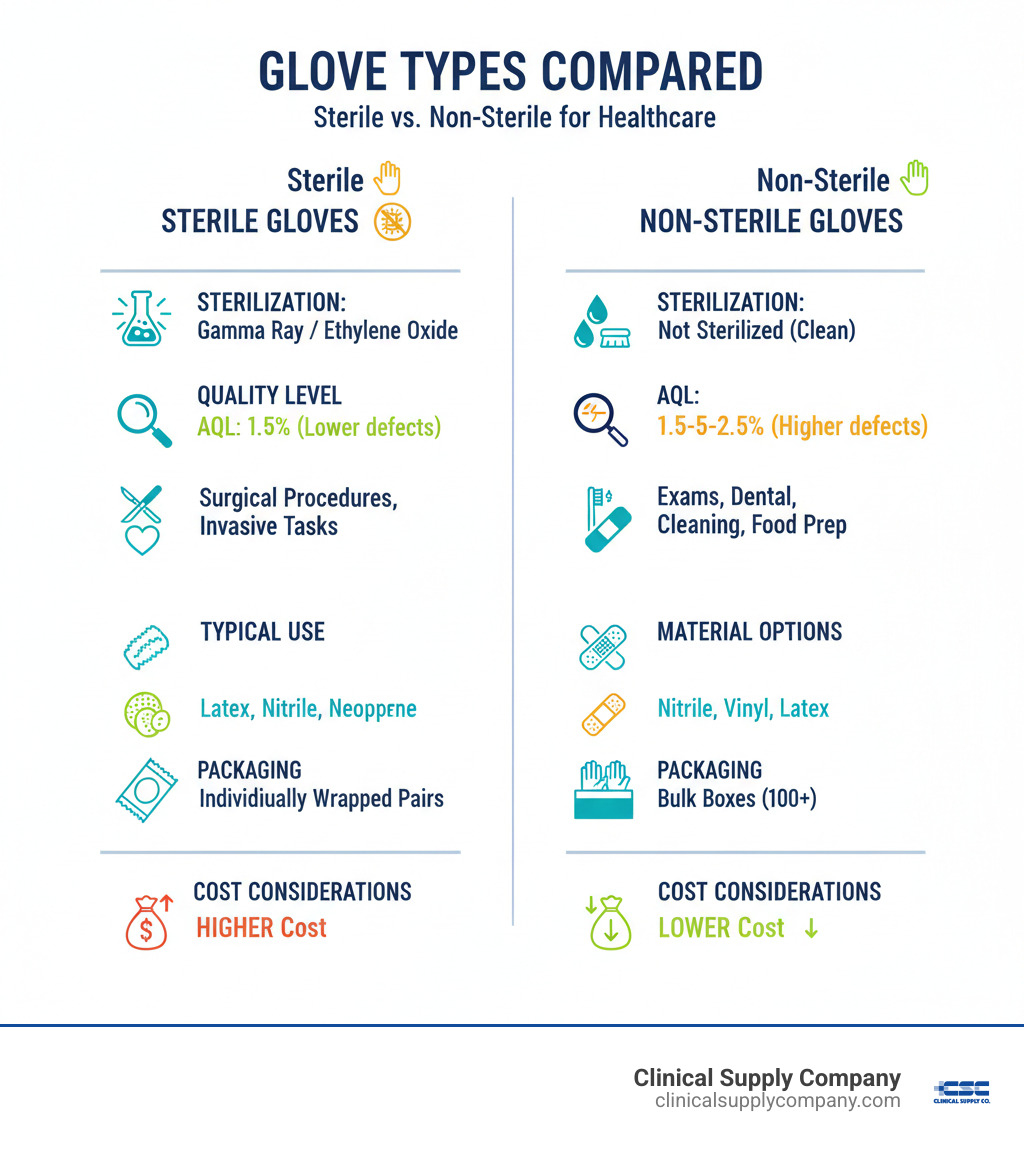
Non sterile gloves are disposable gloves providing barrier protection against contaminants. Unlike sterile gloves, they have not undergone a process to eliminate all microorganisms, making them ideal for non-surgical tasks. Here's a quick comparison:
| Aspect | Non-Sterile Gloves | Sterile Gloves |
|---|---|---|
| Sterilization | Not sterilized | Sterilized via gamma irradiation or ethylene oxide |
| Primary Use | General exams, dental procedures, cleaning | Surgical procedures, invasive medical tasks |
| AQL Standard | 1.5-2.5% acceptable pinhole rate | 1.5% acceptable pinhole rate |
| Cost | Lower cost | Higher cost |
| Packaging | Bulk boxes (100+) | Individually wrapped pairs |
Every day, dental practices decide which gloves to use for which procedures. The wrong choice can waste money, compromise patient safety, or expose your team to risk. Understanding when and why to use specific glove types directly impacts safety outcomes and operational costs, a critical consideration for all healthcare workers.
This guide covers everything you need to know about sterile versus non sterile gloves, from FDA quality standards and material differences to real-world applications in your dental practice. You'll learn how AQL ratings, cost, and material properties should guide your purchasing decisions.
I'm Adam Schuh, President and CEO of Clinical Supply Company. My team and I have spent years helping dental professionals steer FDA compliance and supply chain challenges for critical PPE. We developed EZDoff® accelerator-free nitrile gloves to address the contamination and allergy concerns we heard directly from practitioners like you.
The Fundamental Difference: Sterility and Quality Standards
The difference between sterile and non sterile gloves is about understanding the level of protection a procedure demands. This knowledge is key to ensuring patient safety and team well-being.
What Makes a Glove "Sterile"?
A sterile glove contains zero living microorganisms—no bacteria, viruses, or spores. Manufacturers achieve this through specialized techniques like gamma irradiation, which breaks down microbial DNA, or ethylene oxide gas, which sterilizes heat-sensitive materials. According to the International Atomic Energy Agency, these methods are used on over 40% of medical supplies worldwide.
Sterile gloves are essential for any procedure that breaches a patient's natural defenses, such as surgical operations, catheter insertions, or handling sterile instruments. In these scenarios, introducing even a single microbe could cause a serious infection.
Understanding Non-Sterile Gloves
Non sterile gloves, also known as exam gloves, are the workhorses of your daily practice. While not free of microorganisms, they are manufactured under strict quality controls to be clean and safe. They provide excellent barrier protection against blood, saliva, and other contaminants, which is exactly what's needed for routine exams, cleanings, and other non-invasive procedures.
For the majority of daily dental tasks—patient exams, impressions, cleanings—non sterile gloves offer the necessary protection without the cost of surgical-grade sterility. They are practical, cost-effective, and designed for frequent changes. For team members with sensitivities, many non sterile gloves are available in latex-free glove options that provide comfort without compromising safety.
Decoding Quality Standards: AQL and FDA Regulations
All medical gloves, sterile or non-sterile, must meet standards set by the FDA, which regulates them as medical devices. A key quality metric is the Acceptable Quality Level (AQL), a statistical measure of the maximum percentage of defective gloves (with pinholes) allowed in a batch. A lower AQL number means higher quality.
- Sterile gloves require a strict AQL of 1.5, meaning fewer than 1.5% of gloves in a sample can have pinholes.
- Non sterile gloves have a standard AQL between 1.5 and 2.5, reflecting their use in non-surgical settings.
At Clinical Supply Company, we offer premium exam gloves with an AQL of 1.0, exceeding the minimum requirement and providing extra confidence during procedures. Understanding AQL helps you make smarter purchasing decisions. For a deeper dive, Investopedia offers a helpful explanation of these standards.
Both glove types are vital for infection control, but they are designed for different scenarios. Knowing when to use each—and what quality standards to look for—protects your patients, your team, and your practice's bottom line.
Applications and Uses Across Industries
Choosing between sterile and non sterile gloves is about making smart, task-specific decisions that protect patients and staff while managing costs. The right glove for the right task is a cornerstone of safe and efficient practice.

When to Use Sterile Gloves
Sterile gloves are reserved for procedures where the body's natural defenses are breached and infection risk is high. Their use is non-negotiable in:
- Surgical operations where tissue is cut or internal structures are accessed.
- Childbirth, to protect both mother and baby from infection.
- Invasive procedures like catheter insertions, which create a direct pathway into the body.
- Handling sterile surgical equipment to maintain a sterile field.
- High-risk wound care, such as dressing changes on surgical or deep wounds.
Primary Applications for Non-Sterile Gloves
Non sterile gloves are the versatile workhorses for countless daily tasks that require reliable barrier protection.
In healthcare, they are perfect for general exams, check-ups, blood draws, and specimen handling. For dental professionals, non sterile gloves are essential for most procedures, including routine cleanings, fillings, and examinations, where they protect against saliva and blood. This is why we focus on how advanced gloves are redefining hygiene in dentistry.
Environmental cleaning is another critical use. When staff disinfect operatories or handle medical waste, non sterile gloves protect them from contaminants and harsh chemicals. Many nitrile gloves offer excellent chemical resistance, making them valuable for lab work or chemical handling and safety.
Beyond healthcare, non sterile gloves are used in food service to prevent contamination and by cosmetologists working with chemicals. In every case, the goal is to create a reliable barrier without the expense of sterility. For our clients, this means stocking high-quality non sterile gloves for daily procedures and reserving sterile gloves for when they are truly required.
Choosing Your Glove: Material, Fit, and Features
Selecting the right non sterile gloves involves more than grabbing the nearest box. The ideal glove must protect effectively, fit comfortably, and withstand the demands of a busy dental practice.
A Guide to Glove Materials
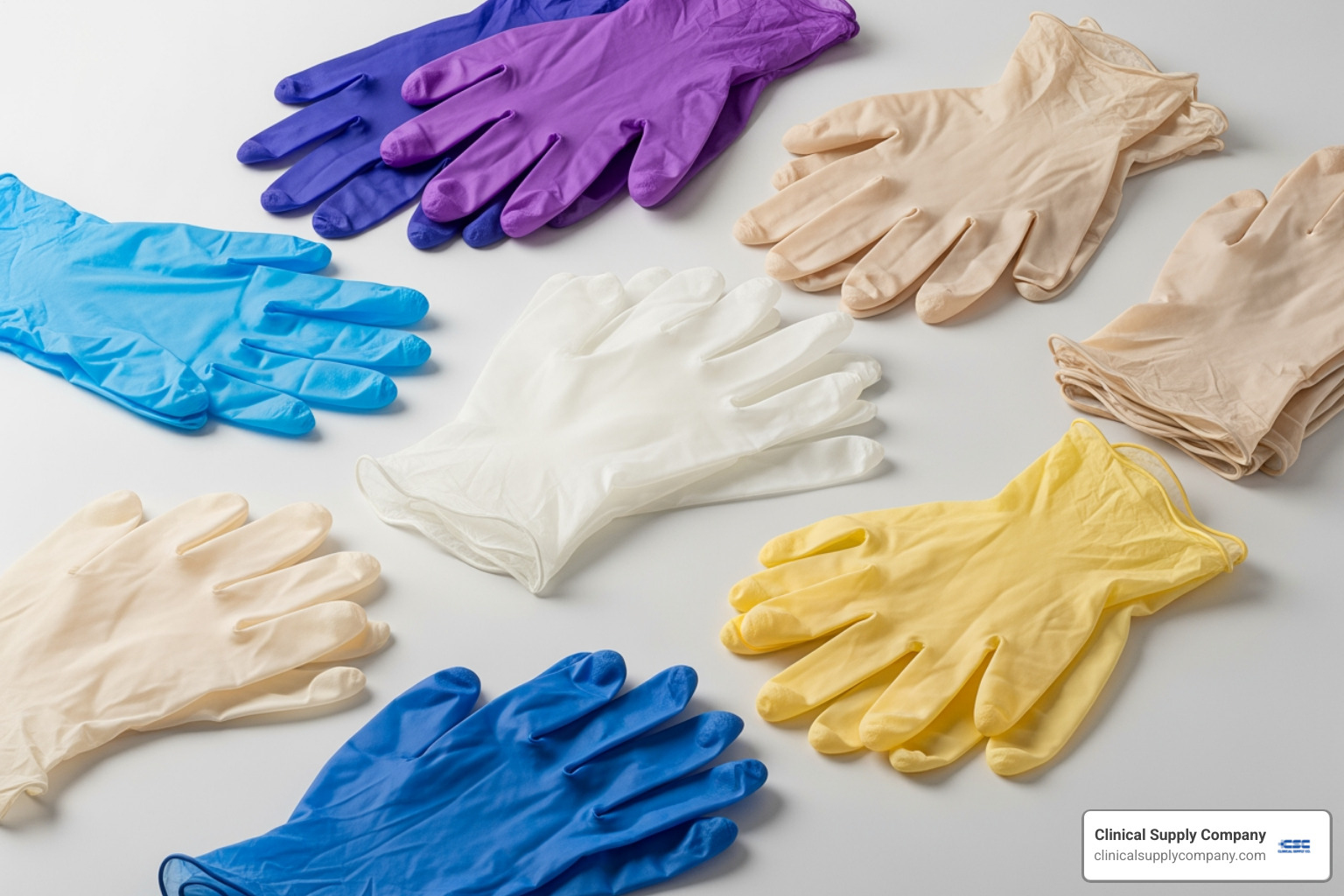
The glove's material determines its durability, comfort, and allergy risk. Here’s a breakdown of the most common options:
- Nitrile: The modern workhorse, offering excellent puncture and chemical resistance. Being latex-free, they eliminate Type I allergy risks, making them a reliable choice for most dental and medical tasks. We explore the key differences between nitrile and other glove types in more detail on our blog.
- Vinyl: A budget-friendly, latex-free option for low-risk tasks like cleaning or quick patient interactions. They are less durable and elastic than nitrile, making them unsuitable for procedures requiring high dexterity.
- Latex: Once the standard for comfort and tactile sensitivity, their use has declined due to the high risk of Type I allergic reactions.
- Polychloroprene: A synthetic option that combines the flexibility of latex with the chemical resistance of nitrile. These latex-free gloves are an excellent high-performance alternative. Learn more about their safety profile and if polychloroprene gloves are hypoallergenic?.
| Material | Durability | Allergy Risk | Cost (Relative) | Common Uses |
|---|---|---|---|---|
| Nitrile | High puncture and chemical resistance | Very low (latex-free) | Medium to High | Healthcare, chemical handling, lab work, food service. |
| Vinyl | Lower durability, less elastic | Very low (latex-free) | Low | Low-risk tasks, food handling, cleaning. |
| Latex | High elasticity and comfort | High (Type I allergy) | Medium | Medical exams (less common now), tasks requiring high dexterity. |
| Polychloroprene | Good elasticity and chemical resistance | Very low (latex-free) | High | High-risk medical/dental procedures, chemical handling. |
Key Features and Benefits of Non-Sterile Gloves
Beyond material, specific features improve performance, safety, and comfort:
- Powder-Free: The FDA banned powdered medical gloves due to risks of airborne contaminants and allergic reactions. Today's powder-free non sterile gloves are the standard for safety. We cover this in Latex or Nitrile Gloves: Powder Is Out.
- Textured Surfaces: Textured fingertips or palms provide a secure grip on wet instruments, enhancing control and safety.
- Proper Fit: A good fit is crucial. Loose gloves reduce dexterity, while tight gloves cause fatigue and can tear. Ambidextrous sizing helps ensure every team member finds a comfortable, protective fit.
- Accelerator-Free: These formulations eliminate chemicals that can cause Type IV allergic contact dermatitis, offering a safer option for sensitive users. Explore the benefits of accelerator-free nitrile gloves.
Clinical Effectiveness and Evidence-Based Guidelines
The appropriate use of non sterile gloves is key to infection control, but more is not always better. Recent research suggests that strategic, evidence-based gloving is more effective than universal use in all situations.

The Debate: Glove Use vs. Non-Use in Low-Risk Settings
For years, universal gloving was assumed to be the safest approach. However, evidence suggests a more nuanced view. A CADTH review on nonsterile glove use found that in low-risk acute care settings, discontinuing routine glove and gown use did not increase rates of hospital-acquired MRSA and, in some cases, was associated with lower rates of VRE infections.
Another study in a neonatal ICU found that infection rates were similar whether the unit used universal gloving or standard infection control precautions. This highlights that gloves are most effective when used strategically based on risk, not reflexively for every interaction.
Evidence-Based Guidelines for Healthcare Professionals
Clear guidelines exist for when non sterile gloves are necessary. Their use is essential when contact with blood, body fluids, non-intact skin, or mucous membranes is anticipated. This is why dental professionals wear gloves for nearly every patient interaction.
Gloves are also non-negotiable for handling hazardous drugs and chemicals and for cleaning contaminated instruments and surfaces. They provide a critical barrier against both pathogens and chemicals.
However, a significant concern is that hand hygiene compliance often drops when gloves are worn, as shown in a study on hand hygiene compliance. Gloves do not replace handwashing. The correct protocol, emphasized by the Public Health Agency of Canada, is non-negotiable: wash hands before donning gloves, change gloves between patients, and wash hands immediately after removal.
Gloves are part of a comprehensive protection strategy, not a standalone solution. An evidence-based approach ensures non sterile gloves are powerful tools for infection control.
Risks, Limitations, and Making the Right Choice
While non sterile gloves are essential protective tools, understanding their limitations is key to making smart choices that protect your team's health and the environment.
Potential Risks and Limitations
- Contact Dermatitis: This common skin condition, appearing as redness, itching, and dryness, can result from the physical irritation of glove use (irritant dermatitis) or an allergic reaction to materials (allergic dermatitis). We offer advice on protecting hands from the risks of gloves to help mitigate this issue.
- Latex Allergies (Type I): Though less common with the shift to synthetic gloves, Type I reactions to natural rubber latex can be severe. Ensuring latex-free options are available is crucial for staff and patient safety.
- Chemical Allergies (Type IV): This delayed hypersensitivity is often triggered by chemical accelerators used in manufacturing synthetic gloves, causing redness and blistering 12-48 hours after contact. Learning to prevent and manage Type 4 allergies is vital for affected individuals.
- Environmental Impact: The high volume of single-use gloves contributes significantly to landfill waste. Weathered gloves can also release microparticles and heavy metals into ecosystems. While no perfect solution exists, awareness is the first step, as explored in our article, Highlighting Nitrile Gloves: Are They Eco-Friendly?.
- Overuse and Misuse: Inappropriate glove use can lead to poor hand hygiene, increasing cross-contamination risks. It also creates unnecessary expense and environmental waste.
Recommendations for Choosing the Right Non-Sterile Gloves
Choosing the right non sterile gloves for your dental practice is a systematic process.
First, assess the task and risk level. For contact with blood or chemicals, you need robust barrier protection like nitrile. For delicate work, tactile sensitivity is key. For long procedures, comfort and ease of use are critical for compliance.
Next, consider user sensitivities. Always have latex-free options (nitrile, vinyl, polychloroprene) available. If staff experience dermatitis, provide accelerator-free nitrile gloves to minimize Type IV reactions.
Then, balance cost versus quality. While budget is a factor, poor-quality gloves with high failure rates can lead to costly exposures. For low-risk tasks, vinyl may suffice. For most dental procedures, nitrile's superior resistance is a worthwhile investment. Bulk purchasing can help manage costs without sacrificing quality.
Finally, evaluate industry-specific requirements. Dental professionals need puncture resistance, chemical resistance, tactile sensitivity, and comfort. Nitrile gloves often meet all these needs. By evaluating these factors, you can select gloves that provide optimal protection. Our guide to choosing the right high-quality glove for you offers more detailed guidance.
Conclusion
Making informed decisions about non sterile gloves is a critical practice that impacts team safety, patient wellbeing, and your budget. For dental professionals, understanding these choices is fundamental to providing excellent care.
We've established the essential difference: sterile gloves are for invasive, surgical procedures, while non sterile gloves are the workhorses for the vast majority of daily dental tasks, providing a reliable barrier without the cost of sterilization.
Quality, measured by AQL, and material choice—from durable nitrile to economical vinyl—directly influence protection and comfort. Features like powder-free designs and accelerator-free formulations solve real-world problems like skin irritation and allergies. Most importantly, an evidence-based approach reminds us that gloves are part of a larger infection control strategy that must always include proper hand hygiene. Overuse is wasteful and can compromise safety.
Choosing the right non sterile gloves means balancing the task's risk, user sensitivities, quality, and cost. It's about finding protection that works without compromise.
At Clinical Supply Company, we understand what dental professionals in Ohio and across the Midwest need. We are your partner in creating a safer, more efficient practice. Our commitment is to help you steer these decisions with confidence.
Ready to find the perfect protection for your practice? Our comprehensive guide to choosing the right high-quality glove for you walks you through everything you need to know. With the right knowledge and the right gloves, you can focus on what you do best: providing exceptional patient care.


