
Why Tray Covers Matter in Your Practice
A tray cover is a protective barrier placed over instrument or food service trays to prevent contamination and maintain hygiene. In any dental practice, medical office, or healthcare facility, this simple item is a frontline defense against cross-contamination. It protects patients and practitioners by preventing instrument contamination in clinical settings and reducing foodborne illness risks in hospitals.
Tray covers come in various materials, including absorbent paper, waterproof plastic, and moisture-resistant poly-coated paper. They are essential for creating a clean barrier, streamlining cleanup, and protecting surfaces in dental, medical, tattoo, and salon applications. In healthcare facilities, they also improve the patient dining experience.
The right tray cover doesn't just protect—it projects professionalism and shows a commitment to safety. However, with so many materials, sizes, and colors, choosing the right one can be confusing. Paper or plastic? Standard size or custom fit? The answers depend on your specific procedures and environment.
I'm Adam Schuh, President of Clinical Supply Company. My experience helping dental professionals select infection control supplies has shown me that understanding tray cover options is key to efficiency and patient safety. We're here to help you make the right choice.
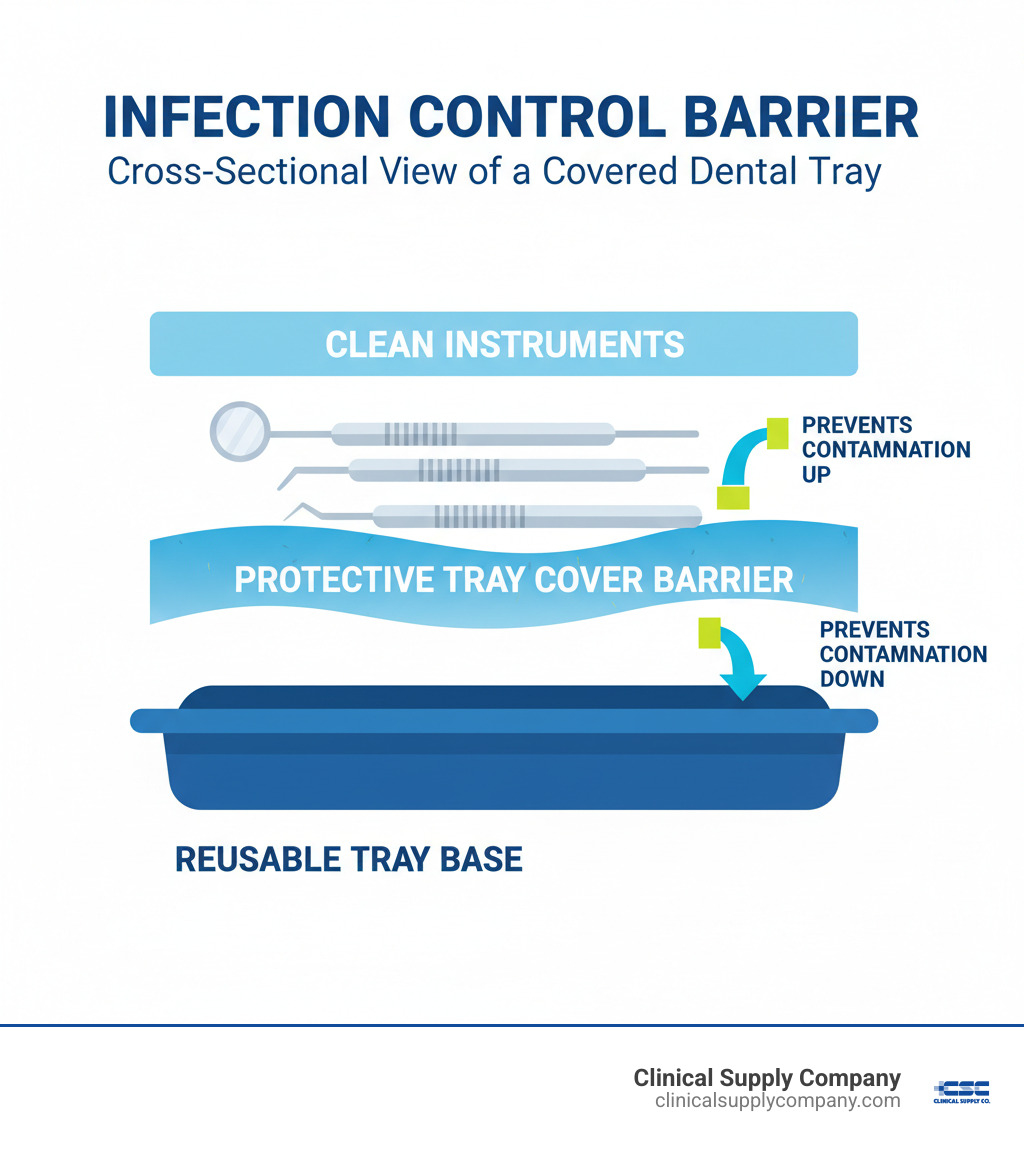
The Critical Role of the Tray Cover in Infection Control
In any dental office or hospital, a simple piece of paper or plastic does one of the most important jobs in healthcare: preventing the spread of infection. The tray cover is essential to keeping patients safe.
Each time a tray cover is placed on an instrument or meal tray, it creates a hygiene barrier—a physical shield between a potentially contaminated surface and the items that will touch your patient. In dental clinics, it prevents instruments from contacting surfaces that may harbor bacteria. In hospital food service, it isolates meals from trays handled countless times.
Cross-contamination is a constant threat in healthcare. The Centers for Disease Control identifies it as a leading cause of healthcare-associated infections (HAIs). A fresh tray cover for each patient is one of the simplest, most effective ways to break the chain of transmission.
Consistently using tray covers is a tangible way of protecting patient safety. Patients notice these details. A crisp, clean surface shows you take their health seriously, building the patient confidence that creates long-term loyalty. For a deeper look at how sterilization practices protect your patients, check out The Role of Sterilization in Patient Safety.
How Covers Prevent Cross-Contamination
In a dental clinic, after a procedure, the used instruments and tray cover are disposed of. For the next patient, a fresh cover is placed on the same tray. Any microscopic contaminants on the tray itself never contact the new patient's instruments.
This disposable barrier is your first line of defense for mitigating risk. By ensuring instruments rest only on a pristine surface, you're upholding safety standards that protect patients and staff. Unlike reusable barriers that require washing and introduce potential for human error, a disposable tray cover guarantees a fresh start every time.
This approach complements other infection control measures. While surface wipes handle larger areas, tray covers provide dedicated protection for instruments and surfaces requiring the highest level of cleanliness. Learn more about maintaining a germ-free environment in Surface Wipes: Ways to Keep Clinic Germ-Free.
In food service, a tray cover prevents meal containers from touching contaminated surfaces, which is key to foodborne illness reduction for vulnerable patients. To understand the broader context of preventing contamination in your practice, visit Prevent Cross-Contamination in Dental Clinics.
Enhancing the Patient and Dining Experience
Tray covers don't just protect patients—they improve their experience. From a patient's perspective, a meal arriving on a clean, fresh tray cover sends a message of care. This visual appeal transforms a functional meal into a more dignified and comfortable experience.
Better presentation leads to higher patient satisfaction and encourages patients to eat, which can improve nutrition and speed recovery while reducing food waste. In your dental practice, instruments arranged on a pristine tray cover signal professionalism. Patients may not consciously think about infection control, but they see that your practice takes cleanliness seriously. This observation builds trust and an improved perception of care.
In catering and hospitality, a tray cover adds a polished touch that shows attention to detail. The humble tray cover pulls double duty—protecting health while also enhancing the patient experience.
A Guide to Tray Cover Types, Materials, and Sizes
Choosing the right tray cover doesn't have to be complicated. At Clinical Supply Company, we help practices across Ohio and nationwide cut through the confusion. Unlike the overwhelming catalogs from Henry Schein or Benco Dental—where you're left to figure things out alone—we provide expert guidance and a curated selection that matches what dental professionals need.
Let's break down the options so you can make the right choice for your practice.
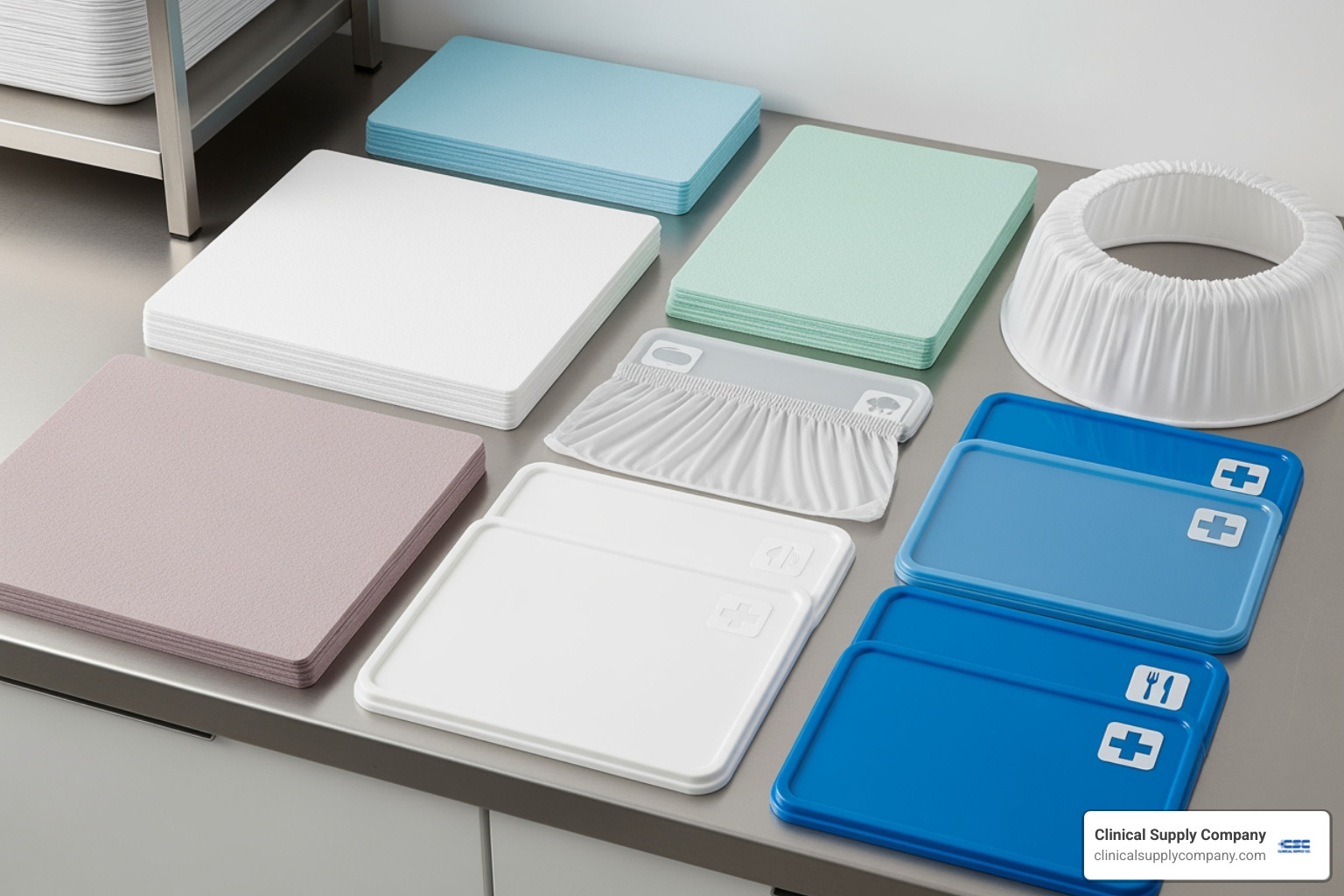
Common Materials and Their Properties
The material determines how your tray cover performs. Each type has strengths for specific needs.
- Paper tray covers are the absorbent, disposable, and economical workhorses of dental practices. They are ideal for routine procedures with minor fluids and come in colors like mauve, green, and blue to add a professional touch.
- Plastic or poly sleeves are waterproof barriers that repel moisture. They are perfect for procedures with significant fluid exposure, creating a durable, transparent, and impermeable shield.
- Poly-coated paper offers the best of both worlds: an absorbent paper top layer with a plastic backing to prevent soak-through. This dual-layer design provides robust protection and absorbency.
- Non-woven fabrics are soft, tear-resistant covers often used in food service and hospitality for their aesthetic appeal. Some, like polyester tray stand covers, are reusable and machine washable.
Here's how these materials stack up:
| Material | Absorbency | Durability | Cost (relative) | Primary Use Case |
|---|---|---|---|---|
| Paper | High | Low | Low | Dental/Medical procedures (minor fluid), general barrier, aesthetic appeal |
| Plastic/Poly | None | High | Medium | Dental/Medical procedures (fluid barrier), instrument protection, tattoo/beauty salons |
| Poly-Coated Paper | High (top) | Medium | Medium | Dental/Medical procedures (fluid management with barrier), general hygiene barrier |
| Non-Woven Fabric | Medium | High | High (reusable) | Hospitality (tray stand covers), high-end food service (reusable options) |
Sizing and Compatibility: Finding the Perfect Fit
A tray cover that doesn't fit is a liability, as it can slip and compromise the barrier.
In dental and medical settings, standard sizes simplify selection. Size B covers (8.5" x 12.25") are great for routine procedures. We stock JMU Dental Tray Paper Liners for Surgery Tray Liner Paper Size B, perfect for dental, tattoo, and beauty trays. Size E covers (around 9.5" x 13.5") accommodate larger setups. Always measure your trays before ordering to ensure a snug, professional fit.
Food service requires more specialized sizing. Hospital meal delivery systems like Aladdin Heat On Demand or Temp-Rite II Excel need custom-fit tray covers to prevent slippage and maintain presentation. A proper fit ensures optimal barrier protection and projects professionalism. When What to Consider When Buying Dental Supplies Online, compatibility should be a top priority.
How to Choose the Right Tray Cover for Your Setting
Picking the right tray cover means understanding your environment and needs. Whether for instrument trays or hospital meals, the details matter.

At Clinical Supply Company, we help dental practices across the Midwest find what works. Unlike suppliers with overwhelming catalogs and little guidance, we help you make confident decisions. Ask yourself: What am I protecting? Do I need absorption or a moisture barrier? Does it fit my trays? Does the color match my clinic's aesthetic? These questions impact function and patient perception. For more insight, see our guide on What to Consider When Buying Dental Supplies Online.
For Dental and Medical Professionals
In a dental practice, a tray cover creates a clean barrier between sterilized instruments and the tray. Paper or poly-coated paper covers are workhorses, providing a fresh surface for every patient and adding a layer of protection that patients notice.
For procedures with moisture, a poly-coated paper tray cover is ideal. The paper top absorbs liquid while the poly backing prevents it from reaching the tray. Most tray covers are not sterile; their job is to maintain the sterility of the instruments placed on them by acting as a barrier. We offer reliable options like the JMU Dental Tray Paper Liners that professionals trust.
Tattoo studios and beauty salons have similar hygiene needs, where a disposable plastic sleeve or poly-coated paper tray cover effectively protects work surfaces.
For Food Service and Hospitality
In food service, a tray cover protects against contamination and improves presentation. For hospital meal delivery, hygiene is paramount. A cover creates a barrier between food and a frequently handled tray, reducing the risk of foodborne illness.
Presentation also affects appetite. A meal on a clean tray cover improves the dining experience and can encourage patients to eat, supporting recovery. Specialized meal systems like Aladdin Heat On Demand require custom-fit covers to prevent slippage and ensure food safety.
In catering, a neat tray cover or tray stand cover improves the decor. Our reusable polyester tray stand covers provide a polished, professional look for events.
Specialty Tray Cover Applications
The versatility of tray covers extends to other areas. Removable plastic high chair tray covers offer a clean, easy-to-wash eating surface for toddlers. Heat-resistant mats, often made of silicone, protect tables from hot dishes in homes and catering. Even electronics manufacturing uses specialized static dissipative tray covers to protect sensitive components, showing how the barrier principle adapts across industries.
Operational Efficiency and Environmental Impact
Tray covers impact more than just hygiene; they affect your practice's efficiency and environmental footprint. Finding the right balance between efficiency and sustainability is essential for modern operations.
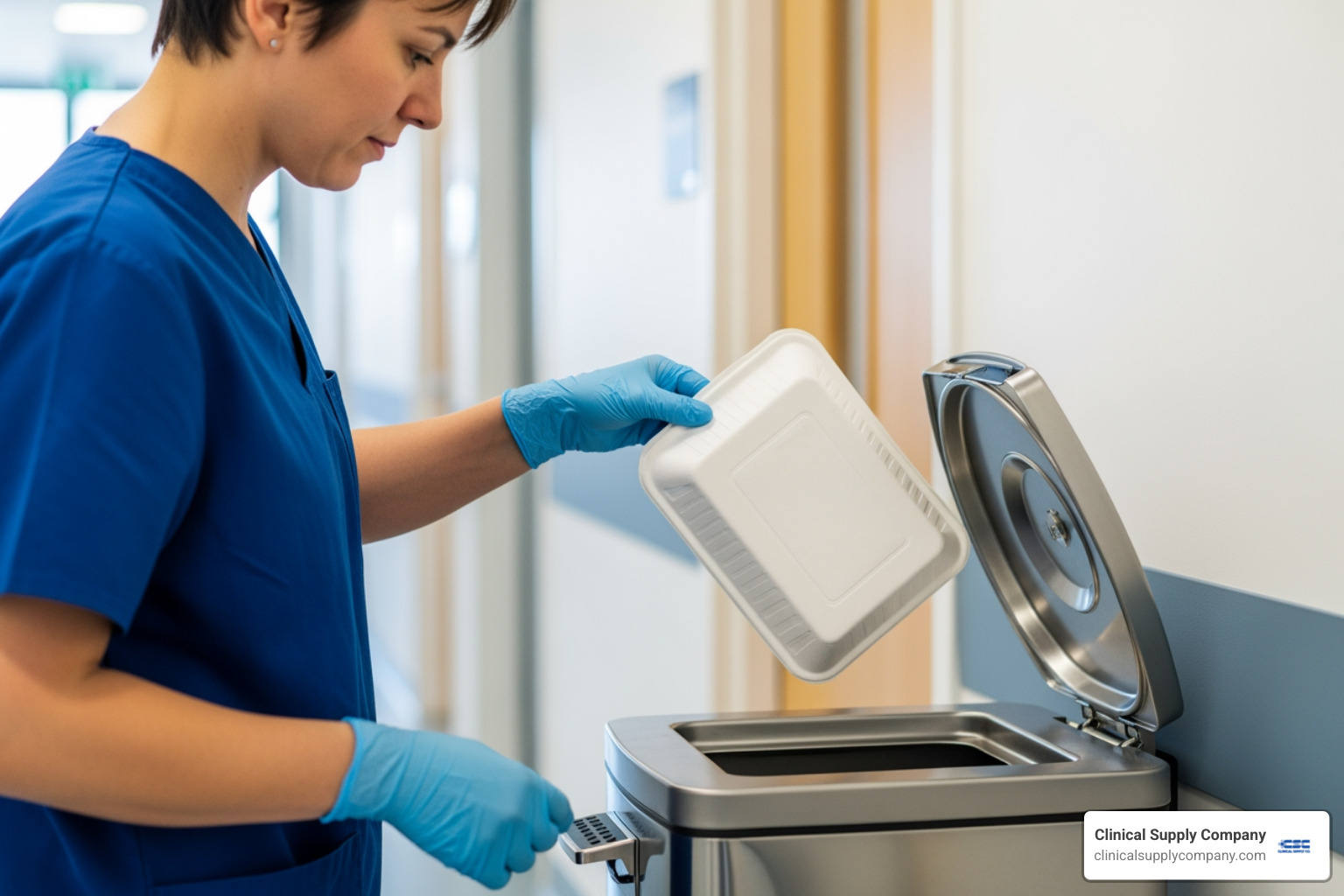
The Disposable Advantage: Cleanup and Workflow
Disposable tray covers transform cleanup into a swift action. After a procedure, your staff simply disposes of the soiled cover, eliminating the need to scrub, wash, and sanitize trays between uses. This streamlines cleanup and saves time.
These saved minutes lead to faster room turnover, more efficient scheduling, and less patient waiting time. Practices we work with across Ohio and the Midwest report that disposable tray covers noticeably improve workflow, allowing staff to focus on patient care instead of cleaning. This reduction in labor costs for sanitation means your team can be more productive where it matters most.
Environmental and Cost Considerations
The reusable versus disposable debate is complex. While disposables create waste, reusables have their own environmental footprint, requiring water, energy, and detergent for washing. The best choice depends on your practice's values and situation.
For those concerned about environmental impact, emerging biodegradable options offer a step toward sustainability. Some paper and plastic tray covers may also be recyclable, depending on local facilities.
When analyzing long-term costs, look beyond the purchase price. Disposable tray covers save on labor, water, electricity, and detergent. For most high-volume practices, the savings in staff time alone often make disposables more economical. The goal is to find a balance between operational efficiency, cost-effectiveness, and environmental responsibility that works for your practice.
Frequently Asked Questions about Tray Covers
Here are answers to the most common questions about tray covers to help you use these protective barriers correctly.
Are tray covers sterile?
Most tray covers are not sterile unless the packaging explicitly states they are. This is because the cover's job is not to be sterile itself, but to provide a clean, single-use barrier between a non-sterile tray and your sterilized instruments. It creates a clean workspace, helping to maintain the sterility of the items placed on it. If a procedure requires a sterile field, you must use a product specifically packaged and marked as sterile. For more on this topic, read Effective Sterilization: Learn the Steps for Best Results.
How do you use a dental tray cover?
Proper use is simple but crucial for hygiene.
- Select the correct size to cover the entire tray without bunching or gaps.
- With clean hands or fresh gloves, place the cover smoothly over a clean, disinfected instrument tray.
- Arrange your sterilized instruments and supplies on top of the tray cover.
- After the procedure, carefully gather the cover's edges to contain all waste and dispose of it immediately according to your practice's biohazard protocols.
This method is key to preventing cross-contamination and applies equally to tattoo and beauty settings.
Can you reuse tray covers?
No, you should never reuse tray covers in professional healthcare, food service, or aesthetic settings. They are designed for single use. Reusing a cover, even if it looks clean, defeats its purpose and creates a serious risk of cross-contamination. The materials are not designed for cleaning and will lose their protective properties.
The only exception is for products specifically designed for reuse, such as polyester tray stand covers for hospitality, which are for presentation, not clinical barrier protection. For any setting with strict hygiene standards, the rule is simple: use a fresh disposable tray cover for every patient or service and discard it immediately.
Conclusion
The humble tray cover is an indispensable tool for maintaining hygiene, enhancing efficiency, and improving the patient experience. From busy dental practices in the Midwest to healthcare facilities nationwide, these protective barriers are crucial for preventing cross-contamination and streamlining cleanup.
As we've seen, the right tray cover contributes to patient safety and satisfaction, projects professionalism, and saves valuable staff time. Understanding the different materials and sizes allows you to choose the perfect cover for your needs, reinforcing your commitment to the highest standards of care. While environmental impact is a growing consideration, the infection control benefits of single-use covers often make them the safest choice in clinical settings.
For a comprehensive selection of high-quality dental supplies, including the ideal tray covers for your practice, trust a dedicated partner like Clinical Supply Company. We offer a curated selection and expert guidance to help you make the best choice, without the overwhelming catalogs you find elsewhere. We're here to help you uphold the highest standards of care.
Ready to learn more? Explore the importance of tray covers in dental procedures to dive deeper into best practices for your practice. Because when it comes to patient safety, every detail matters—even the simple tray cover.


