
Why Disposable Isolation Gowns Matter in Healthcare and Beyond
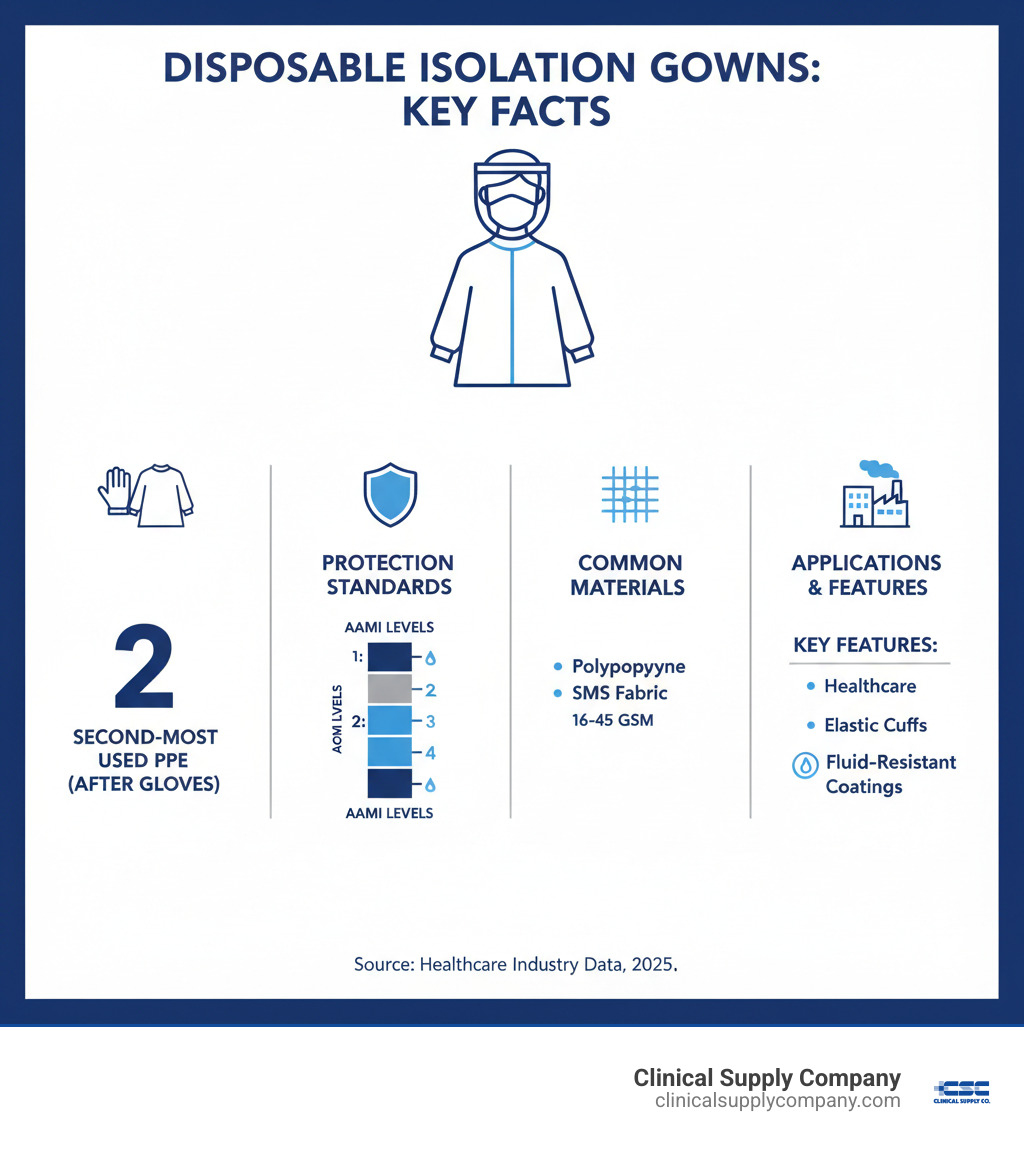
Disposable isolation gowns are the second-most used piece of personal protective equipment (PPE) in healthcare, after gloves. They provide a critical barrier between the wearer and contaminants like bodily fluids, infectious agents, and chemicals.
Quick Answer: What You Need to Know About Disposable Isolation Gowns
- Purpose: Protect healthcare workers and patients from cross-contamination and infectious disease transmission.
- Protection Levels: Classified by AAMI standards (Levels 1-4) based on fluid resistance.
- Common Materials: Non-woven polypropylene (PP), SMS fabric, and PE-laminated materials.
- Key Features: Neck and waist ties, elastic or knit cuffs, full-body coverage.
- Applications: Hospitals, dental offices, laboratories, food processing, and industrial settings.
- Single-Use Design: Eliminates laundering costs and reduces cross-contamination risk.
Proper PPE is more critical than ever. For any dental practice, medical facility, or lab, choosing the right isolation gown is key to preventing exposure risks. However, not all gowns are the same. With various protection levels, materials, and features, selecting the right one can be challenging.
This guide simplifies the process, covering AAMI protection levels, material composition, proper usage, and bulk purchasing. You'll learn how to choose the best gown for different risk scenarios, what features matter, and how to protect your team without overspending.
I'm Adam Schuh, President and CEO of Clinical Supply Company. I've spent years helping dental and healthcare providers access reliable, FDA-compliant PPE that meets safety standards and budget needs. My goal is to provide the practical knowledge you need to make informed purchasing decisions and effectively protect your team and patients.
Understanding the Fundamentals of Isolation Gowns
A disposable isolation gown creates a protective barrier between you and potential contamination. In settings like dental offices, hospitals, and labs, these gowns shield both the wearer and the environment from microorganisms, bodily fluids, and particulate matter. They protect your clothing from contamination while preventing cross-infection, meeting standards like ANSI 101-1996 for reliable protection. The single-use design is simple: wear it over your clothes for full-body coverage, then safely discard it. This eliminates laundering and reduces exposure risks.
You can learn more about how isolation gowns protect you and the science behind their effectiveness.
How Gowns Contribute to Infection Control
Disposable isolation gowns are essential for breaking the chain of infection. In environments with harmful bacteria, viruses, or bodily fluids, they act as a physical shield. In high-risk settings like dental offices and hospitals, where exposure to blood and saliva is common, gowns protect workers from direct contact with contaminants, dramatically reducing the spread of illness. The single-use nature is key to their effectiveness. After a procedure, the gown and any pathogens on it are discarded. This prevents carrying contamination between patients and ensures a fresh, clean barrier for every task, maintaining a hygienic environment for everyone.
For more details on preventing the spread of infections, check out our comprehensive guide.
Disposable vs. Reusable Gowns
Many professionals wonder whether to choose disposable or reusable gowns. For most settings, disposable isolation gowns are the superior solution. The most obvious benefit is the elimination of laundering costs. Reusable gowns require washing, drying, and sterilization, which involves equipment, services, and staff time. With disposables, you simply use and toss the gown.
More importantly, disposable gowns reduce the risk of cross-contamination. Each disposable gown is new, clean, and has guaranteed barrier integrity. Reusable gowns can degrade over time with repeated washing, thinning the fabric or compromising fluid resistance. Inadequate cleaning can also leave behind microorganisms. Disposables eliminate these concerns and offer best convenience, allowing staff to focus on patient care instead of gown management.
| Feature | Disposable Isolation Gowns | Reusable Gowns |
|---|---|---|
| Laundering | None required—single-use only | Required after each use; significant cost and labor |
| Cross-Contamination Risk | Minimized; fresh, clean gown every time | Risk of incomplete decontamination or barrier degradation |
| Barrier Integrity | Guaranteed with each new gown | Can degrade over time with repeated washing |
| Convenience | High; simple to use with no post-procedure processing | Low; requires collection, washing, and redistribution |
| Cost | Per-unit cost with no hidden expenses | Higher initial investment plus ongoing laundering costs |
| Material Degradation | None—each gown is new | Possible tearing, thinning, or loss of fluid resistance |
While some assume reusable gowns are more eco-friendly, the energy, water, and chemicals for commercial laundering often offset these benefits. Factoring in the health risks of compromised protection, the improved safety, guaranteed barrier, and operational efficiency make disposable isolation gowns the smart choice for maintaining the highest standards in your practice.
Decoding Protection Levels and Materials
Understanding the protection levels of disposable isolation gowns is crucial for selecting the right tool for the job. The AAMI guidelines classify gowns based on their liquid barrier performance, removing the guesswork and helping you match the gown to the specific risks you face.
AAMI Protection Levels Explained
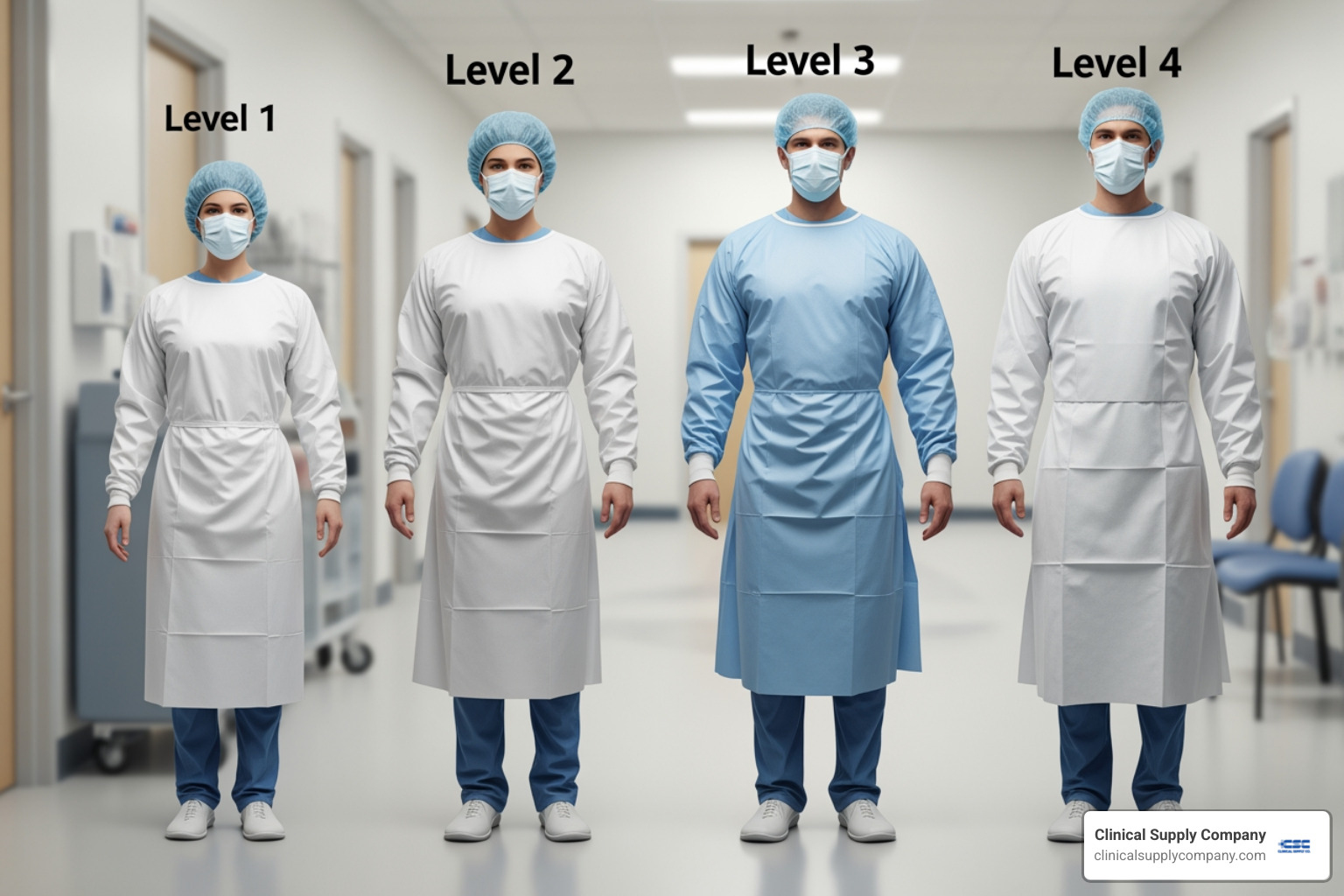
The Association for the Advancement of Medical Instrumentation (AAMI) created a four-level classification system that is now the industry standard for fluid exposure protection. For an independent overview of medical gown classifications, see the FDA’s guidance on medical gowns and AAMI PB70 levels.
- AAMI Level 1: For minimal risk situations. These offer basic protection against small amounts of fluid and are ideal for standard isolation, basic patient care, or visitor coverage.
- AAMI Level 2: For low to moderate risk scenarios with a higher chance of fluid contact, such as blood draws, suturing, or work in intensive care units.
- AAMI Level 3: For moderate risk procedures like arterial blood draws, inserting IVs, or in emergency rooms. Our AAMI Level 3 disposable isolation gowns often use multi-layer SMS material for a solid, breathable barrier.
- AAMI Level 4: For the highest-risk situations, including major surgery or extended, fluid-intensive procedures. These provide the maximum barrier against liquid and viral penetration.
The key is to assess the anticipated fluid exposure for each task and choose the appropriate AAMI level. It's about smart protection that matches the risk. For a deeper dive, see our guide on the best material for isolation gowns.
Common Gown Materials
The effectiveness of disposable isolation gowns comes down to their non-woven materials, which balance protection, breathability, and cost.
- Polypropylene (PP): This lightweight, durable polymer is the workhorse of isolation gowns. It can be engineered for varying levels of fluid resistance, with weights from 16 to 25 grams per square meter (GSM) providing comfortable, reliable protection.
- Spunbond-Meltblown-Spunbond (SMS): This multi-layer fabric is our choice for AAMI Level 3 gowns. It combines the strength of spunbond polypropylene with the filtration of meltblown polypropylene, creating a robust barrier that remains breathable.
- Polyethylene (PE) Lamination: For maximum fluid resistance, a PE coating is applied to polypropylene. This creates a superior shield against liquids and splashes, ideal for environments where fluid exposure is expected.
There is always a trade-off between breathability and fluid resistance. We offer gowns in different material weights (GSM)—from 25 GSM for lightweight comfort to 45 GSM for more robust protection. Lower GSM gowns are lighter and more breathable for low-risk tasks, while higher GSM gowns offer improved durability and fluid resistance when needed.
Key Features and Applications of Disposable Isolation Gowns
When selecting disposable isolation gowns, design features are just as important as the material and protection level. These practical details affect comfort, fit, and ultimately, how well the gown protects your team.

What to Look for in Disposable Isolation Gowns
Here are the features that distinguish a great isolation gown:
- Cuff Design: Knit cuffs are soft and comfortable, preventing sleeves from riding up. Elastic cuffs create a tighter seal to keep contaminants out. The choice depends on the task.
- Neck and Waist Ties: These provide a secure, adjustable fit. Many of our gowns feature front-tying waist ties for easy donning and doffing.
- Thumb Loops: These simple loops keep sleeves from sliding up, ensuring continuous coverage at the wrists for an extra layer of security.
- Full Coverage: A proper gown should be generously sized (e.g., 120cm x 137cm) to protect clothing and skin, extending from the neck to at least mid-calf.
- Seam Construction: Heat-bonded seams are more comfortable and improve barrier integrity compared to rough, irritating seams on cheaper gowns.
- Fluid Resistance and Breathability: For fluid exposure, look for fluid-resistant PE lamination. This is often combined with lightweight non-woven material (25-40gsm) to provide protection without sacrificing breathability.
These features work together to ensure the gown performs its job effectively. For a closer look at top-performing options, check out a roundup of the best white disposable isolation gowns.
Common Applications and Industries
Disposable isolation gowns are used across a diverse range of industries:
- Healthcare Settings: Hospitals, clinics, and nursing homes rely on gowns for daily infection control, from routine patient care to managing infectious disease outbreaks.
- Dental Offices: As a dental supply company, we know how essential gowns are for dentists and hygienists who face splashes of blood and saliva. A quality gown provides a critical barrier. You can see why isolation gowns are vital for a clean dental office in more detail.
- Laboratories and Research Centers: Gowns provide an essential barrier for scientists and technicians handling chemicals and biological samples, preventing cross-contamination and health risks.
- Food Processing and Industrial Use: In food processing, gowns prevent product contamination. In industrial settings, they shield workers from chemicals, dust, and other hazards.
- Chemotherapy Administration: Workers handling these potent drugs need specialized gowns tested to resist specific chemotherapy drugs (ASTM F739-12).
- Emergency Response and Other Settings: Paramedics, EMTs, and even professionals in beauty and tattoo practices use gowns for quick, reliable barrier protection and hygiene.
A Practical Guide to Selection and Use
Having the right disposable isolation gown is only half the battle; proper donning (putting on) and doffing (taking off) are equally crucial. A gown's protective barrier is only as good as the technique used to manage it, as incorrect handling can lead to self-contamination.
How to Properly Don and Doff a Gown
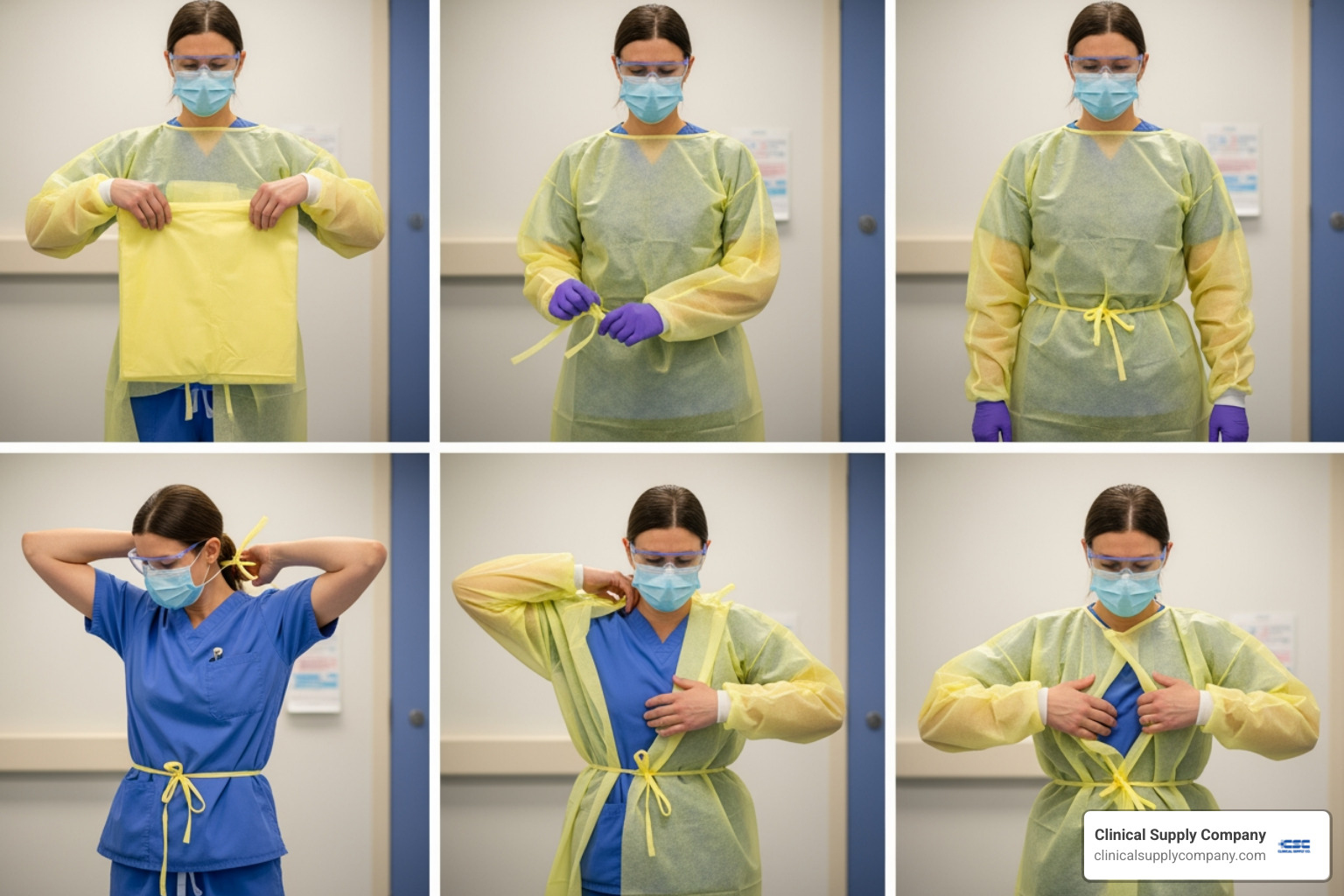
Follow this routine to prevent contamination at every step.
Donning (Putting On):
- Perform hand hygiene.
- Select the appropriate gown, checking for tears.
- Unfold the gown, slide arms through the sleeves, and fasten the neck ties.
- Secure thumb loops if available.
- Wrap the gown around your back and fasten the waist ties.
- Put on gloves, ensuring they overlap the gown's cuffs.
Doffing (Taking Off):
- Remove gloves first, using a glove-in-glove technique, and discard them.
- Untie the waist and neck ties.
- Pull the gown away from your neck and shoulders, touching only the inside surface.
- Roll the gown downward, turning it inside out so the contaminated surface is folded inward.
- Hold the bundled gown away from your body and discard it in a designated waste container.
- Perform hand hygiene immediately.
This meticulous process is vital. For more details, consult our guide on how to discard isolation gowns safely. You can also review the CDC Sequence for Putting On and Removing PPE for standardized procedures.
Choosing the Right Size and Fit
An ill-fitting disposable isolation gown can compromise protection, restrict movement, or cause discomfort. The gown should provide full coverage of your torso, arms, and clothing, extending from your neck to at least mid-thigh. It should be loose enough for a full range of motion but not so baggy that it becomes a hazard.
Many gowns come in universal or one-size-fits-all options, but larger sizes (XL, 2XL) are also available. Consider your team's needs when selecting sizes. Sleeve length is critical; sleeves should be long enough to overlap with gloves. Cuffs, whether elastic or knit, should be snug but comfortable. Check manufacturer specifications for dimensions (e.g., 120cm x 137cm) to ensure an adequate fit for your team. A well-fitting gown improves compliance and safety. For more help, see our insights on how to choose isolation gowns.
Sourcing and Purchasing Gowns
Sourcing quality disposable isolation gowns requires a thoughtful approach that balances protection, compliance, and cost. As a company that has helped dental professionals nationwide steer supply chain challenges, we know what matters when securing reliable PPE.
When purchasing, prioritize the following:
- Quality and Certifications: Ensure gowns meet ANSI 101-1996 standards and the appropriate AAMI levels. FDA and CE certifications are your assurance of safety and testing.
- Material and Construction: Understand the material (polypropylene, SMS, PE-laminated) and construction details like seam type and cuff design, as they directly impact protection.
- Supplier Reputation: A reliable supplier with a proven track record is crucial, especially for bulk orders. Consistency in quality and delivery is key.
- Cost-Effectiveness: The cheapest option isn't always the best value. A slightly higher-priced gown with superior durability can prevent exposures and reduce waste.
- Packaging and Shipping: Choose packaging that fits your storage and usage patterns. Ensure your supplier has adequate stock and can deliver reliably to avoid operational disruptions.
When buying in bulk, look for volume discounts but ensure you have adequate, clean storage space. Check the shelf life on large orders and understand the return policy before committing.
Where to Purchase Gowns
At Clinical Supply Company, we are your go-to source for high-quality, FDA-compliant disposable isolation gowns. As a Midwest-based national dental supply company, we understand the needs of dental professionals and are your partner in maintaining the highest safety standards.
Our selection covers everything from lightweight Level 1 gowns to robust Level 3 options. While gowns are also available through general B2B platforms or direct from manufacturers, these channels often lack the specialized expertise and consistent quality control that a dedicated supplier like Clinical Supply Company provides. Purchasing through large platforms can lead to inconsistent products from various manufacturers, and buying direct often requires significant volume commitments that are impractical for many practices.
Wherever you purchase, prioritize quality, verify certifications, and work with a supplier who understands your needs. Your team's safety is too important to compromise on protective equipment.
Frequently Asked Questions about Disposable Isolation Gowns
Are all disposable isolation gowns fluid-resistant?
No, not all disposable isolation gowns offer the same level of fluid resistance. This varies significantly based on the material and AAMI level. Basic AAMI Level 1 gowns made of polypropylene offer minimal resistance, suitable for low-risk situations. For higher fluid exposure, you need gowns with PE (polyethylene) coating or multi-layer SMS fabric, which correspond to AAMI Levels 2, 3, or 4. Always check the AAMI rating to match the gown's capabilities to the anticipated fluid risk.
Can you reuse a disposable isolation gown?
Absolutely not. Disposable isolation gowns are designed and intended for single-use only. Reusing a gown compromises its barrier integrity, as the material can degrade or develop microscopic tears. It also creates a significant risk of cross-contamination, turning your protective equipment into a liability. For optimal safety, a disposable gown must be discarded properly after every use.
What is the difference between a surgical gown and an isolation gown?
Surgical gowns and disposable isolation gowns serve different purposes. Surgical gowns are sterile and designed for use in sterile environments like operating rooms. They must meet higher AAMI level requirements (typically Level 3 or 4) and often have reinforced critical zones for protection during invasive procedures. In contrast, disposable isolation gowns are generally non-sterile. Their purpose is to protect wearers from contact with infectious materials in non-surgical settings like patient care rooms, dental offices, and labs. They typically range from AAMI Levels 1 to 3.
Conclusion
Choosing the right disposable isolation gowns is a critical step in protecting your team and patients. This guide has equipped you to make confident decisions by explaining the role of gowns as a barrier, the AAMI protection levels, and the different materials and features available. You've learned that details like knit cuffs and thumb loops are essential for reliable protection, and that proper donning and doffing techniques are non-negotiable for safety.
Whether you run a dental practice in Ohio or a medical facility elsewhere, your commitment to safety starts with informed choices. Selecting gowns based on AAMI level, material, and design—and ensuring your team uses them correctly—is a vital investment in workplace safety.
At Clinical Supply Company, we are dedicated to providing FDA-compliant, reliable PPE that meets both safety standards and budget requirements. The right disposable isolation gown provides peace of mind and the confidence to focus on patient care without worrying about exposure risks.
Ready to learn even more? We invite you to explore all about isolation gowns, their different types, and uses for additional insights to refine your PPE strategy.


