

Why Dental Office Hygiene is the Foundation of Patient Safety
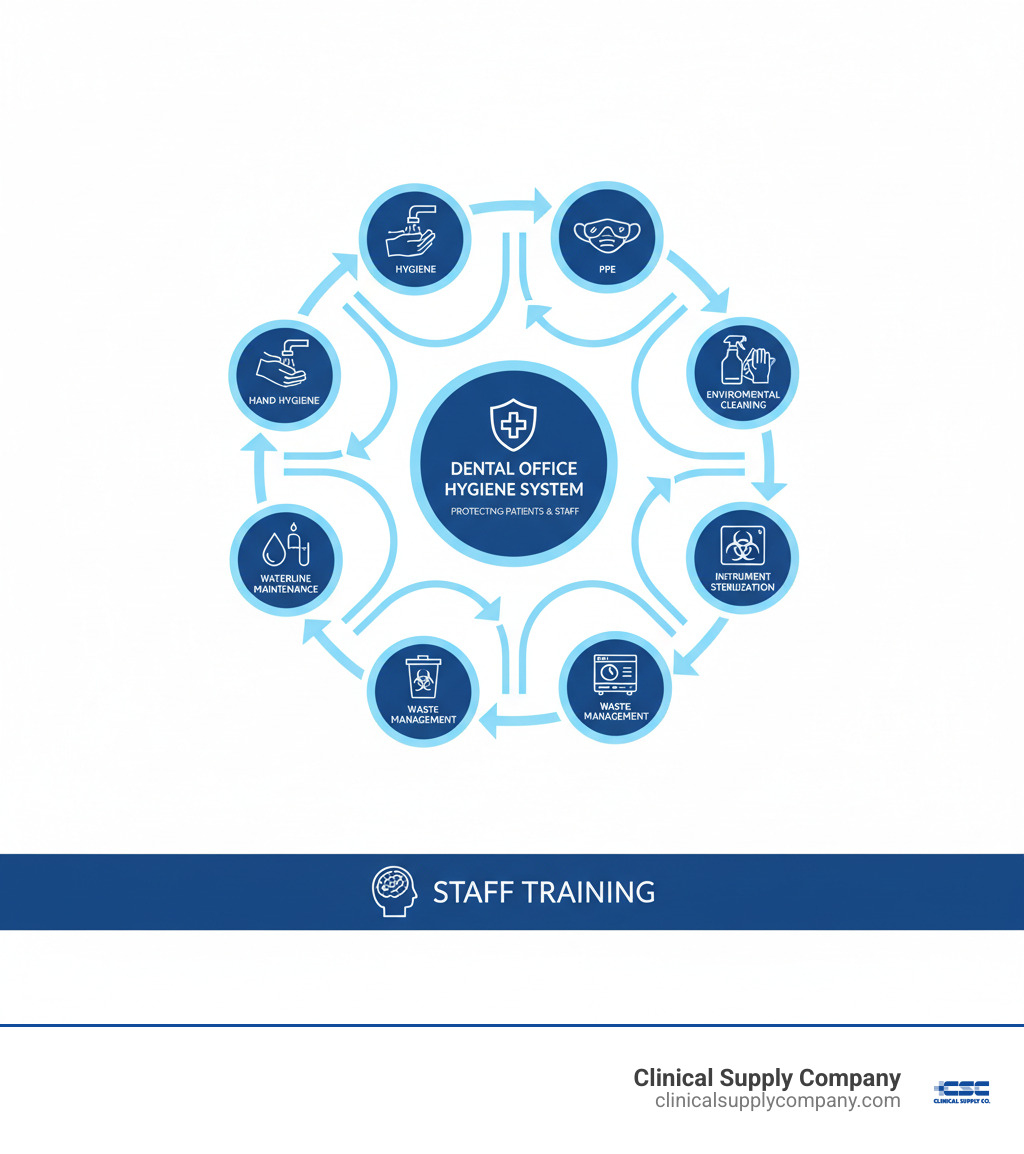
Dental office hygiene is the comprehensive system of infection control practices that protects both patients and staff from disease transmission. A robust program is built on core components: consistent hand hygiene, correct use of Personal Protective Equipment (PPE), thorough environmental cleaning and disinfection, verified instrument sterilization, safe waste management, diligent dental unit waterline maintenance, and ongoing staff training on OSHA standards.
While infection transmission in dental settings is rare, documented cases have revealed breakdowns in these basic procedures. Lapses like failing to sterilize handpieces or improper injection practices are preventable with consistent adherence to established protocols. Your practice's infection control standards directly impact patient safety, staff health, and your professional reputation.
As Adam Schuh, President and CEO of Clinical Supply Company, I've spent years helping dental professionals uphold these standards. My team and I are committed to advancing dental office hygiene by providing FDA-compliant, reliable supplies without the supply-chain disruptions or quality compromises that can affect larger suppliers. We help you maintain excellence and protect your practice.
Foundations of Infection Control: Standard Precautions and Staff Roles
An effective dental office hygiene program is built on a culture of safety, where every team member understands their role in protecting patients. This isn't just about compliance; it's about making safety second nature. The Centers for Disease Control and Prevention (CDC) and the Occupational Safety and Health Administration (OSHA) provide the framework, and your team brings it to life.
The Dental Hygienist's Pivotal Role in Infection Prevention
Your dental hygienist is an infection prevention MVP. Before each patient, they disinfect surfaces, place fresh barriers, set out sterilized instruments, and purge waterlines. During the appointment, they perform hand hygiene, use fresh PPE, and screen for oral health issues, all while maintaining a sterile field. After the patient leaves, they restart the process: disinfecting the operatory, preparing instruments for sterilization, and disposing of waste according to strict protocols. Ensuring they have the necessary supplies is essential to this critical role.
More info about essential supplies for a hygienic dental office
Understanding CDC's Standard Precautions for All Patient Care
Standard Precautions are based on a simple, powerful principle: treat every patient as if they could transmit an infection. This approach applies to all patient care, creating a consistent safety baseline that protects everyone. Key components include:
- Hand Hygiene: The single most effective way to prevent infection. Use soap and water or an alcohol-based hand rub before and after every patient, and after removing gloves.
- PPE Use: Proper use of gloves, masks, and eye protection for every procedure.
- Safe Practices: Includes respiratory hygiene, safe sharps handling, and sterile techniques for injections.
- Sterilization and Disinfection: Proper reprocessing of reusable instruments and routine cleaning of environmental surfaces.
These precautions exist to prevent the kind of preventable lapses that have led to patient harm in the past.
CDC's Summary of Infection Prevention Practices
Essential Training for a Safe Workplace
Your hygiene protocols are only as strong as your team's training. OSHA's Bloodborne Pathogens Standard is the foundation, requiring a written Exposure Control Plan that is updated annually. All team members must be trained on pathogen transmission, proper PPE use, and the steps to take following an exposure incident.
OSHA also requires employers to offer the Hepatitis B vaccination at no cost to employees with occupational exposure. Training should also cover hazard communication (WHMIS in Canada), eyewash station use, and general workplace safety. Documenting all training sessions, immunizations, and monitoring results is crucial for demonstrating your commitment to safety and protecting your practice.
OSHA's Bloodborne Pathogens standard
Personal Protective Equipment (PPE): Your First Line of Defense
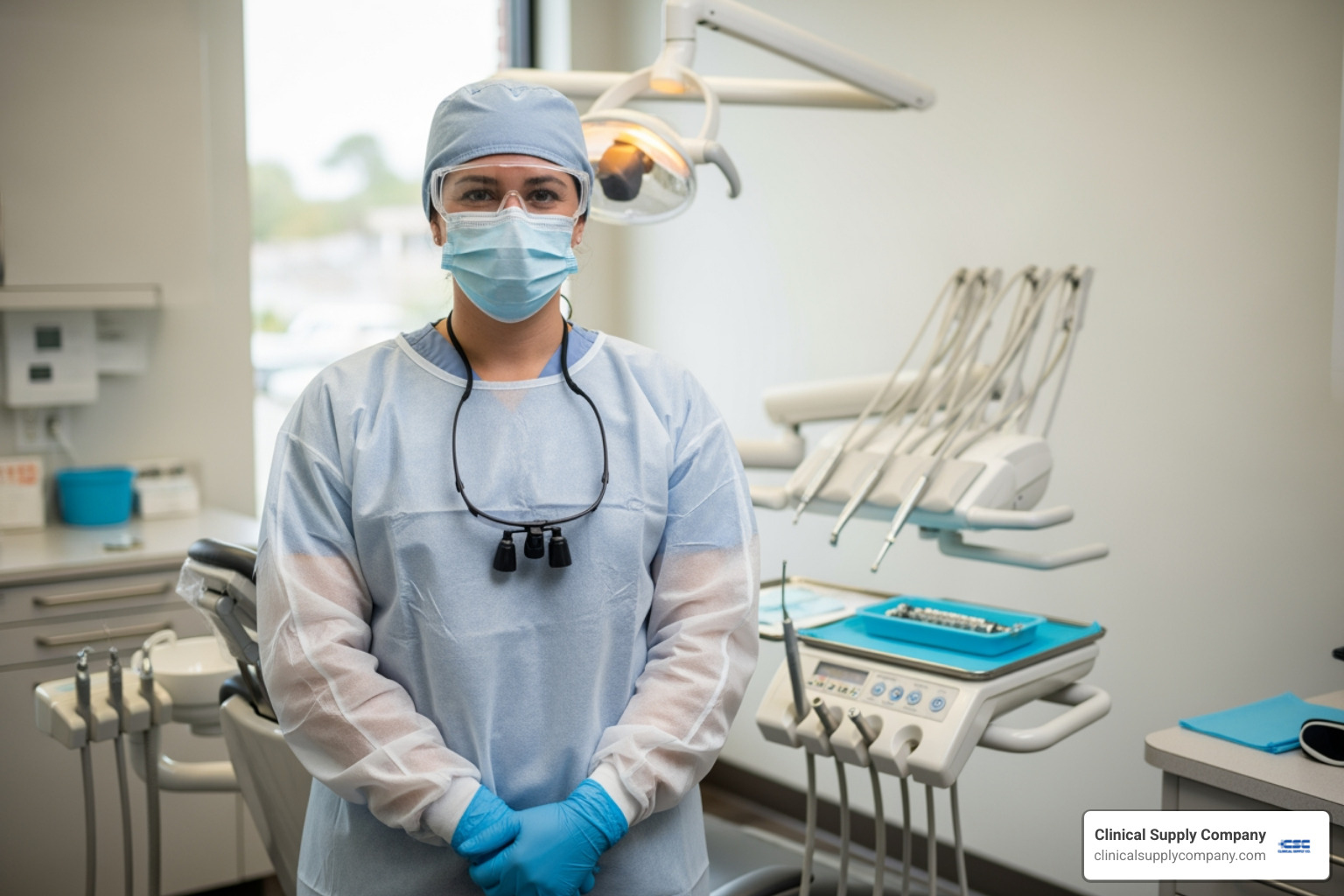
Personal Protective Equipment (PPE) is the essential physical barrier between your team and potential infection. In dentistry, where aerosols and spatter are common, effective dental office hygiene depends on selecting the right PPE for each task and using it correctly every time.
Choosing the Right Gloves for Every Task
Gloves are the most frequently used PPE, preventing microorganism transmission between clinicians and patients. Nitrile gloves have become the industry standard, offering superior puncture resistance and eliminating the risk of latex allergies for both staff and patients. For team members with skin sensitivities, accelerator-free nitrile gloves provide excellent protection without the chemical additives that can cause contact dermatitis.
Regardless of the type, the single-use principle is non-negotiable. Gloves must be changed between every patient and whenever they are torn or heavily soiled. Proper removal technique is also critical to prevent contaminating your hands.
Nitrile Glove Awareness: Understanding the Importance and Benefits Prevent Allergic Reactions: Accelerator-Free Exam Gloves
The Importance of Masks, Eye Protection, and Gowns
A complete PPE strategy protects your entire body. Surgical masks shield your mouth and nose from splashes and aerosols, with N95 respirators offering higher protection for certain procedures. Eye protection, such as safety glasses with side shields or full face shields, is crucial for guarding against spatter. Fluid-resistant isolation gowns protect your skin and clothing from contamination. The choice of PPE should always be based on a risk assessment of the specific procedure being performed.
Face Masks in Dentistry: A Quick Guide How to Choose Isolation Gowns
Proper Donning and Doffing to Prevent Cross-Contamination
Wearing PPE is only half the battle; removing it correctly is just as critical to prevent self-contamination. Always perform hand hygiene before donning and after doffing.
- Donning Sequence: Gown, mask/respirator, eye protection, and finally gloves (pulled over the gown cuffs).
- Doffing Sequence: Gloves, gown (turned inside-out), eye protection, and mask. Remove items carefully, touching only the ties or straps, and perform thorough hand hygiene immediately after.
Using a designated area for donning and doffing helps minimize the spread of contaminants throughout the office.
Revolutionary Glove Removal System Tackles Cross-Contamination in Healthcare
Mastering Environmental Dental Office Hygiene: Cleaning and Disinfection
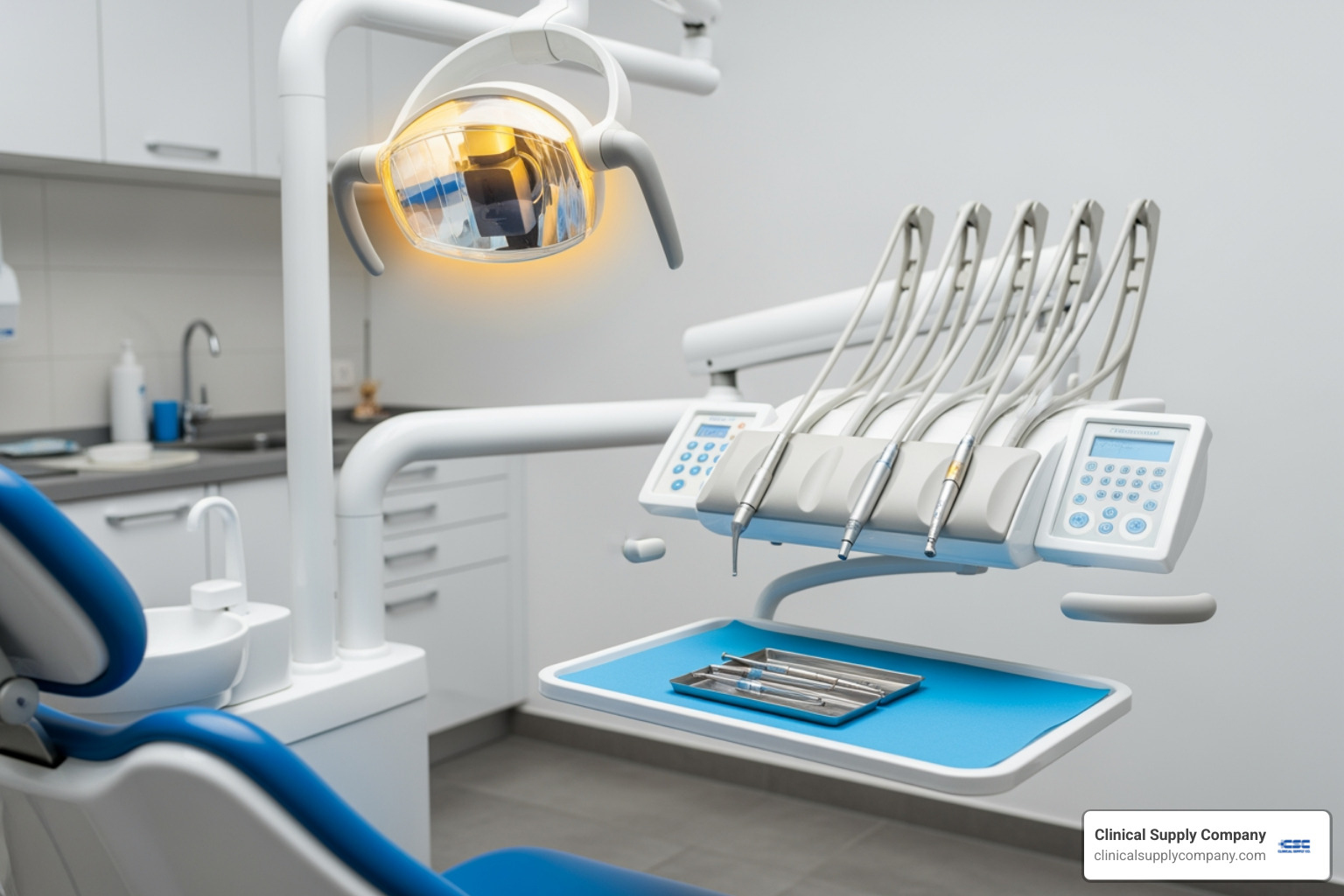
In a dental office, every surface can potentially harbor pathogens. An effective approach to dental office hygiene requires understanding that not all surfaces carry the same risk, allowing you to focus your efforts where they matter most.
Decontaminating Clinical Contact vs. Housekeeping Surfaces
Operatory surfaces fall into two categories. Clinical contact surfaces are high-touch items like light handles, chair controls, and countertops that can be easily contaminated. These must be either protected with single-use barriers or cleaned and disinfected between every patient. Barriers are especially useful for difficult-to-clean equipment.
Housekeeping surfaces like floors, walls, and sinks have a lower risk of transmission. They require routine cleaning on a regular schedule (e.g., daily for floors) rather than between-patient disinfection. This two-tiered approach ensures both safety and efficiency.
Cross Contamination Dental Chair Sleeves Surface Wipes Dental Office Cleaning
Selecting EPA-Registered Disinfectants for Your Practice
Choosing the right disinfectant is crucial. Always use EPA-registered, hospital-grade disinfectants. For clinical surfaces, an intermediate-level disinfectant with a tuberculocidal claim is recommended. While TB transmission from surfaces is not a primary concern, a product that can kill Mycobacterium tuberculosis is effective against a broad spectrum of pathogens.
Always follow the manufacturer's instructions for use, paying close attention to the required contact time—the duration the surface must remain wet for the disinfectant to work. Wiping a surface dry too soon negates the product's effectiveness. Pre-saturated wipes can help ensure consistency and proper application.
Choosing the Best Disinfectant Cleaners EPA's list of registered disinfectants
Implementing a Daily and Between-Patient Cleaning Protocol for dental office hygiene
Consistency is the key to successful dental office hygiene. A standardized protocol ensures every operatory is safe for every patient.
Between Patients: Remove all barriers. Clean surfaces to remove bioburden, then apply an EPA-registered intermediate-level disinfectant, ensuring it remains wet for the full contact time. Transport contaminated instruments to the sterilization area and flush waterlines for 20-30 seconds.
Daily: Thoroughly clean and disinfect all treatment rooms. Process all remaining instruments, empty waste bins, and restock supplies. Perform required daily maintenance on dental unit waterlines.
In addition, schedule periodic checks, such as weekly autoclave spore testing and monthly equipment inspections, to ensure all systems are functioning correctly.
Infection Prevention Checklist for Dental Settings
Instrument Reprocessing and Waste Management
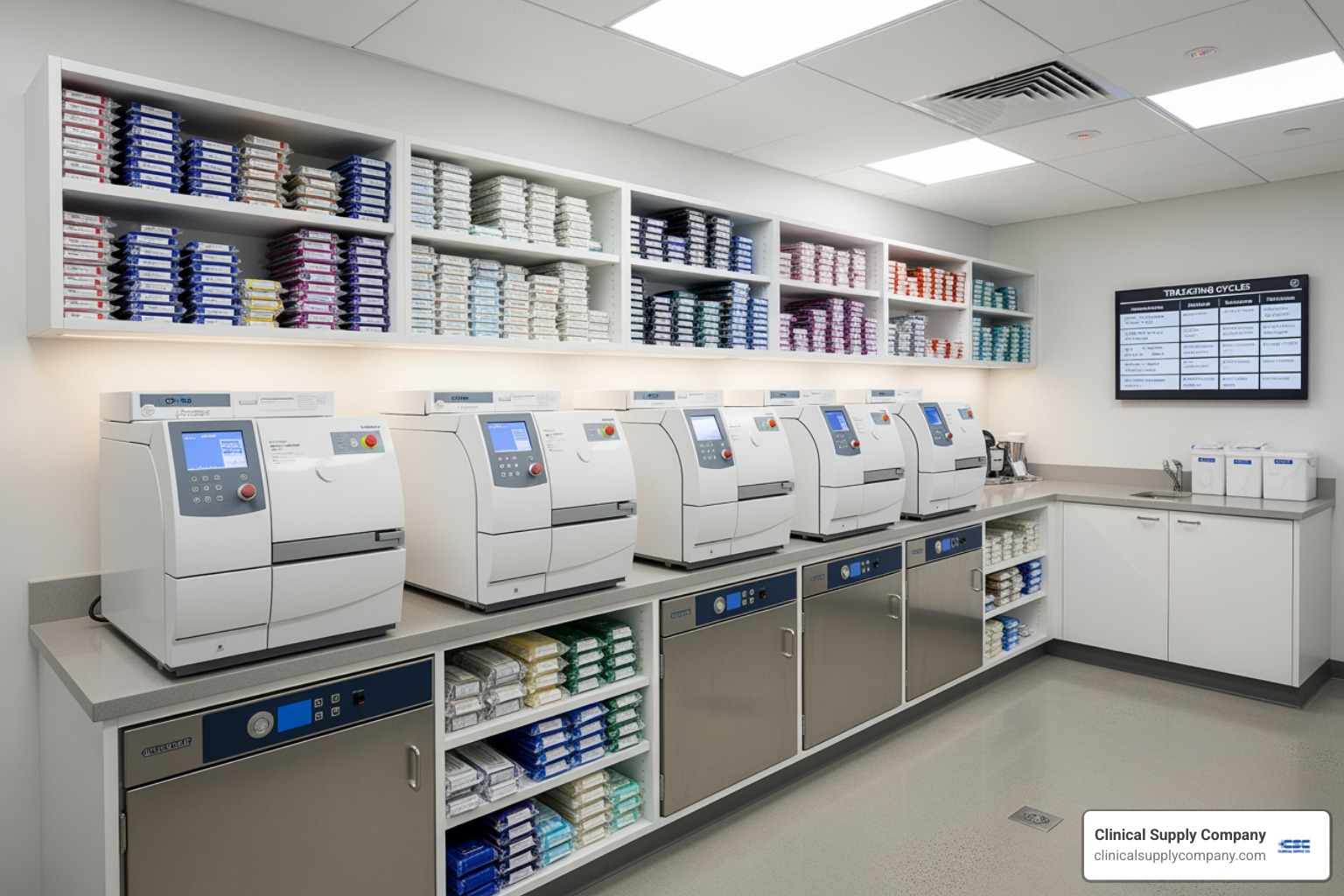
Processes that happen behind the scenes, like instrument sterilization and waste disposal, are the backbone of your dental office hygiene program. These non-negotiable protocols protect every patient and staff member from cross-contamination.
Step-by-Step Guide to Instrument Sterilization
Sterilization eliminates all microbial life, including resilient bacterial spores. The process begins with classifying instruments by risk: critical items (penetrate tissue) and semi-critical items (contact mucous membranes) must be heat-sterilized.
The process follows a strict sequence:
- Cleaning: Instruments must be thoroughly cleaned of all bioburden using an ultrasonic cleaner or instrument washer. Sterilization cannot be achieved on a dirty instrument.
- Packaging: Cleaned instruments are placed in sterilization pouches or cassettes.
- Sterilization: Heat sterilization, typically with a steam autoclave, is the most common method.
- Monitoring: Every cycle is verified. Mechanical indicators (gauges) and chemical indicators (strips/tape) are checked with each load. Biological indicators (spore tests) are the gold standard and must be performed at least weekly to confirm the sterilizer is effectively killing all microorganisms.
- Storage: Sterile packages are stored in a clean, dry, enclosed area until use.
The Best Sterilization Techniques and Mistakes to Avoid The Role of Sterilization in Patient Safety
Safe Disposal of Sharps and Regulated Medical Waste
Proper waste disposal is critical for personnel safety. All sharps (needles, burs, scalpels) must be immediately placed in puncture-resistant, leak-proof sharps containers located at the point of use. Never overfill these containers. Regulated medical waste, such as items saturated with blood, must be segregated from general trash and placed in labeled biohazard bags. Adherence to all local, state, and federal disposal regulations is mandatory.
How to Discard Isolation Gowns Safely
Maintaining Dental Unit Waterlines to Prevent Biofilm
Narrow dental unit waterlines are prone to biofilm, a slimy layer of microorganisms that can contaminate procedural water. To manage this risk, purge all waterlines for 20-30 seconds at the start of each day and between patients. Use an EPA-registered chemical treatment regularly to control microbial growth. Periodically monitor water quality to ensure it meets the EPA standard for drinking water (≤ 500 CFU/mL). For surgical procedures, always use sterile water or saline from a sterile delivery system, bypassing the unit waterlines entirely.
More on water quality in dental settings
Frequently Asked Questions about Dental Office Hygiene
Here are answers to some of the most common questions we receive about maintaining exceptional dental office hygiene.
How often should we monitor our autoclave?
Your autoclave's performance must be verified consistently. The CDC recommends weekly biological monitoring (spore testing). This is the only method that confirms the sterilizer is killing the most resistant microorganisms. In addition, mechanical and chemical indicators should be used with every single load. Chemical indicators confirm exposure to sterilizing conditions, while mechanical indicators provide real-time data on the cycle's time, temperature, and pressure.
What's the difference between cleaning, disinfecting, and sterilizing?
Understanding these terms is fundamental to proper infection control:
- Cleaning: The physical removal of debris and organic matter. It is the essential first step before disinfection or sterilization.
- Disinfecting: Kills most disease-causing microorganisms on surfaces, but not necessarily bacterial spores. It's used for environmental surfaces and some non-critical items.
- Sterilizing: The highest level of microbial kill. It destroys all forms of microbial life, including spores. This process is required for all critical and semi-critical dental instruments.
Are there specific IPAC requirements for digital sensors?
Yes. Digital radiography sensors are considered semi-critical items because they contact mucous membranes. Since they cannot be heat-sterilized, they require a strict protocol. Before each use, the sensor must be covered with an FDA-cleared, single-use barrier. After use, the barrier is discarded, and the sensor must be cleaned and then disinfected with an EPA-registered intermediate-level disinfectant, following the manufacturer's instructions for contact time.
Conclusion
A robust dental office hygiene program is a multi-layered system that combines staff training, correct PPE use, meticulous disinfection, verified sterilization, and vigilant waterline maintenance. This commitment to excellence is the foundation of patient safety. It protects your team, builds patient trust, and solidifies your practice's reputation as a provider of exceptional care.
Maintaining these high standards requires a reliable supply partner who understands what's at stake. At Clinical Supply Company, we are more than just a supplier—we are your partner in patient safety. We offer a comprehensive selection of high-quality dental supplies, consumables, and sterilization products, all chosen to help you uphold the highest standards.
Unlike larger competitors where you might face back-orders or inconsistent quality, we pride ourselves on keeping essential products in stock and ready to ship. We ensure that supply chain challenges never compromise your ability to provide safe, exceptional care. Partner with Clinical Supply Company for reliable, FDA-compliant supplies backed by a team that is committed to your success.
Learn more about balancing efficiency and quality in your dental practice