

Beyond the Chair—A New Standard for Patient Safety
Dental patient protection is a comprehensive approach safeguarding patients through three pillars: privacy and confidentiality (HIPAA, informed consent), infection control (hygiene, PPE, sterilization), and physical safety (radiation protection, emergency protocols). It’s a commitment to respecting patient autonomy, securing health records, and implementing universal precautions to create a safe, transparent environment.
As a patient, you deserve confidential care in an environment that minimizes infection risk. The oral cavity hosts numerous microorganisms, and dental procedures can create significant risk. For example, ultrasonic instruments can aerosolize 100,000 microbes per cubic foot, which can linger for hours. Studies also reveal gaps in safety compliance, with one showing routine protective eyewear use was only 60.3% for dentists.
These facts highlight that dental patient protection is more than just compliance. It’s about building a partnership of trust between the dental team and every patient. From the moment you enter, every detail should communicate one message: your safety is our priority.
This guide explores the principles, protocols, and tools of modern dental patient protection, from HIPAA and Standard Precautions to advanced safety measures. Understanding these layers helps practices lift care and empowers patients.
I'm Adam Schuh, President and CEO of Clinical Supply Company. My work in medical-grade manufacturing focuses on ensuring every product we provide—from PPE to sterilization equipment—upholds the highest standards of dental patient protection. Let's begin.
The Foundation of Trust: Upholding Patient Rights and Privacy
The foundation of dental patient protection is trust, built on a genuine commitment to protecting your rights and privacy. When you share your personal and medical history, you deserve to know it is handled with respect.
Core Principles: Patient Autonomy and Informed Consent
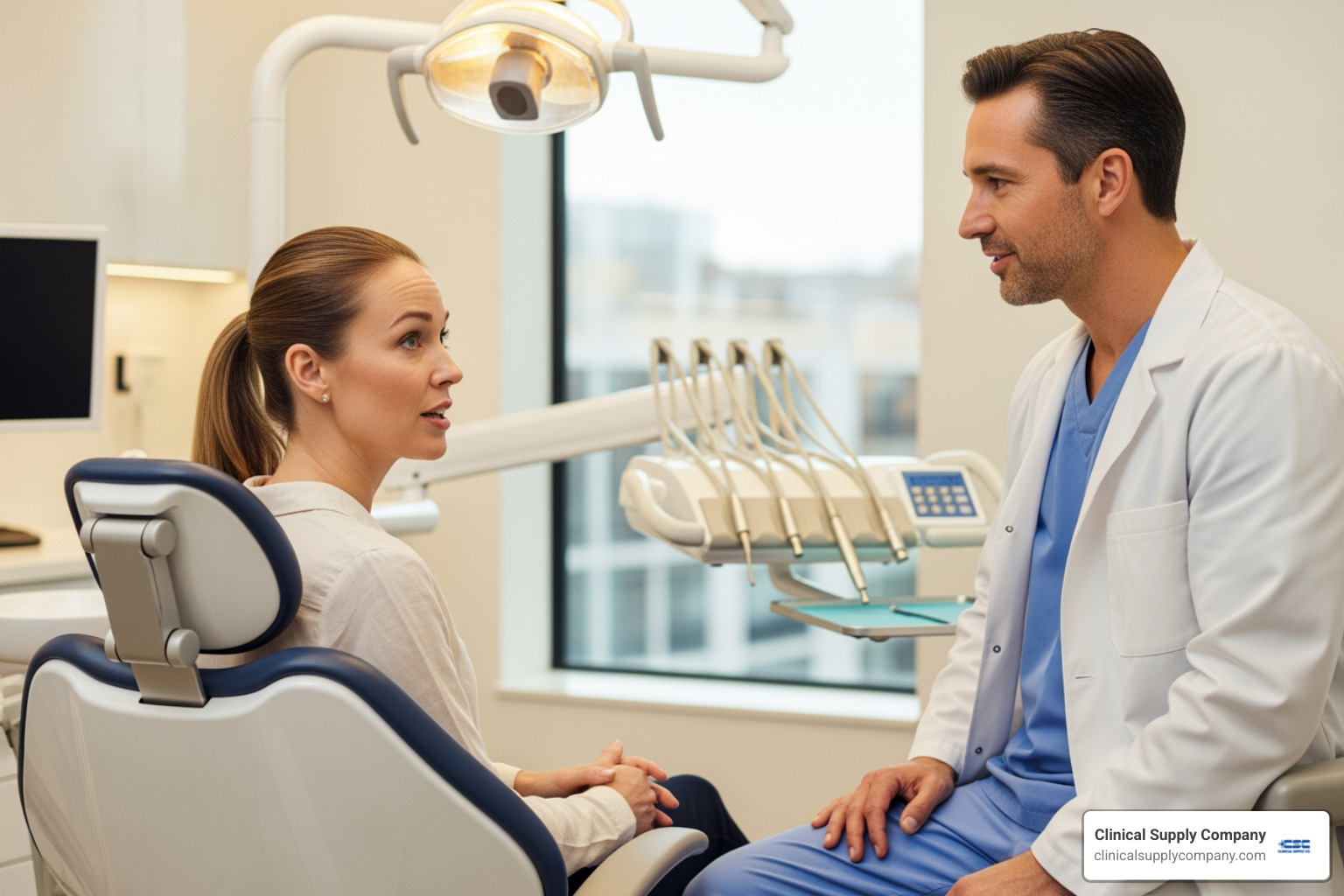
Patient autonomy means you are in charge of your health decisions. The American Dental Association's principles state that your dentist works with you, not on you. This requires your dental team to explain proposed treatments, alternatives, risks, and benefits in plain English so you can make informed choices.
Informed consent is your voluntary agreement to treatment after you fully understand all relevant information. A good practice ensures you have time to ask questions and feel confident in your decisions. This transparency empowers you to be an active partner in your care.
Navigating HIPAA in the Dental Office
The Health Insurance Portability and Accountability Act (HIPAA) sets national standards for protecting your sensitive Protected Health Information (PHI)—any data that can identify you, such as your name, diagnosis, or treatment plans.
Under HIPAA, your dentist must get your written consent before sharing your PHI for purposes other than treatment, payment, or healthcare operations. They must also provide a privacy policy and give you timely access to your records. A helpful HIPAA compliance checklist can offer more details.
You also have an active role. Always read privacy policies and consent forms before signing. Be cautious about sharing health information online. It's also illegal for a dentist to reveal your PHI when responding to an online review, even if you mention it first.
Your dental team must secure your records, whether digital (with encryption) or paper (in locked storage), and conduct ongoing staff training. These measures are practical expressions of respect for your privacy.

At Clinical Supply Company, we know dental patient protection includes a culture of respect. We support this by providing secure storage solutions and privacy-compliant documentation tools, reinforcing the trust patients place in their dental teams.
Universal Safeguards: Implementing Standard Precautions for Dental Patient Protection
A safe, hygienic environment is fundamental to dental patient protection. This is achieved through Standard Precautions—a set of infection prevention practices applied to all patient care, as outlined in the CDC's Guidelines for Infection Control in Dental Health-Care Settings—2003. This universal approach assumes every patient could carry an infection, minimizing risk for everyone.
Given that the oral cavity is a natural reservoir for microorganisms and dental procedures can generate aerosols, robust infection control is indispensable. Standard Precautions integrate hand hygiene, Personal Protective Equipment (PPE), sharps safety, safe injection practices, instrument sterilization, and surface disinfection to create multiple barriers against infection.
The First Line of Defense: Hand Hygiene and PPE
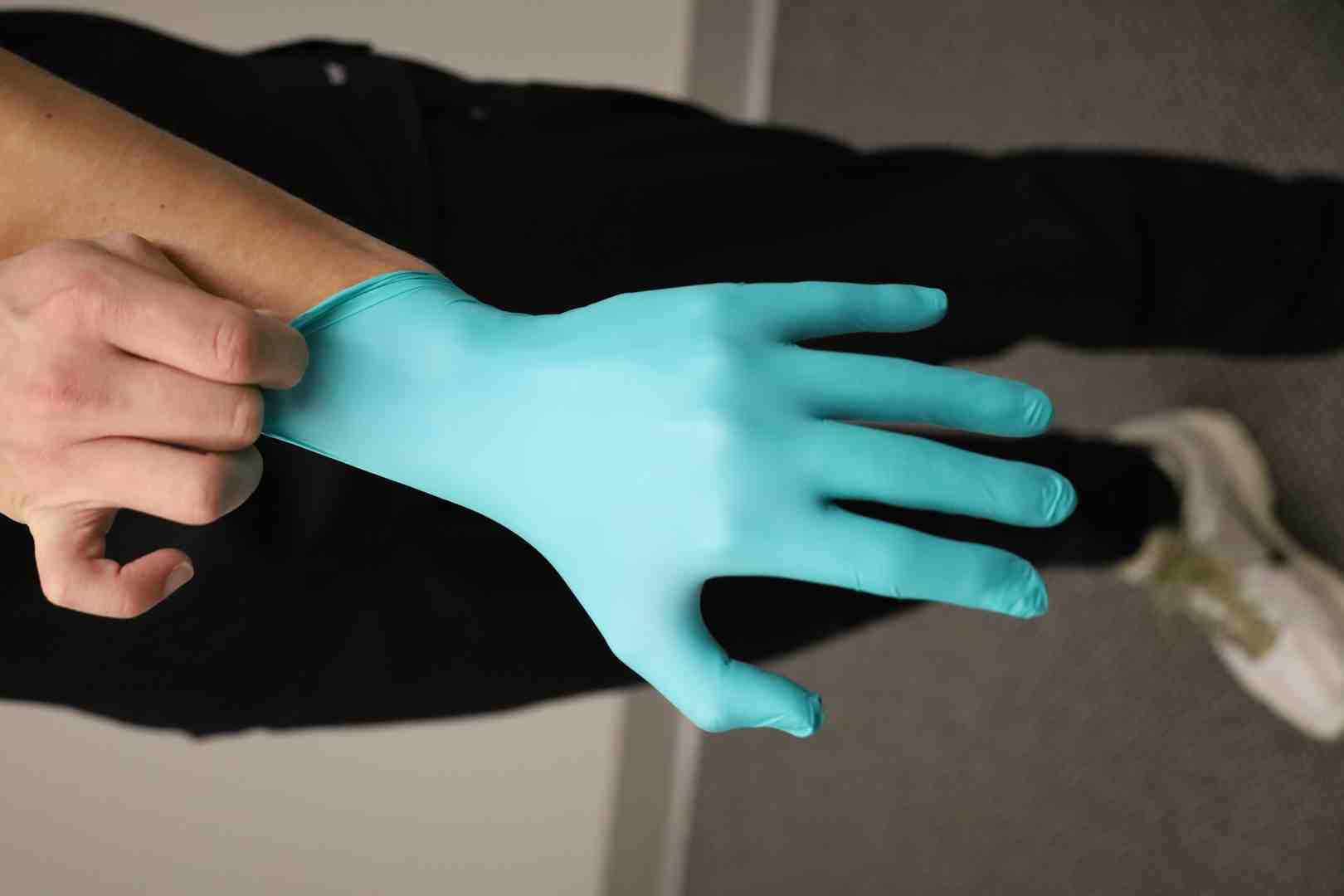
Hand hygiene is the most important measure to prevent infection spread. Staff must perform hand hygiene before and after treating each patient, before donning gloves, and immediately after removing them, using either soap and water or an alcohol-based hand rub.
PPE acts as a shield against splashes and sprays.
- Gloves: A new pair of high-quality nitrile gloves must be used for every patient. Our guide to Nitrile Glove Awareness: Understanding the Importance and Benefits explains why material choice is critical.
- Face Masks: Masks with high Bacterial Filtration Efficiency (BFE) are essential. Our article on Face Masks for Dentists details proper selection.
- Protective Eyewear: Eye protection is crucial, yet studies show compliance is often low. Full compliance is necessary to prevent injuries.
- Gowns: Isolation Gowns in Preventing Spread of Infections protect skin and clothing from contamination.
All PPE must be removed before leaving the work area, followed by hand hygiene.
Creating a Safe Environment: From Sharps to Surfaces
Managing the clinical environment is just as critical as personal barriers. This includes respiratory hygiene/cough etiquette in waiting areas, with tissues and hand sanitizer readily available.
Sharps safety prevents injuries from burs and needles. This involves using engineering controls like safety syringes and work-practice controls like the one-handed scoop technique for recapping. Used sharps must be placed in puncture-resistant containers. Our guide on Ensuring Safety with Dental Needles provides more detail.
Safe injection practices are non-negotiable: needles and syringes are never used for more than one patient.
Instrument sterilization and surface disinfection are the final layers. Reusable instruments are cleaned and then heat-sterilized, a process detailed in The Complete Guide to Dental Sterilization Equipment: Protecting Patients and Your Practice. Clinical surfaces are cleaned and disinfected between patients using effective Surface Wipes: Dental Office Cleaning.
Together, these Standard Precautions create overlapping layers of protection, dramatically reducing infection risk and demonstrating a commitment to patient safety.
Advanced Protocols: Managing High-Risk Scenarios and Radiation
While Standard Precautions are the foundation, high-risk scenarios involving infectious disease or radiation require advanced protocols for dental patient protection. These measures create confidence that every possible precaution is in place.
Managing Infectious Disease Transmission
Lessons from the COVID-19 pandemic have permanently improved infection control. Following CDC guidance, practices now use a layered approach to manage potentially infectious patients. This includes:
- Pre-appointment screening for symptoms and postponing non-emergency care if necessary.
- Upgraded ventilation systems and portable HEPA filtration units to clean the air.
- Improved PPE, such as N95 respirators, for aerosol-generating procedures.
- Pre-procedural mouth rinses to reduce the microbial load in aerosols.
- Use of high-volume evacuators to capture contaminants at the source. Our guide on Dental Saliva Ejectors: Patient Comfort explores how these devices work.
- Allowing adequate time between patients for air exchange and surface disinfection.
These protocols, guided by resources like the CDC: Guidance on Dental Settings, have become the new standard.
A Core Component of Dental Patient Protection: Radiation Safety
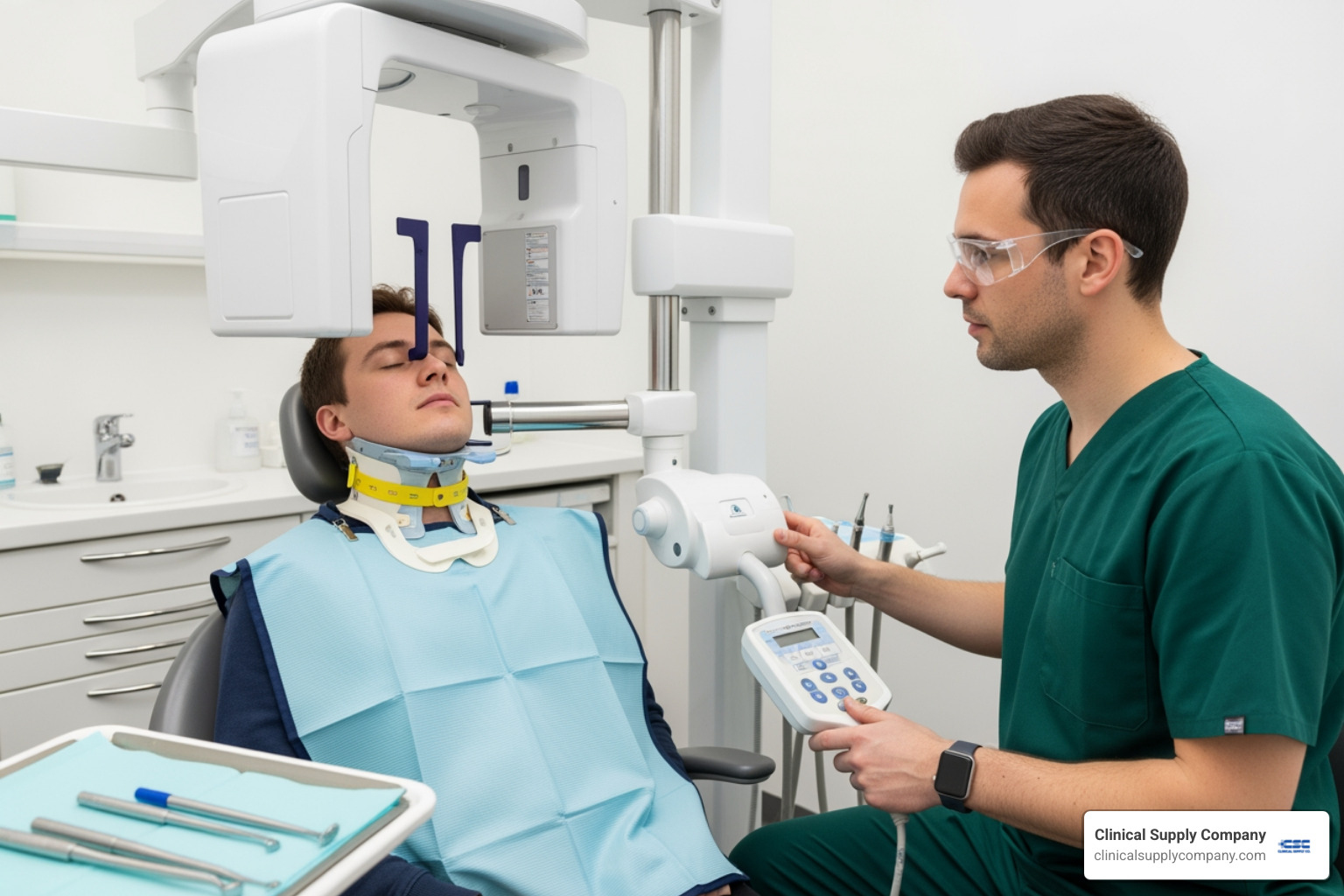
Dental X-rays are vital diagnostic tools that require careful radiation safety management. The guiding principle is ALARA (As Low As Reasonably Achievable), which means every decision is made to minimize radiation exposure for both patients and staff.
Staff and Equipment Safety: X-ray equipment is regularly calibrated and inspected. Staff are trained in safe operation and use protective barriers or maintain a safe distance during exposures.
Patient Protection Measures: The ALARA principle is applied rigorously for patients.
- Justification: X-rays are only taken when clinically necessary, based on individual risk factors, not a fixed schedule.
- Shielding: Lead aprons and thyroid collars are essential to shield sensitive organs.
- Technology: Modern practices use fast digital sensors, which can reduce radiation by 50-80% compared to film, and rectangular collimation to narrow the X-ray beam, reducing exposure by up to 60%.
Is it safe to get dental X-rays during pregnancy?
Yes. The American College of Obstetricians and Gynecologists (ACOG) confirms that dental X-rays are safe during pregnancy with proper shielding. The radiation dose is extremely low. Postponing necessary X-rays for a dental infection can pose a greater risk to both mother and baby than the minimal radiation exposure. Always inform your dentist if you are or might be pregnant.
Frequently Asked Questions about Dental Patient Protection
Understanding how dental patient protection works in practice builds confidence. Here are answers to common patient questions.
How can I be sure my dentist's instruments are sterile?
Every reusable instrument undergoes a rigorous, multi-step process. First, instruments are cleaned to remove debris. Then, they are packaged and sterilized in an autoclave, which uses steam under high pressure and temperature to kill all microorganisms.
Practices verify sterilization using two methods: chemical indicators on packages that change color and weekly biological indicator (spore) testing. If the highly resistant spores in the test vial are killed, the sterilizer is confirmed to be working effectively. This comprehensive approach ensures every instrument is sterile. Learn more in our article on The Role of Sterilization in Patient Safety.
Is it safe to get dental X-rays during pregnancy?
Yes. The American College of Obstetricians and Gynecologists (ACOG) confirms that dental X-rays are safe during pregnancy when a lead apron and thyroid collar are used for shielding. The radiation dose from modern digital X-rays is minimal. Often, the health risk of an untreated dental infection is far greater than the small radiation risk. Always inform your dental team if you are or might be pregnant.
What are my rights if I have a concern about safety or privacy?
You have the right to voice any concerns. Your first step should be to speak directly with the dentist or office manager. Most issues can be resolved through open communication.
If you are not satisfied, you have further options:
- For safety or professional conduct concerns, contact your state dental board.
- For privacy issues, you can file a complaint with the U.S. Department of Health and Human Services Office for Civil Rights (OCR), which enforces HIPAA.
Asking questions makes you an engaged partner in your care, which is a key part of dental patient protection.
Conclusion: A Partnership in Protection
Modern dental patient protection is built on three pillars: respecting privacy, preventing infection, and ensuring physical safety. These principles represent a commitment to patient well-being that transforms dental care into a genuine partnership. Every action, from securing your data under HIPAA to sterilizing instruments and using lead aprons for X-rays, is designed to build trust and ensure your safety.
As a patient, you are a vital part of this partnership. By asking questions, understanding your rights, and voicing concerns, you help lift the standard of care for everyone.
At Clinical Supply Company, we are proud to support dental professionals in upholding these high standards. As a Midwest-based company from Ohio, we provide a comprehensive selection of high-quality supplies, from FDA-verified PPE to sterilization equipment. We are committed to being a reliable one-stop shop because we know that consistency and quality control in your supply chain directly impacts patient safety.
The professionals who partner with us understand that every product plays a role in protecting patients.
If you're a dental professional dedicated to patient safety, we invite you to explore our essential guides for dental clinic safety and find how our products can support your practice. Dental patient protection is about creating an environment where every patient feels safe, valued, and protected.