

Why Healthcare Professionals Are Switching to Accelerator-Free Protection
Accelerator Free Gloves are disposable gloves manufactured without chemical accelerators (thiurams, carbamates, and mercaptobenzothiazoles) that can trigger Type IV allergic reactions. Here's what makes them different:
- Traditional nitrile gloves contain chemical accelerators that speed up manufacturing but can cause delayed allergic reactions
- Accelerator-free gloves eliminate these chemicals while maintaining the same strength and protection
- Key benefit: Prevent contact dermatitis (redness, itching, blisters) that appears 24-48 hours after glove use
- Performance: No compromise in durability—some formulations are over 300% stronger than traditional nitrile
- Ideal for: Healthcare workers, dental professionals, lab personnel, and anyone experiencing skin reactions to standard nitrile gloves
Working in a dental clinic is demanding enough without worrying about what's inside your protective equipment. Many professionals assume that switching from latex to nitrile gloves eliminates all allergy risks. Unfortunately, that's not the case.
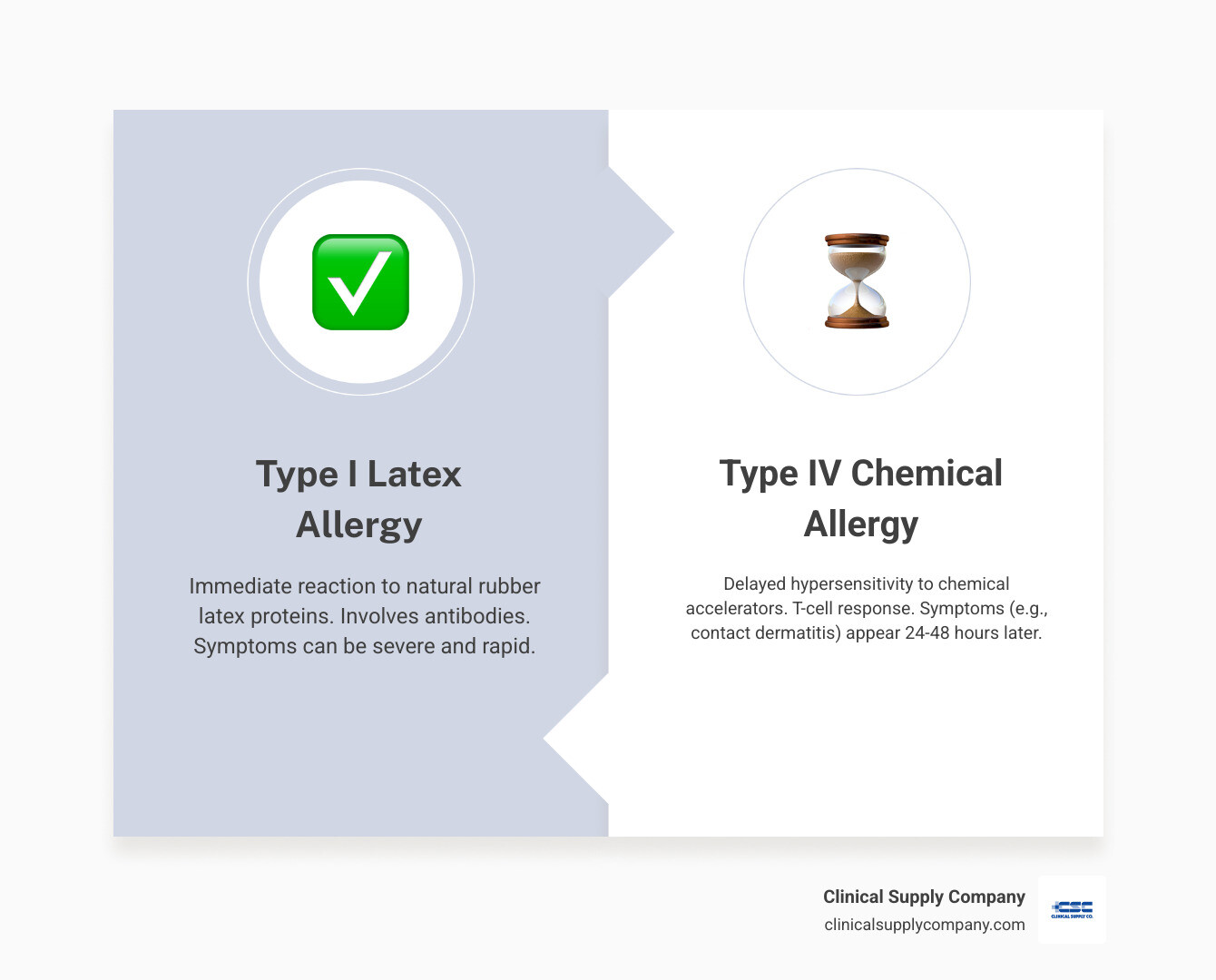
Unlike Type I latex allergies (immediate reactions to latex proteins), Type IV allergies are delayed reactions to chemical accelerators used in manufacturing. These reactions don't happen right away—they develop 1-2 days after exposure, making them harder to identify.
Contact dermatitis from these chemicals affects healthcare workers nationwide. The symptoms include persistent redness, intense itching, dry cracked skin, and painful blisters. For dental professionals who wear gloves for hours every day, this isn't just uncomfortable—it can threaten their ability to work.
More than 13 million workers in the United States are potentially exposed to chemicals that can be absorbed through the skin, and contact dermatitis accounts for 10-15% of all occupational illnesses. The annual cost? At least $1 billion.
I'm Adam Schuh, President and CEO of Clinical Supply Company, and I've spent years working to solve this exact problem through our development of accelerator-free nitrile technology. Our work with Accelerator Free Gloves has helped reduce contamination risk by 73% while protecting practitioners from chemical sensitivities.
Understanding Glove Allergies: More Than Just Latex
When most people hear "glove allergies," they immediately think of latex. That makes sense—Type I latex allergies are serious business. These immediate reactions to proteins in natural rubber latex can happen within minutes and range from uncomfortable to downright dangerous.
But here's where things get confusing: you switched to latex-free nitrile gloves, yet your hands are still red, itchy, and covered in blisters. What gives?
The answer often lies in Type IV allergies, a completely different type of reaction that catches many healthcare professionals off guard. Unlike the antibody-driven response of Type I allergies, Type IV reactions involve your T-cells—a type of white blood cell that triggers inflammation in your skin. The tricky part? These symptoms don't show up right away.
Type IV allergies are delayed hypersensitivity reactions. You might wear gloves on Monday and feel fine, only to wake up Wednesday morning with uncomfortable symptoms. This 24-48 hour delay makes it incredibly difficult to connect the dots between your gloves and your skin problems.
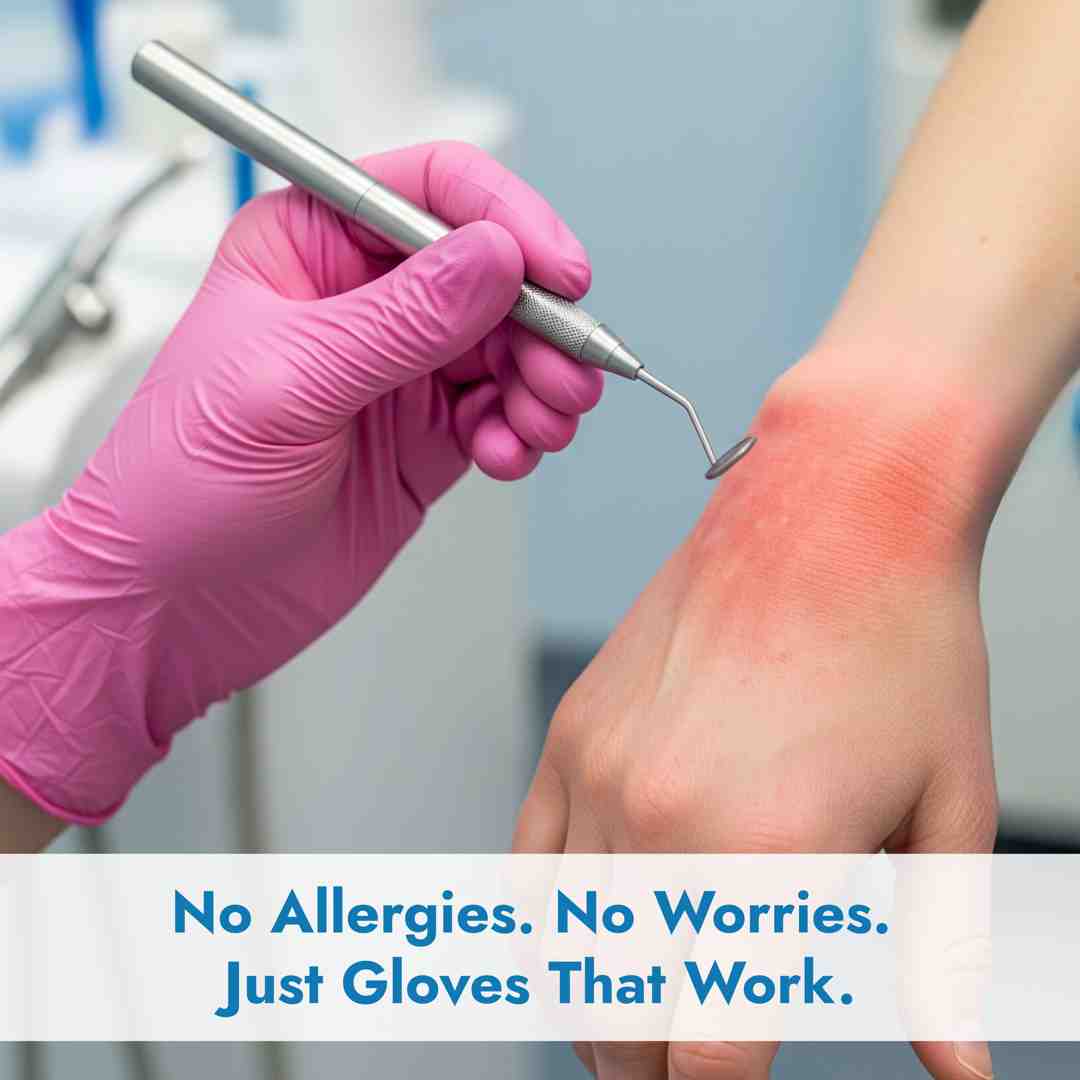
The symptoms of contact dermatitis from these reactions include persistent redness, intense itching, painful blisters, burning sensations, and sometimes even increased sun sensitivity. While latex allergies can be life-threatening, reactions to chemicals in nitrile gloves typically manifest as this uncomfortable but less severe contact dermatitis.
It's worth noting that not all skin irritation is allergic. Simple irritant contact dermatitis—caused by friction, moisture, or harsh cleaning—can produce similar symptoms without involving your immune system at all. This is why pinpointing the exact cause matters so much.
Here's the encouraging news: research shows that Accelerator Free Gloves really work. Scientific research on glove allergy in healthcare workers found that more than 66% of healthcare workers experiencing allergic contact dermatitis saw complete resolution of their symptoms after switching to accelerator-free alternatives. That's two out of every three people finding relief simply by changing their gloves.
For more details on these concerns, check out allergy concerns with latex-free gloves.
What Are Chemical Accelerators in Traditional Gloves?
Let's talk about what's actually causing these delayed reactions. The culprits are chemical accelerators—sulfur-based compounds added during the glove manufacturing process.
During production, raw liquid nitrile needs to be transformed into the stretchy, durable material that protects your hands. This change happens through a process called vulcanization, and accelerators are what make it work efficiently. Think of them as the catalyst that turns liquid into the flexible barrier you depend on.
Manufacturers add these chemicals for good reasons. Accelerators dramatically speed up the curing process, which reduces production time and costs. They help create the softness and tactile sensitivity you need for precise work. They contribute to the glove's elasticity and durability—those qualities that let you stretch a glove without tearing it and wear it for hours without failure.
The problem? These same helpful chemicals can trigger allergic reactions in sensitive individuals. The most common accelerators include thiurams, carbamates, and mercaptobenzothiazoles (MBTs)—all sulfur-based compounds that can be absorbed through your skin and trigger that delayed immune response we discussed earlier.
When you wear traditional nitrile gloves, these accelerators can leach out and come into contact with your skin. For some people, this contact is no big deal. For others, it's the start of a frustrating cycle of skin problems that can seriously impact their ability to work.
Understanding this distinction between latex proteins and chemical accelerators is the first step toward finding the right hand protection. You can learn more about protecting your hands from glove risks to make informed decisions about your safety.
What Are Accelerator Free Gloves and How Are They Made?
Now that we understand the problem, let's dive into the solution. If you've been dealing with skin reactions from your nitrile gloves, you're probably wondering what makes Accelerator Free Gloves different—and whether they're made through some complicated, expensive process.
The answer is surprisingly straightforward. Accelerator Free Gloves are disposable gloves manufactured without the chemical accelerators (thiurams, carbamates, and MBTs) that typically cause Type IV allergies. We've simply reimagined the traditional nitrile glove production process to eliminate these problematic chemicals while maintaining everything you love about nitrile: the strength, the flexibility, the reliable protection.
The standard nitrile glove production starts with liquid nitrile butadiene rubber (NBR). Ceramic hand-shaped formers are dipped into this liquid, then the real change happens during the curing process. This is where traditional glove manufacturers add those chemical accelerators to speed things up and cross-link the nitrile polymers. It's efficient, it's cost-effective, and it works—but it leaves behind those irritating chemicals.
For Accelerator Free Gloves, we take a different path. Instead of relying on those sulfur-based accelerators, we use modified formulas and alternative curing methods. This might involve different heat treatments, longer curing times, or alternative non-sensitizing compounds that achieve the same cross-linking without the problematic chemicals. Yes, it requires more precision and care, but the result is worth it.
After curing, the gloves go through a thorough leaching and washing process to remove any residual chemicals. For accelerator-free gloves, this step is particularly rigorous—we want to ensure minimal irritants remain. Then comes chlorination and finishing, where we add the features you expect: smooth donning, beaded cuffs, and textured fingertips for better grip.
The beauty of this process is that we're not compromising on quality to achieve safety. We're simply being more thoughtful about how we get there. The result is a cleaner product that eliminates the major source of chemical irritants while providing a genuine solution for those with Type IV allergies. This careful attention to manufacturing is exactly why accelerator-free nitrile gloves are increasing in popularity across healthcare settings.

Performance and Strength: Are There Compromises?
I know what you're thinking. "This sounds great, but if you remove the chemicals that make gloves strong and elastic, aren't they going to be weaker?" It's the most common question we hear, and honestly, it's a smart one to ask.
Here's the truth: there are absolutely no performance compromises with Accelerator Free Gloves. In fact, when we look at the data, these gloves often outperform their traditional counterparts.
Modern manufacturing techniques and advanced formulations have completely changed the game. Research consistently shows that there's no compromise in physical film strength or chemical permeation capabilities. These gloves offer the same reliable barrier protection you'd expect from any high-quality nitrile glove. Your hands are just as protected from bloodborne pathogens, chemicals, and contaminants.
But here's where it gets really interesting: some advanced accelerator-free nitrile formulations actually demonstrate elongation and tensile strength over 300% stronger than traditional nitrile. That's not a typo. By carefully engineering the polymer cross-linking without relying on accelerators, manufacturers have created gloves that are incredibly durable, resisting tears and punctures even under demanding conditions.
The chemical resistance remains excellent too. Despite the absence of accelerators, these gloves maintain their resistance to a wide range of chemicals, making them suitable for everything from dental procedures to laboratory work to industrial applications. And if you're worried about losing that tactile sensitivity that makes nitrile gloves so popular? Don't be. Many accelerator-free gloves are designed with lightweight nitrile technology that gives you superior strength alongside outstanding tactile sensitivity and dexterity. You get that "second-skin" feel that's crucial for intricate dental work or delicate medical procedures.
So when you choose Accelerator Free Gloves, you're not sacrificing anything. You're simply choosing a glove that meets the highest standards of safety and comfort, specifically engineered to protect sensitive skin without any trade-offs in protective capabilities. If you're still wondering about safety, you can learn more about whether accelerator-free gloves are truly safe.
The Key Benefits of Switching to Accelerator-Free Nitrile Gloves
Let's be honest: if you're spending hours every day with your hands in gloves, those gloves better be doing more than just protecting you from germs. They need to protect you from themselves. That's exactly what Accelerator Free Gloves deliver—protection without the hidden chemical irritants that can make your workday miserable.

The most immediate benefit? Relief for sensitive skin. If you've been dealing with red, itchy, dry, or blistered hands after wearing traditional nitrile gloves, switching to accelerator-free options can feel like a revelation. By removing the chemical accelerators that trigger Type IV allergic reactions, these gloves dramatically reduce skin irritation and improve overall comfort during wear.
Think about what that means for your daily work. No more constant distraction from uncomfortable hands. No more wondering if you'll make it through a long procedure without your skin flaring up. For professionals who wear gloves for extended periods—and that's most of us in dental and healthcare settings—this improved comfort translates directly to better focus and performance.
Beyond personal comfort, there's a safety dimension that matters for everyone involved. Accelerator Free Gloves create a safer environment for both the wearer and the patient. Healthcare and dental professionals face enough occupational hazards without adding preventable skin conditions to the list. By eliminating common chemical irritants, you're protecting your long-term hand health and career sustainability. After all, contact dermatitis isn't just uncomfortable—it can become debilitating enough to affect your ability to work.
The peace of mind that comes with knowing your protective equipment won't harm you is genuinely valuable. You can concentrate on providing excellent patient care instead of managing your own discomfort. For a comprehensive look at these advantages, explore more info on the benefits of accelerator-free nitrile gloves.
The Best Safety of Accelerator Free Gloves for Sensitive Skin
For those with sensitive skin, Accelerator Free Gloves aren't just an improvement—they're often the difference between continuing in your profession comfortably or struggling through every shift. These gloves are specifically designed with hypoallergenic properties that actively prevent contact dermatitis before it starts.
The key is what's not in them. Traditional nitrile gloves contain chemical accelerators that can leach from the glove material onto your skin throughout the day. Even in small amounts, this chemical exposure builds up over time and can trigger delayed allergic reactions. With accelerator-free gloves, you're getting a cleaner product with significantly reduced chemical leaching.
This matters not just for your hands, but for everything you touch. In dental work, you're handling delicate materials and working in patients' mouths. Knowing that your gloves aren't introducing unnecessary chemicals into that environment provides genuine peace of mind. You're protecting yourself while also maintaining the highest standards of patient care.
The results speak for themselves. Research shows that more than 66% of healthcare workers experiencing allergic contact dermatitis found complete resolution of their symptoms after switching to accelerator-free alternatives. That's a remarkable success rate for such a straightforward change. For additional strategies on protecting your hands, see more info on preventing allergic reactions.
How Accelerator-Free Nitrile Compares to Other Glove Types
Understanding where Accelerator Free Gloves fit in the bigger picture helps clarify why they're becoming the gold standard for professionals with sensitive skin. Let's look at how they compare to traditional nitrile and latex gloves across the factors that matter most:
| Comparison Criteria | Accelerator-Free Nitrile Gloves | Traditional Nitrile Gloves | Latex Gloves |
|---|---|---|---|
| Type I Allergy Risk | Low (Latex-free) | Low (Latex-free) | High (Latex protein) |
| Type IV Allergy Risk | Very Low (Accelerator-free) | High (Chemical accelerators) | Low (Other chemicals can still be present) |
| Durability | Excellent (often 300%+ stronger) | Good | Good |
| Puncture Resistance | Excellent | Good | Good |
| Tactile Sensitivity | Excellent (similar to latex) | Good | Excellent |
What's remarkable about accelerator-free nitrile is how it addresses both major allergy concerns without sacrificing performance. When the dental industry first moved away from latex gloves to address Type I allergies, it was a necessary step forward. But traditional nitrile gloves inadvertently created a new problem with Type IV reactions to chemical accelerators.
Accelerator Free Gloves solve both issues simultaneously. You get the latex-free protection that eliminates immediate allergic reactions, combined with the absence of accelerators that prevents delayed hypersensitivity. And here's the best part: you're not giving up anything in terms of strength, puncture resistance, or that crucial tactile sensitivity you need for precise dental work.
The performance is genuinely comparable to—and often exceeds—what you'd get from traditional options. Some formulations are over 300% stronger than standard nitrile, offering superior durability and barrier protection. This means you can protect your hands from chemical irritants and get better overall glove performance. For a deeper dive into how different glove types compare, check out more info on nitrile vs. other gloves.
Who Should Use Accelerator-Free Gloves? Key Industries and Professions
If you're wondering whether Accelerator Free Gloves are right for your profession, the answer is probably yes—especially if you spend a significant portion of your day with gloves on. We've watched these specialized gloves transform workplaces across countless industries, and the feedback has been overwhelmingly positive.
Healthcare professionals are among the most frequent users, and for good reason. Doctors, nurses, medical assistants, and anyone providing direct patient care face some of the highest rates of occupational contact dermatitis. When you're changing gloves dozens of times a shift, the cumulative exposure to chemical accelerators can really take its toll. These gloves offer critical protection that allows healthcare workers to focus on patient care rather than their own hand discomfort.
The dental industry is particularly close to our hearts at Clinical Supply Company. Dentists, hygienists, dental assistants, and lab technicians perform incredibly precise work that requires both excellent tactile sensitivity and prolonged glove wear. The combination of intricate procedures and extended contact with glove materials makes accelerator-free options essential for maintaining hand health throughout a career. We've seen how switching to these gloves has allowed dental professionals to continue practicing comfortably, even after developing sensitivities to traditional gloves. More info on advanced gloves in dentistry highlights just how transformative this technology has been for the field.
Laboratory professionals—including researchers, lab technicians, and scientists—need gloves that can handle various chemicals while still providing the precise tactile sensitivity required for delicate work. The same goes for those in pharmaceutical and biotech settings, where both hand protection and product integrity are non-negotiable. These environments demand gloves that won't compromise either safety or performance.
In the food handling industry, workers in food preparation, processing, and service face their own unique challenges. Long hours of glove wear combined with the need for strict hygiene standards make comfort and skin health essential. Nobody wants to choose between protecting food safety and protecting their hands—with accelerator-free gloves, they don't have to.
Tattoo artists and aestheticians have finded these gloves are game-changers for their work. Both professions require exceptional tactile sensitivity and involve prolonged glove wear during close contact with clients. The last thing you want is a skin reaction interfering with your artistry or your ability to serve clients comfortably.
Even in automotive and engineering settings, mechanics and technicians benefit from gloves that offer durable protection against oils, greases, and industrial fluids without causing skin irritation. Similarly, janitorial services staff who regularly handle various cleaning agents and wear gloves for extended periods find these gloves significantly more comfortable for their daily tasks.
The truth is, anyone who wears gloves frequently, has sensitive skin, or has experienced even mild discomfort with traditional gloves should consider making the switch. The National Institute for Occupational Safety and Health (NIOSH) provides valuable guidance on occupational skin diseases, emphasizing the importance of selecting appropriate protective equipment to prevent these conditions. You can explore their recommendations at NIOSH guidance on occupational skin disease.
At Clinical Supply Company, we've made it our mission to provide dental professionals and other healthcare workers with the absolute best protective equipment available. Accelerator Free Gloves represent a significant advancement in occupational health, and we're proud to offer them as part of our commitment to keeping your hands healthy and your practice running smoothly.
Frequently Asked Questions
We know making the switch to Accelerator Free Gloves is a big decision, and you probably have questions. Let me address the most common concerns we hear from dental professionals and healthcare workers every day.
How do I know if I need accelerator free gloves?
The telltale sign that you might need Accelerator Free Gloves is experiencing a delayed reaction—not right away, but about 24 to 48 hours after wearing traditional nitrile gloves. Does this sound familiar? You finish a long day at the clinic, everything seems fine, but the next day or the day after, your hands start showing symptoms like redness, intense itching, dryness, blisters, or a burning sensation.
This delayed timeline is the hallmark of a Type IV allergic contact dermatitis reaction to chemical accelerators. It's different from immediate irritation you might feel from dry hands or friction, and it's definitely not the immediate, potentially severe reaction you'd experience with a Type I latex allergy.
Here's what makes it tricky: many professionals switched to "latex-free" nitrile gloves thinking they'd solved their allergy problem, only to find their hands still reacting days later. If that's your experience, the accelerators are likely the culprit. It's also important to differentiate this from simple irritant contact dermatitis, which isn't an immune response but rather direct irritation from moisture, friction, or harsh chemicals.
For a definitive diagnosis and to rule out other skin conditions, we always recommend consulting a healthcare professional or dermatologist who can perform patch testing if needed.
Are accelerator-free gloves less durable than regular nitrile gloves?
This is probably the question we hear most often, and I'm happy to give you the answer: absolutely not! In fact, you might be pleasantly surprised.
Modern Accelerator Free Gloves are engineered to deliver the same—or even better—performance than traditional nitrile gloves. We're not asking you to sacrifice protection for comfort. The numbers back this up: there's no compromise observed in physical film strength or chemical permeation capabilities. These gloves maintain excellent barrier protection against chemicals, bloodborne pathogens, and contaminants.
But here's where it gets even better: many advanced accelerator-free formulations actually boast tensile strength and elongation over 300% stronger than traditional nitrile. That means they're incredibly resistant to punctures and tears, even during demanding procedures. They offer the same excellent chemical resistance you need for working with disinfectants and other substances in your practice.
The tactile sensitivity is outstanding too—many of our customers tell us they actually prefer the feel and dexterity of accelerator-free gloves. So you're getting superior protection without any trade-offs in durability, strength, or performance.
Are all "latex-free" gloves also accelerator-free?
No, and this is such an important distinction! This common misconception has caused confusion for countless healthcare workers, and I want to clear it up once and for all.
When a glove is labeled "latex-free," it means it doesn't contain natural rubber latex proteins—the ones that cause Type I immediate allergic reactions. That's great news for people with latex allergies. However, most standard latex-free nitrile gloves still contain chemical accelerators like thiurams, carbamates, and mercaptobenzothiazoles (MBTs) in their manufacturing process.
This is exactly why so many dental professionals switched from latex to nitrile, hoping to solve their skin problems, only to continue experiencing contact dermatitis. They eliminated the Type I allergy risk but were still exposed to the Type IV allergy risk from accelerators.
To protect yourself from both types of allergic reactions, you need to specifically look for gloves labeled "accelerator-free" in addition to "latex-free." Don't assume that latex-free automatically means free of all potential allergens—always check the product specifications. At Clinical Supply Company, we make sure our accelerator-free options are clearly labeled so you know exactly what you're getting: complete protection from both latex proteins and chemical accelerators.
Conclusion
If there's one thing we've learned from years of working alongside dental professionals and healthcare workers, it's this: your hands are your most valuable tool. They deserve protection that doesn't come with uncomfortable trade-offs.
The shift from latex to nitrile gloves solved one problem but quietly created another. Type IV allergic reactions to chemical accelerators have been affecting professionals nationwide, often going undiagnosed for years. The itching, blistering, and discomfort don't just impact your hands—they can threaten your ability to do the work you love.
That's exactly why we've made Accelerator Free Gloves a cornerstone of what we offer at Clinical Supply Company. These gloves represent everything we believe hand protection should be: exceptionally safe for sensitive skin, uncompromising in performance, and reliable enough to get you through your longest days without a second thought.
The evidence speaks clearly. No sacrifice in tensile strength. No reduction in puncture resistance. No compromise in the tactile sensitivity you need for precision work. What you get instead is a cleaner, safer product that eliminates the chemical irritants causing so many problems. It's the ideal choice for anyone who's experienced contact dermatitis, and honestly, it's simply a smarter standard for everyone.
As a Midwest-based company serving dental professionals across the nation, we understand that Ohio dentists and practitioners nationwide need supplies they can trust completely. We've built our reputation on being that one-stop shop where quality and service come together, and our commitment to accelerator-free technology is just one more way we're looking out for you.
Your hands work hard every single day. They deserve gloves that work just as hard to protect them—without the irritation, without the worry, and without any performance compromises.
Ready to make the switch? Explore our complete guide to accelerator-free nitrile gloves and find the difference for yourself.