

Why Dental Face Masks Matter for Every Practice
Dental face masks are essential protective barriers shielding practitioners and patients from infectious agents. Understanding the types, protection levels, and features available helps you choose the right mask for your practice.
Quick Guide to Dental Face Mask Selection:
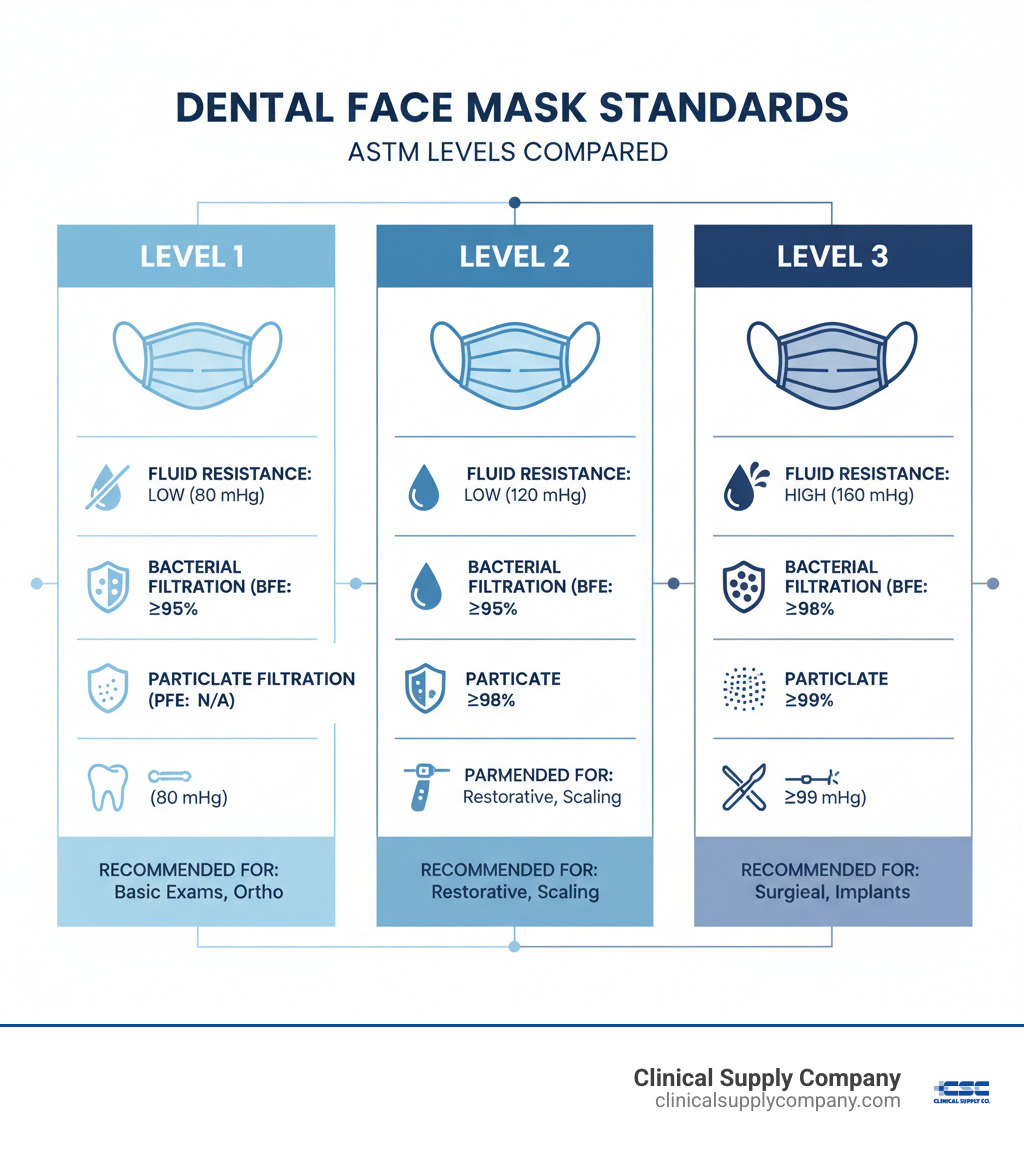
| ASTM Level | Best For | Fluid Resistance | Filtration |
|---|---|---|---|
| Level 1 | Low-risk exams, basic procedures | Low (80 mmHg) | ≥95% BFE |
| Level 2 | Moderate aerosol procedures | Moderate (120 mmHg) | ≥98% BFE |
| Level 3 | High-risk surgical procedures | High (160 mmHg) | ≥98% BFE, ≥99% PFE |
Key features to prioritize:
- Filtration efficiency - BFE >99% and PFE >99% at 0.1 micron
- Proper fit - Adjustable nosepiece and secure earloops or ties
- Breathability - Low differential pressure for comfort
- Fluid resistance - Match to procedure types (80-160 mmHg)
Navigating a market flooded with inconsistent products can be challenging. A New York Times investigation revealed many online mask listings were likely counterfeit, stressing the need for reputable suppliers. Different procedures demand different protection: Level 3 for surgery and implants, Level 2 for restorative work, and Level 1 for basic exams.
Beyond protection, comfort is key for your team. Features like hypoallergenic materials and anti-fog technology reduce fatigue. The right mask protects effectively while allowing staff to work comfortably.
I'm Adam Schuh, President and CEO of Clinical Supply Company. I've spent years ensuring dental practices have access to FDA-compliant, ASTM-verified dental face masks that balance protection with comfort. My work helps practices steer supply-chain challenges and access quality PPE that meets the highest safety standards.
Understanding ASTM Levels: Your First Step to Protection
Not all dental face masks offer the same protection. The American Society for Testing and Materials (ASTM) International sets performance standards that evaluate filtration, fluid resistance, and breathability, taking the guesswork out of mask selection.
ASTM levels are a roadmap to proper protection, helping you match the right mask to the right procedure. This ensures your team is safe without being over-protected for simple tasks or under-protected during high-risk procedures. For more details, our guide on selecting the right type of face masks offers additional insights.
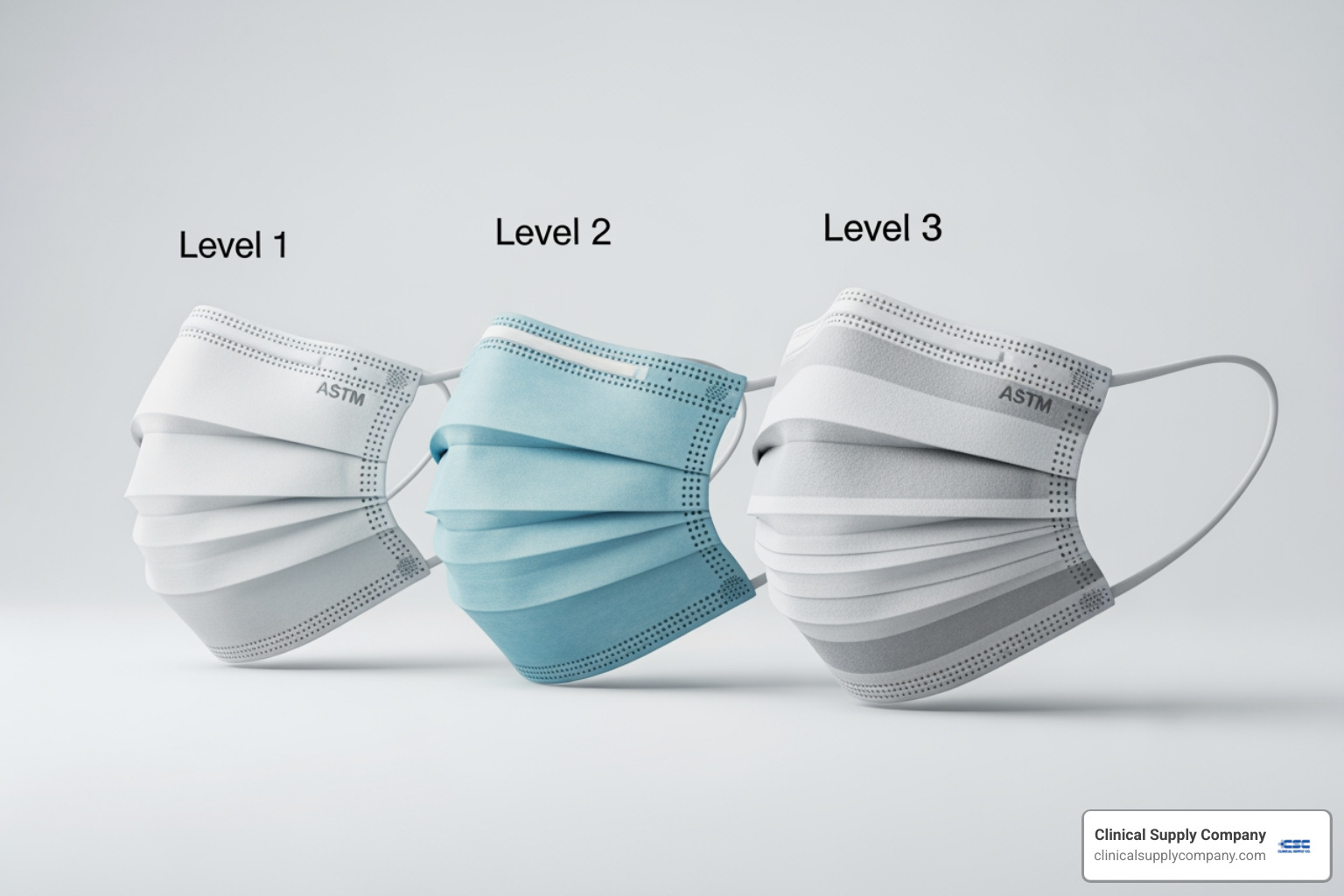
ASTM Level 1: For Low-Risk Procedures
Level 1 masks are for procedures with minimal fluid exposure. They offer at least 95% bacterial filtration efficiency (BFE) and fluid resistance of 80 mmHg, making them perfect for situations without much splatter or aerosol.
Use Level 1 masks for oral exams, orthodontic adjustments, basic prophylaxis with minimal spray, fluoride treatments, and basic lab work. They provide essential, cost-effective protection and are breathable for extended wear.
ASTM Level 2: The Moderate Barrier Standard
When procedures generate moderate aerosols and splatter, Level 2 masks are the solution. They offer 98% or greater BFE and PFE, with fluid resistance of 120 mmHg, making them ideal for much of your daily clinical work.
Restorative dentistry, such as placing fillings or crowns, is classic Level 2 territory. Scaling and root planing and endodontic procedures also fall into this category, as they generate enough spray and aerosol to warrant a moderate barrier. Level 2 masks provide an extra layer of confidence without the feel of surgical-grade protection.
The Importance of ASTM Level 3 Dental Face Masks
For high-risk procedures, ASTM Level 3 dental face masks are essential. They represent the highest standard, with BFE and PFE greater than 98% and fluid resistance of 160 mmHg. This level is non-negotiable when facing heavy splatter, significant aerosols, or working with open tissue.
Surgical procedures like extractions, biopsies, and periodontal surgery demand Level 3 protection. Implant placement also requires this top-tier protection due to surgical exposure and high-speed instruments. Any extensive use of high-speed handpieces or ultrasonic scalers that generate significant aerosols calls for a Level 3 mask.
Many premium dental face masks, including options available from Clinical Supply Company, exceed these minimums, offering BFE >99.9% at 3 microns and PFE of 99.9% at 0.1 micron. This extra fluid resistance and filtration creates a meaningful safety margin when you need it most.
Key Features to Look for in High-Quality Dental Face Masks
Selecting the right dental face masks goes beyond the ASTM level. The best masks balance superior filtration, a secure fit, and all-day comfort. A mask that causes discomfort will be adjusted constantly, compromising its protection.

Look for features like adjustable nosepieces, anti-fog technology, and soft inner linings that transform a basic barrier into a tool your staff will wear correctly and comfortably.
Filtration Efficiency (BFE & PFE)
A quality mask's core function is filtering harmful particles, measured by Bacterial Filtration Efficiency (BFE) and Particulate Filtration Efficiency (PFE).
- BFE measures how well a mask blocks bacteria-carrying droplets (typically tested at 3 microns). A BFE >99.9% is ideal.
- PFE measures filtration of smaller, sub-micron particles (often at 0.1 microns), which can carry viruses. Look for PFE=99.9% at 0.1 Micron for exceptional protection.
Construction also matters. Premium dental face masks, like the iMask Premium Level 3, often use a 4-ply design for a more robust barrier without sacrificing breathability.
Fit and Seal: Earloop vs. Tie-On
A mask with perfect filtration is useless if air leaks around the edges. A proper fit is just as important as filtration efficiency.
- Earloop masks are convenient and quick to change between patients. Quality versions have strong, comfortable loops and a design that conforms to the face without gapping.
- Tie-on masks offer a customizable fit that can be adjusted for a precise seal, making them a preference for lengthy or high-risk procedures.
Regardless of style, an adjustable nosepiece is essential to mold the mask to the bridge of your nose, eliminating gaps. Some masks feature advanced designs with additional materials that conform to the face, further preventing gapping. For more tips, see our guide to Face Masks Ensure Proper Fit Every Time.
Comfort for Prolonged Wear
Comfort is essential for maintaining protection and productivity. Uncomfortable masks lead to fidgeting and distraction.
- Breathability (Delta-P): A low differential pressure (Delta-P) value means easier breathing. Look for ratings below 6.0 mm H₂O/cm² for all-day comfort.
- Hypoallergenic Materials: Latex-free and fiberglass-free materials reduce the risk of skin irritation and allergic reactions.
- Anti-Fog Features: Masks like our 360 Anti-Fog and Repel Anti-Fog 4-PLY Face Masks direct breath downward, keeping eyewear clear.
- Soft Inner Lining: Gentle materials, such as those found in masks specifically designed for sensitive skin, prevent chafing.
Comfortable staff can focus on patient care. For more guidance, read our article on Choosing Dental Face Masks for Comfort.
How to Buy and Manage Your Mask Supply
Knowing you're getting authentic dental face masks is critical, as counterfeit products are a real risk. A New York Times report found many online listings were likely fake, highlighting the danger of unreliable suppliers. When protecting your team and patients, you can't afford to take chances.
Sourcing and Authenticity
The first rule is to know your supplier. Purchasing from established dental supply companies like Clinical Supply Company provides peace of mind. Operating from Liberty Township, Ohio, we vet every product to ensure it is authentic and FDA-cleared.
FDA clearance is non-negotiable, confirming that masks meet performance standards. We also offer many Made in USA options, which provide greater supply chain transparency. Avoid purchasing PPE from general online marketplaces like Amazon or eBay, as they lack the verification processes of specialized dental suppliers.
Cost-Effective Purchasing: Bulk Orders and Auto-Ship
Smart purchasing means being strategic. Bulk purchasing is a simple way to reduce the per-unit cost of dental face masks without sacrificing quality. Our masks, for example, range from $8.99 to $58.99, with significant savings on larger orders.
For even greater efficiency, consider auto-ship programs. We offer discounts of up to 35% on first AutoShip orders, saving you money and eliminating the administrative burden of reordering. Supplies arrive on a predictable schedule, keeping your inventory consistent and preventing shortages before a busy day of procedures.
Sustainability and Special Features
Modern dental face masks offer features that address specific practice needs.
- Eco-Conscious Options: Some manufacturers now provide an Eco Score, reflecting innovations in more sustainable materials and production.
- Sensitive Skin: If staff struggle with irritation, look for masks specifically designed for sensitive skin, which use extra-soft, hypoallergenic materials. Our guide on How to Stop Face Mask Skin Irritation offers more tips.
- Pediatric Sizing: Our iMask Disposable Level 3 Face Masks for Kids provide high-level protection in a size that fits children, often in fun colors to ease anxiety.
- Other Features: You can find masks with anti-fog coatings, various colors, and advanced designs with features that create a stronger seal to prevent gapping.
Best Practices for Mask Usage and Disposal
Even the highest quality dental face masks are ineffective if not used and disposed of correctly. Improper handling can undermine the protection you've invested in.
Proper Application and Removal
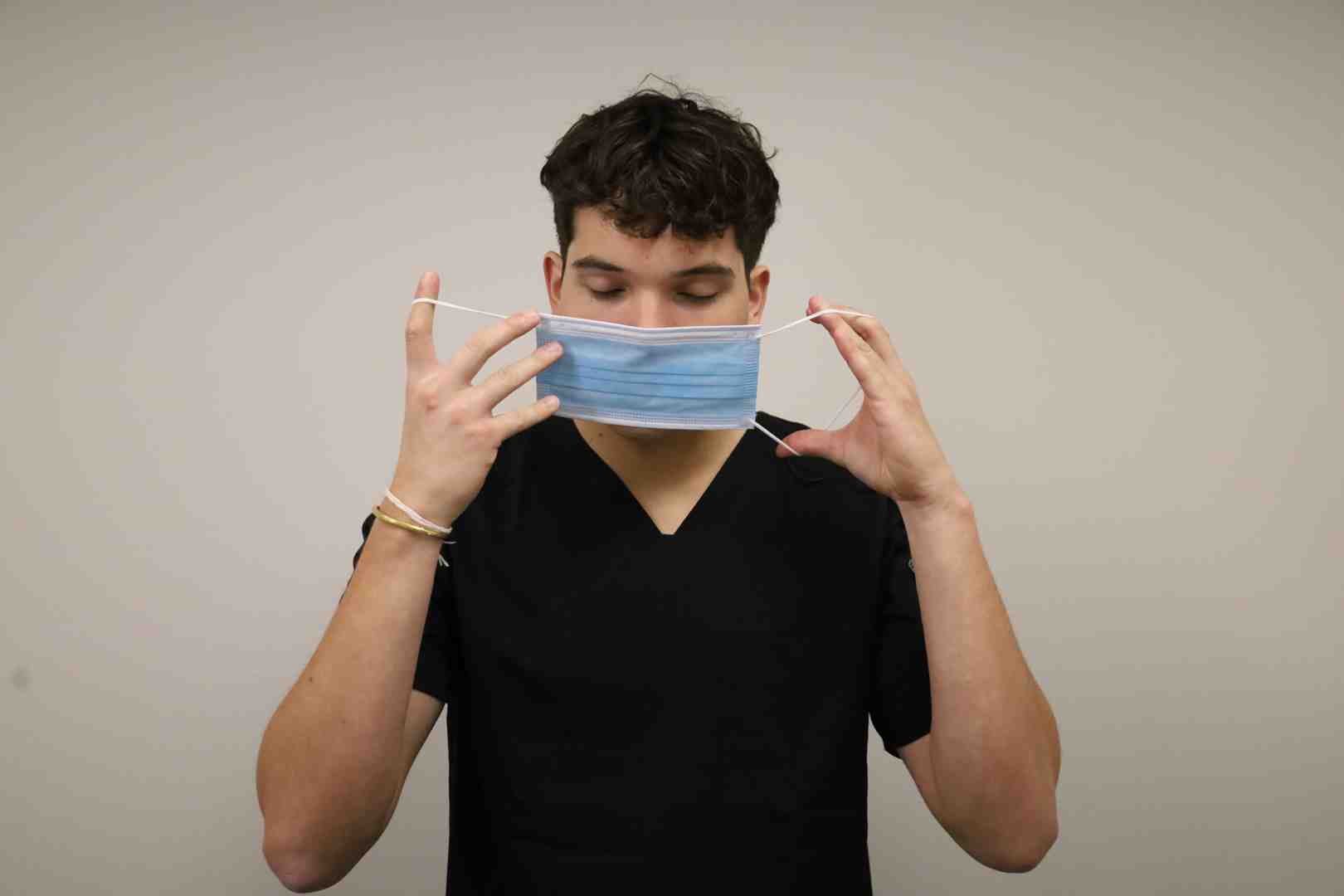
Proper technique begins with hand hygiene. Always wash your hands or use an alcohol-based sanitizer before touching a new mask.
- Inspect the mask for any tears or defects. Discard if compromised.
- Handle by earloops or ties only. Position it over your nose and mouth and secure it.
- Adjust the nosepiece by molding the flexible strip to the bridge of your nose for a snug seal.
- Ensure full coverage by pulling the bottom of the mask down over your chin, eliminating side gaps.
Once on, avoid touching the front of the mask. To remove it, handle it only by the earloops or ties, dispose of it immediately, and wash your hands again.
When to Change Your Mask
To maintain protection, follow these rules:
- Change your mask between every patient. This is the most important rule to prevent cross-contamination.
- Replace if it becomes moist. A damp mask loses filtration efficiency. Change it immediately if it gets wet from breath or spray.
- Discard if damaged. If the mask tears or the earloops stretch, its integrity is compromised.
Dental face masks are designed for single use in clinical settings. The risks of reuse far outweigh any cost savings. Learn more in our article, Face Masks Can They Be Reused Safely.
Safe Disposal
Proper disposal completes the infection control cycle. Used dental face masks are considered biohazard waste and must be placed in designated, lined waste bins.
Your clinic's medical waste management protocols must be followed consistently. While most masks are not recyclable due to their multi-layer construction and potential contamination, responsible disposal in proper containers is essential for public and environmental safety.
Frequently Asked Questions about Dental Face Masks
Let's clear up some common questions about dental face masks to help you make informed decisions.
What's the difference between a surgical mask and an N95 respirator?
This is a critical distinction for your safety protocols.
- Surgical Masks: These are the loose-fitting, disposable masks (ASTM Levels 1, 2, and 3) common in dentistry. They act as a physical barrier, protecting patients from the wearer's respiratory emissions and protecting the wearer from large droplets, splashes, and sprays.
- N95 Respirators: These are tight-fitting devices designed to filter at least 95% of airborne particles, including tiny aerosols. They primarily protect the wearer from inhaling contaminants. N95s require professional fit-testing to ensure a proper seal.
For most dental procedures, an appropriate ASTM-level surgical mask provides sufficient protection. N95s may be recommended for specific high-aerosol procedures, especially with known airborne pathogens.
How do I know if a mask fits properly?
A mask's protection depends on its fit. A proper fit means no gaps along the sides, cheeks, or under the chin. The mask should conform snugly to your face.
The nosepiece must be molded firmly to the bridge of your nose to create a tight seal, which also helps prevent eyewear from fogging. When you breathe in, you should feel slight suction. If you feel air leaking from the edges, readjust the mask and nosepiece until the seal is secure.
Are masks with earloops or ties better?
This comes down to personal preference and the specific procedure.
- Earloop masks are convenient, quick to put on, and ideal for changing frequently between patients. Modern designs have improved comfort for prolonged wear.
- Tie-on masks offer a more customizable and secure fit. The ability to adjust the tightness makes them a good choice for longer surgical procedures where a consistent seal is critical.
Many practices keep both styles on hand, using earloops for routine work and tie-ons for more demanding procedures. The best option is the one that works for your team's comfort and clinical needs.
Conclusion: Choosing the Right Partner for Your Practice's Needs
Selecting the right dental face masks is straightforward when you focus on what matters: matching the ASTM level to the procedure, ensuring high filtration, and prioritizing a comfortable, secure fit.
We've covered how Level 1 masks suit low-risk work, Level 2 is ideal for moderate aerosol procedures, and Level 3 is essential for surgery and implant placement. However, the most critical factor is the source. The quality and authenticity of your masks depend entirely on where you buy them. With counterfeit PPE being a known issue, partnering with a trusted supplier is non-negotiable.
At Clinical Supply Company, we provide dental practices with dental face masks and supplies they can count on. From our base in Liberty Township, Ohio, we vet every product to ensure it meets FDA requirements and ASTM standards. We are a dedicated dental supply partner, not just an online retailer.
We simplify inventory management with cost-effective bulk purchasing and auto-ship programs that can save you up to 35% on your first order. We handle the supply chain complexities so you can focus on patient care.
When you choose Clinical Supply Company, you're choosing a partner committed to your practice's safety and success. We're here to provide guidance and reliable products you can trust.
For a deeper dive, check out our Face Masks In Dentistry A Quick Guide. Let's work together to keep your practice protected with the right dental face masks for every procedure.