
Why Hand Health Matters for Dental Professionals
Aloe Gloves are disposable examination gloves with an inner coating of aloe vera that activates with body heat to moisturize and soothe hands during use. Here's what makes them different:
- Material options: Available in nitrile, latex, and vinyl formulations
- Key benefit: Reduces skin irritation and dryness from prolonged glove wear
- Best for: Healthcare professionals, dental teams, and anyone who wears gloves frequently
- How they work: Body heat releases aloe vera to create a protective, moisturizing layer
- Special features: Many are accelerator-free to reduce contact dermatitis risk
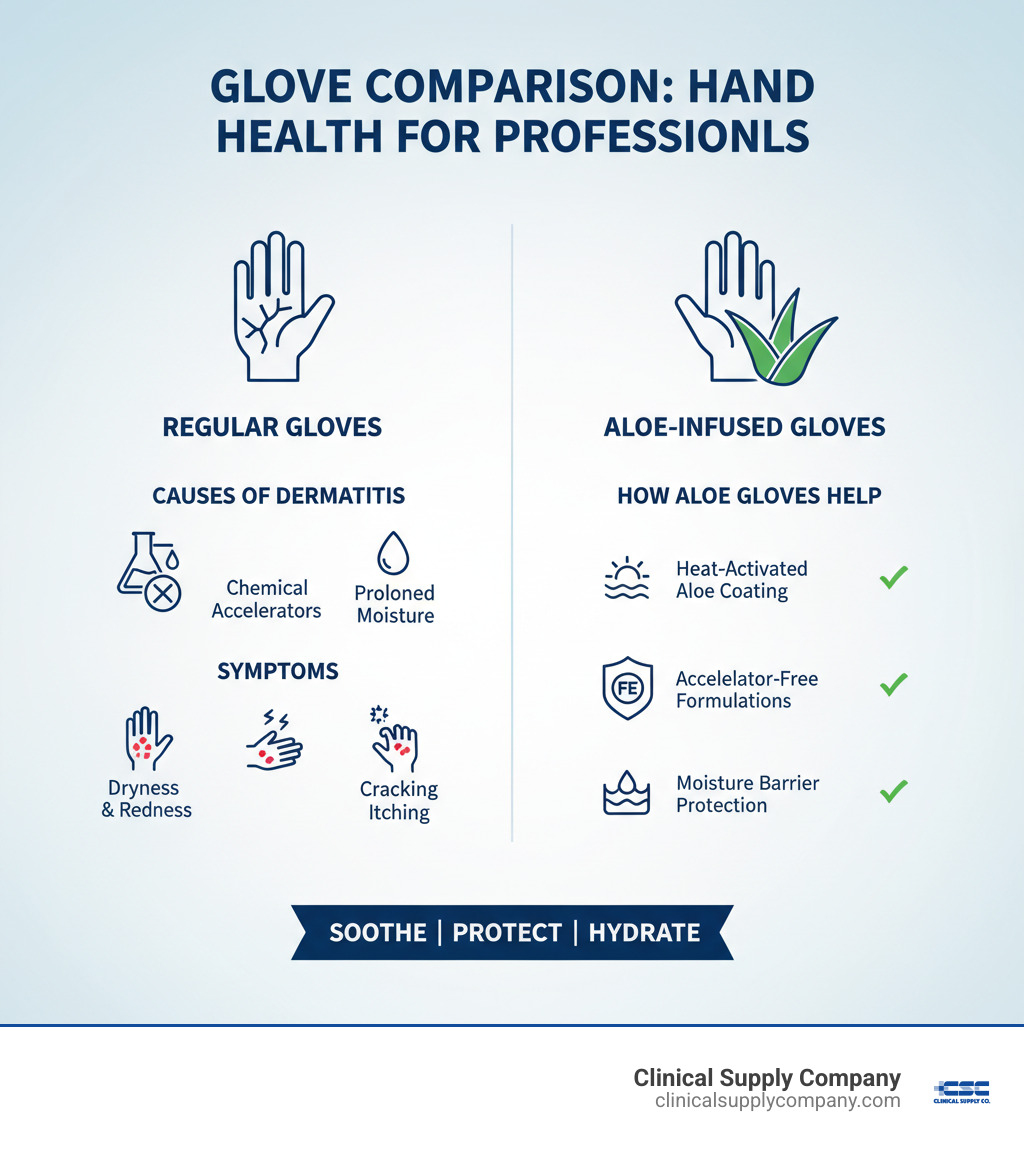
If you wear gloves for hours every day, you know the problem: dry, cracked, and itchy hands. This isn't just discomfort—it's an occupational hazard. Prolonged glove use leads to irritation, which is why manufacturers created aloe-infused gloves. The heat from your hands activates an inner coating of aloe vera, forming a protective layer that soothes your skin while you work.
Professionals with irritant contact dermatitis often see genuine improvement when they switch to aloe gloves. The natural moisturizing properties help soothe skin from the friction, moisture, and chemical exposure of all-day glove use.
However, not all aloe gloves are the same. Some use cheap, tear-prone vinyl, while others contain chemical accelerators that can worsen skin sensitization. I'm Adam Schuh, President and CEO of Clinical Supply Company. I've spent years helping dental professionals solve this exact problem by providing FDA-compliant, high-performance aloe gloves like our Aloe Shield™ line. In this guide, we'll walk through how to compare aloe gloves so you can protect your patients and your hands.
What Are Aloe Gloves and How Do They Benefit Your Skin?
Aloe gloves are about prevention, not just protection. While standard gloves form a simple barrier, aloe-infused gloves actively care for your skin. They feature an inner coating of aloe vera that's activated by your body heat. This simple mechanism releases a moisturizing layer that sits against your skin, providing a gentle hand treatment while you work.
The skin health benefits are significant. Aloe vera has natural anti-inflammatory and moisturizing properties, which are essential for dental professionals who frequently wash and sanitize their hands. For skin that's already chapped and dry, the continuous moisture from aloe helps soothe and soften. It reduces the irritation from friction and moisture buildup inside traditional gloves, helping to prevent small cracks from becoming bigger issues.
Crucially, people with or at risk of irritant contact dermatitis often see genuine improvement when they switch. This is a documented outcome that matters when your career depends on healthy hands. Our Aloe Shield™ exam gloves put this science to work, delivering all-day comfort. To learn more, check out The Science Behind All-Day Comfort in Aloe Shield Exam Gloves.
A Material-by-Material Breakdown of Aloe Gloves
The base material of an aloe glove is as important as the aloe itself. The material determines protection, feel, and allergy risk. Understanding the differences between nitrile, latex, and vinyl is key to choosing the right glove for your work environment.
Here's how the main materials compare:
| Feature | Nitrile Aloe Gloves | Latex Aloe Gloves | Vinyl & Synthetic Aloe Gloves |
|---|---|---|---|
| Durability | Excellent (Puncture & chemical resistant) | Good (Flexible, but can tear under stress) | Fair (Less durable, prone to tearing) |
| Allergy Risk | Very Low (Latex-free, often accelerator-free) | High (Natural rubber latex allergy risk) | Very Low (Latex-free) |
| Tactile Sensitivity | Excellent (Thin formulations offer great feel) | Excellent (Conforms well to hand) | Good (Can feel bulkier, less conforming) |
| Best Use Cases | Dental, Medical, Lab, Chemical handling, High-risk | Medical, Dental (for non-allergic users), High dexterity | Food service, Light-duty, Low-risk, Cost-conscious |
Want to see how these materials stack up against other options like polychloroprene? Check out our detailed comparison: The Ultimate Glove Showdown: Aloe vs. Polychloroprene vs. Latex.
Nitrile: The Professional's Choice
For dental practices, nitrile aloe gloves are the top choice. They are tough, protective, and safe for nearly everyone. Nitrile offers superior puncture and chemical resistance, which is crucial when working with sharp instruments and various dental substances. Most importantly, nitrile is completely latex-free, eliminating the risk of Type I latex allergies for both staff and patients.
Combining nitrile's durability with aloe's soothing benefits creates a glove that works as hard as you do. Our Aloe Shield™ gloves exemplify this, providing necessary protection without sacrificing comfort. To see how this innovation is changing practices, read The Real Story Behind Aloe Infused Gloves in Modern Dentistry.
Latex: The Classic with a Caveat
Latex gloves, made from natural rubber, offer excellent elasticity and tactile sensitivity. When coated with aloe, they combine comfort with moisturization. However, the significant drawback is latex allergies. These can cause severe Type I hypersensitivity reactions, posing a risk to both you and your patients. While some distributors still offer latex options, we believe the allergy risk is unacceptable when superior alternatives like nitrile are available.
Vinyl & Synthetic: The Budget-Friendly Option
Vinyl and synthetic aloe gloves are a budget-friendly, latex-free option for low-risk, light-duty tasks like food handling or cleaning. Made from PVC, some brands incorporate aloe for moisturization. However, they are not suitable for dental work. Vinyl gloves have a looser fit, lower durability, and poor puncture resistance compared to nitrile. For demanding dental environments, they simply don't offer the necessary protection or tactile sensitivity, even with an aloe coating. Reserve them for non-clinical tasks.
Must-Have Features for High-Performance Gloves
When you're choosing aloe gloves for your practice, the aloe infusion and base material are just the beginning. The real difference between a good glove and a great one comes down to the thoughtful design features and advanced technologies that manufacturers build in. These are the details that determine whether you'll make it through a long day with comfortable, protected hands—or whether you'll be reaching for hand cream the moment you pull off that last pair.
The Importance of Accelerator-Free Formulations
Surprisingly, the chemicals that make nitrile gloves durable can also cause hand problems. These chemical accelerators are a primary culprit behind Type IV contact dermatitis, a delayed allergic reaction that causes redness, itching, and blistering over time. If your hand irritation has worsened throughout your career, accelerators may be the cause.
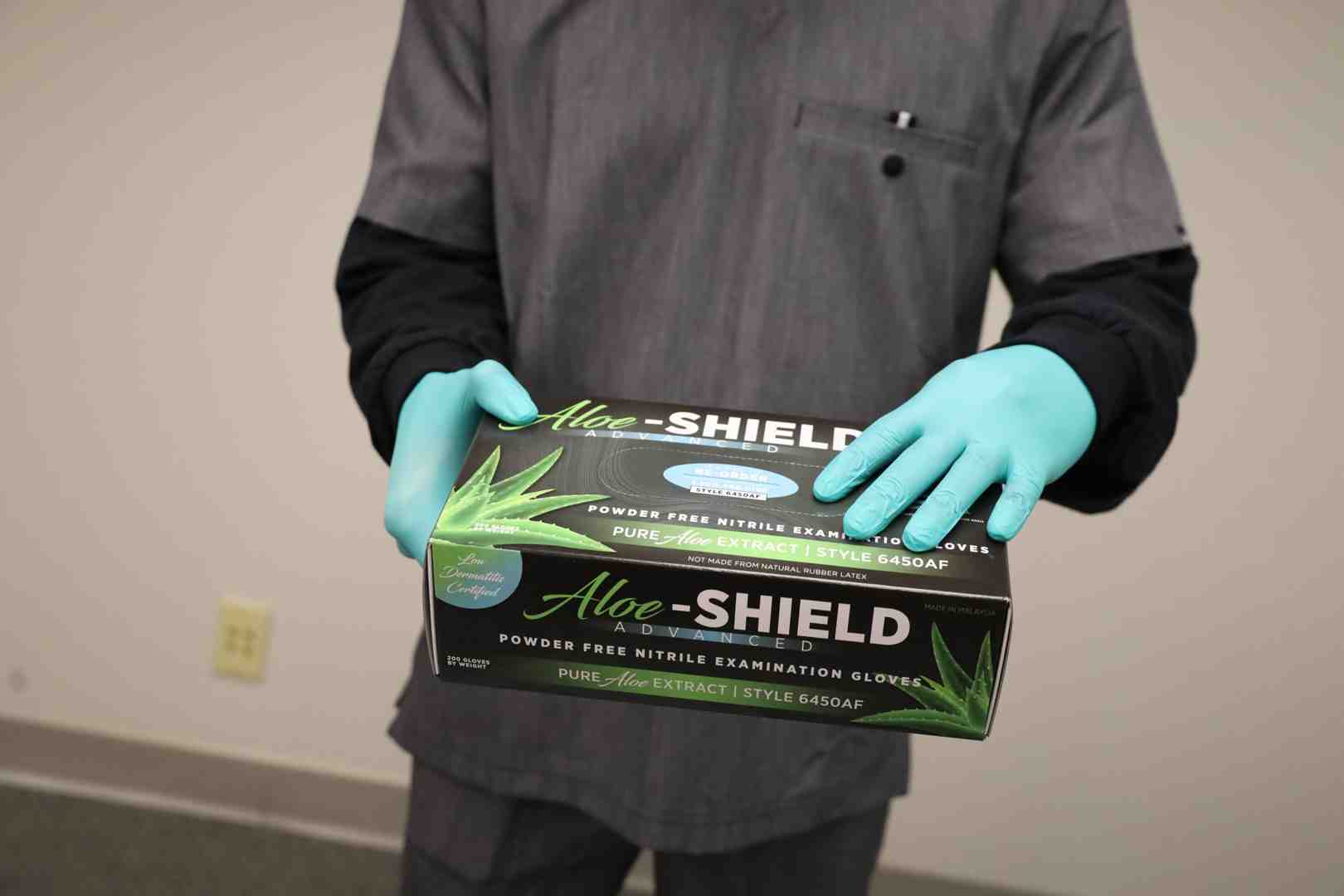
This is why accelerator-free formulations are a breakthrough. Technologies like DermaSense significantly reduce the risk of skin sensitization. When you choose accelerator-free aloe gloves like our Aloe Shield™ line, you get the moisturizing benefits of aloe without the chemical irritants. It's a non-negotiable feature for serious hand protection. Learn how this technology makes a difference in Protecting Hands, Protecting Careers: How Aloe Shield Gloves Stop Contact Dermatitis in its Tracks.
Essential Specifications for Dental Professionals
Practical specifications are essential for the precision and safety your work demands.
- Powder-free construction is the modern standard, eliminating the skin irritation and contamination risks of powdered gloves.
- Textured fingertips provide a secure grip on small instruments in wet environments, improving control and confidence.
- A beaded cuff adds durability, preventing tears when donning and stopping liquids from rolling down your forearm.
- Glove thickness, measured in mil, balances protection and sensitivity. High-quality nitrile aloe gloves are often around 3.1 mil, offering excellent tactile feel with reliable protection.
Important Certifications
Certifications are your assurance of a glove's quality and safety.
- ASTM standards set the bar for medical exam gloves, testing for tensile strength and barrier integrity. Meeting these standards means proven lab performance.
- FDA compliance is required for all medical and dental gloves in the U.S., ensuring they meet federal safety and effectiveness criteria.
- Chemotherapy drug testing and fentanyl resistance certifications offer an extra layer of protection against hazardous substances, providing peace of mind in high-risk scenarios.
How to Choose the Best Aloe Gloves for Your Practice
Once you understand the benefits and features of aloe gloves, the next step is finding the right ones for your specific needs. Whether you're running a busy dental practice in Ohio or managing a laboratory, the choice you make impacts both your team's comfort and your patients' safety. Let's break down how to make that decision with confidence.
Top Applications and Industries
Aloe gloves are essential across many industries where hand protection and skin health are paramount.
- Dental Practices: The combination of barrier protection and moisturization is a game-changer for dentists and hygienists who wear gloves for hours.
- Medical & Veterinary: In clinics and hospitals, the aloe coating counteracts the damage from constant glove changes.
- Laboratories: Professionals value the chemical resistance of nitrile paired with all-day comfort.
- Health & Wellness: Spa technicians, salon professionals, and tattoo artists use them to maintain hygiene while caring for their hands.
- Food Handling: FDA-compliant aloe gloves address the chronic dryness common in this industry.
Quality aloe gloves provide consistent care in any setting. Learn more in Aloe Shield Gloves: Protecting Hands and Elevating Patient Care Year-Round.
A Quick Guide to Aloe Gloves Brands
Not all aloe gloves are created equal. Here's a quick comparison:
- Clinical Supply Company's Aloe Shield™: Our gloves are the gold standard. Built with accelerator-free nitrile, they are designed specifically for dental professionals to prevent contact dermatitis and provide all-day comfort under pressure. Explore the advantages in our Benefits of Aloe Shield Gloves guide.
- Medline's Aloetouch® Latex: Often sold by large distributors, this line uses natural rubber latex, which carries an unnecessary and serious allergy risk for staff and patients.
- Handgards® and RONCO: These brands offer cost-effective vinyl or synthetic aloe gloves for food service. However, vinyl lacks the durability, puncture resistance, and chemical protection required for dental work.
- Ocean Pacific™ TruAloe: This is another accelerator-free nitrile option. However, our Aloe Shield™ gloves are specifically custom for dental professionals, backed by our deep industry understanding and commitment to service.
What to Consider When Buying Aloe Gloves
Consider these practical details when purchasing:
- Packaging: Aloe gloves come in various box counts (100, 200, or 250). Larger boxes can reduce reordering frequency and workflow interruptions.
- Price: Calculate the cost per glove, not just per box. While aloe gloves have a higher upfront cost, they are a worthwhile investment in hand health, preventing the hidden costs of occupational skin disease.
- Volume Discounts: Buying in larger quantities can significantly lower your cost per glove. We work with practices to find a budget-friendly volume.
- Sizing: Proper fit is crucial for comfort and safety. Aloe gloves are available from Extra Small to X-Large. A glove that's too tight causes fatigue, while one that's too loose compromises dexterity. Ensure you order the right sizes for your team.
Frequently Asked Questions
Are aloe gloves better for eczema or dermatitis?
Yes, aloe gloves can make a significant difference. The natural soothing properties of aloe vera calm irritated skin, reducing redness and sensitivity. Unlike standard gloves that can strip moisture, aloe gloves actively hydrate your skin via a body heat-activated coating, combating the dryness that worsens eczema and dermatitis.
For the best results, choose high-quality, accelerator-free aloe gloves like our Aloe Shield™ line. These eliminate the chemical irritants that often trigger allergic contact dermatitis, creating a gentler environment for your hands. This helps reduce irritation and supports your skin's natural barrier, promoting healing instead of flare-ups.
Can you be allergic to aloe gloves?
While a true aloe vera allergy is rare, allergies to glove materials are more common. The main culprits are:
- Latex: Natural rubber latex can cause serious Type I allergic reactions. We strongly recommend avoiding latex gloves.
- Chemical Accelerators: Used in many standard nitrile gloves, these can cause Type IV contact dermatitis (a delayed rash).
For most people, accelerator-free nitrile aloe gloves are the safest and most beneficial choice. They eliminate the most common allergens while providing skin-soothing benefits. If you have a known sensitivity to aloe vera, consult your healthcare provider before switching.
How are aloe gloves priced compared to standard gloves?
Aloe gloves do have a slightly higher upfront cost than standard gloves, but this reflects their added value. The price includes specialized features like the aloe infusion, heat-activation technology, and accelerator-free formulations, which require advanced manufacturing and higher-quality ingredients.
Think beyond the box price and consider the long-term value. Investing in aloe gloves can prevent the "hidden costs" of cheaper gloves, such as lost productivity from hand discomfort or medical bills for treating dermatitis. The improvement in hand health and daily comfort makes them a worthwhile investment for any professional who relies on their hands. At Clinical Supply Company, we offer competitive pricing and volume discounts to make quality hand protection affordable.
Conclusion: Make the Switch to Healthier Hands
Your hands are your most important tool. If you're dealing with the dry, cracked, and irritated skin that comes from constant glove use, it's time to switch to the right gloves.
Aloe gloves are the solution, offering what standard gloves can't: they protect and heal. While you focus on patient care, these gloves work to soothe and moisturize your skin, providing smart prevention against occupational hazards.
As this guide has shown, choosing high-quality, accelerator-free nitrile aloe gloves is a critical investment in your long-term hand health. It's about preventing occupational skin disease and ensuring you can continue doing the work you love, comfortably and safely.
At Clinical Supply Company, a Midwest-based national dental supply company in Ohio, we understand your challenges. Our Aloe Shield™ line is our commitment to providing solutions that truly work. We are your one-stop shop for dental supplies, and we take that responsibility seriously.
Ready to give your hands the care they deserve? Explore our complete guide to accelerator-free nitrile gloves and find how our products can lift your practice and daily comfort. Let's keep your hands healthy for the rest of your career.


