

The First Line of Defense in Operatory Hygiene
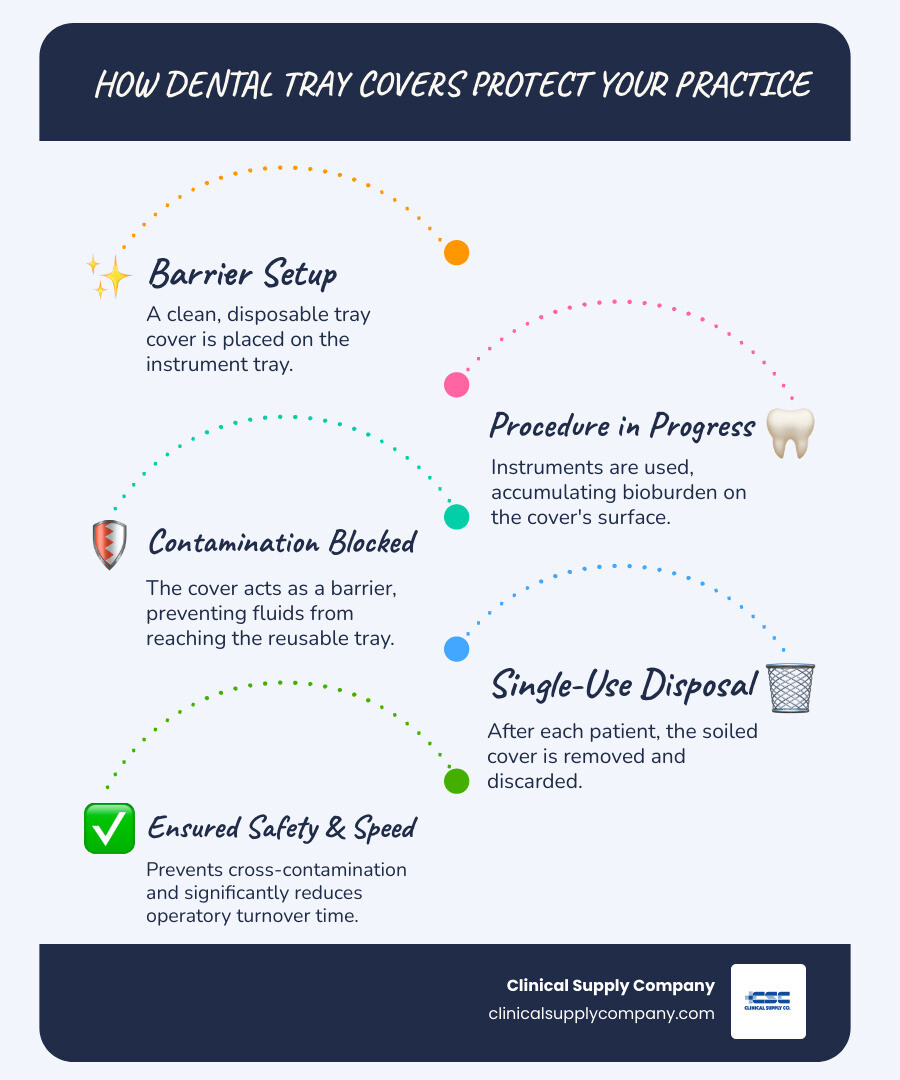
Tray covers dental are disposable barrier sheets that line instrument trays to prevent cross-contamination and simplify cleanup. Made from paper, plastic, or poly-coated materials, they are a critical component of operatory hygiene.
Quick Selection Guide:
- Material: Paper (absorbent), Plastic (fluid-proof), Poly-coated (best of both)
- Size: Measure your trays; Ritter B (8.5" x 12.25") is a common size.
- Color: Use white for simplicity or colors for organization.
- Quantity: Boxes typically contain 500–1000 covers.
In a busy dental practice, operatory turnover speed is essential. Tray covers protect your instruments, trays, and patients by providing a single-use barrier that contains potential contamination. They also serve as a visual cue that a station is clean, reduce instrument noise, and make cleanup a swift, simple process.
However, not all tray covers are created equal. Low-quality covers can tear or let fluids seep through. Ordering from massive distributors like Henry Schein or Patterson can lead to backorder delays, forcing your staff to improvise.
I'm Adam Schuh, President and CEO of Clinical Supply Company. We help dental practices streamline infection control with reliable, FDA-compliant tray covers dental that ship fast and perform under pressure. My background in medical-grade manufacturing taught me that barrier protection is a system that must work flawlessly.
The Anatomy of a Tray Cover: Materials, Sizes, and Shapes
At Clinical Supply Company, we know tray covers dental are a vital part of your infection control plan. They act as a protective shield between clean instruments and reusable trays, preventing germ transmission and simplifying cleanup. As single-use items, they are essential for both safety and efficiency in the modern dental practice.
Common Materials and Their Properties
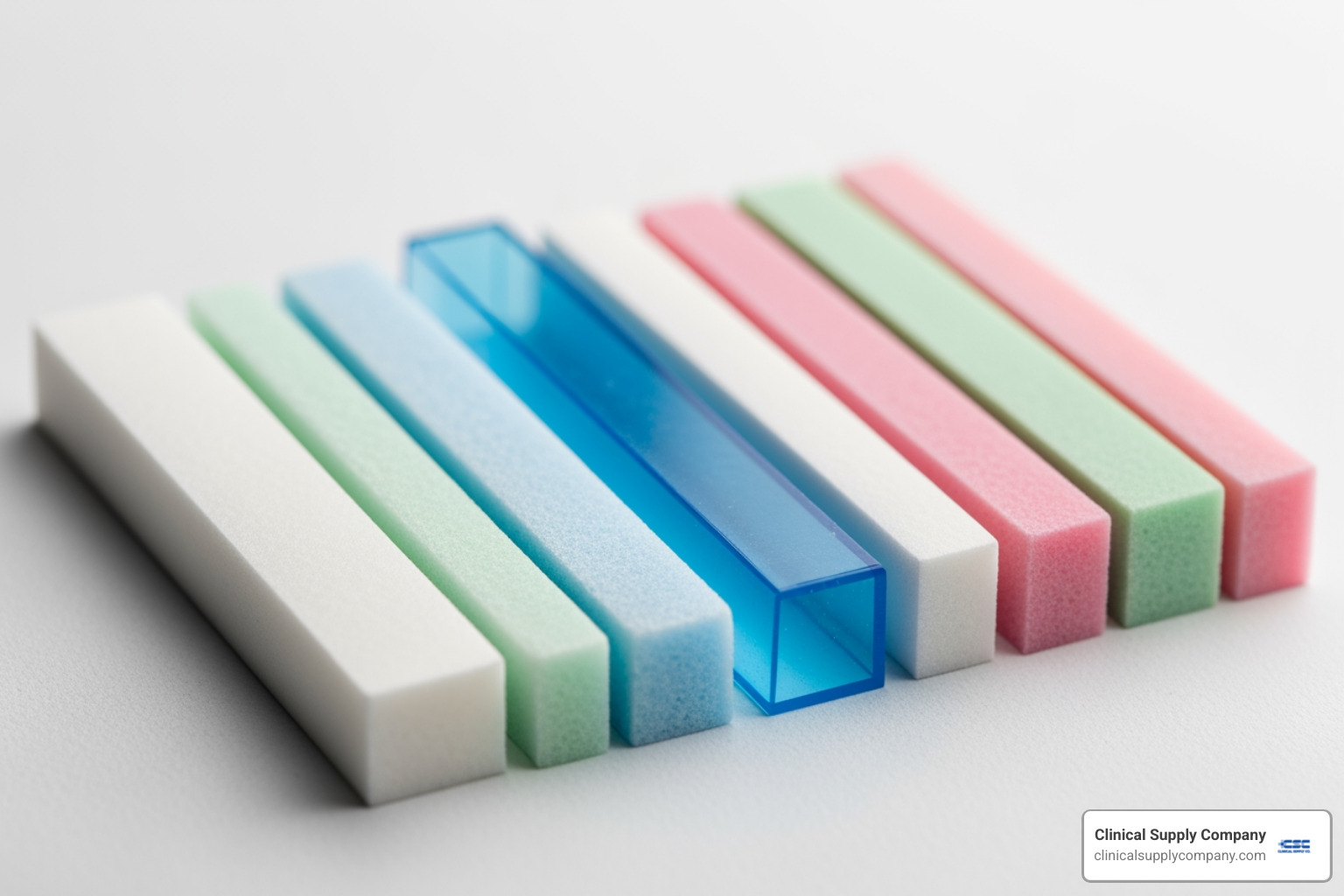
The effectiveness of a tray cover dental depends on its material. We offer several options to meet your practice's specific needs.
- Medical-Grade Paper: A popular, budget-friendly choice. Our heavy-duty paper covers are low-absorbent and tear-resistant, providing reliable protection during routine procedures.
- Plastic (Polyethylene) Sleeves: For procedures with significant fluids, these tough polyethylene covers are completely waterproof. They offer superior fluid seepage resistance, ensuring no liquids reach the tray.
- Poly-Coated Paper: This option offers the best of both worlds, combining an absorbent paper top layer with a waterproof polyethylene backing. It provides excellent moisture resistance for longer or wetter procedures.
Each material improves your barrier protection, a cornerstone of infection control. To learn more about stocking your practice, see our guide on essential supplies.
Standard Sizes for a Perfect Fit
A snug fit is crucial to prevent slipping and maintain a clean work area. Tray covers dental come in various sizes to match different instrument trays.
Common sizes include:
- Ritter B Size: A popular choice measuring approximately 8.5" x 12.25".
- Midwest ADEC E Size: A slightly larger option, typically 9.5" x 13.5".
- Bracket Tray Covers: Smaller, specially shaped covers for orthodontic trays.
While these standard sizes cover most needs, always measure your trays to ensure a perfect fit. Many of our covers also feature rounded corners to reduce noise, prevent snagging, and make setup and cleanup smoother.
Why Every Dental Practice Needs Quality Tray Covers
While skilled clinicians and advanced equipment are at the heart of your practice, small items like quality tray covers dental make a huge difference. They are an indispensable tool underpinning the safety, efficiency, and professionalism of your entire operation.
Unbeatable Infection Control
In dentistry, infection control is non-negotiable. Tray covers dental are a crucial first line of defense, embodying the barrier principle by creating a physical separation between contaminants and your equipment.
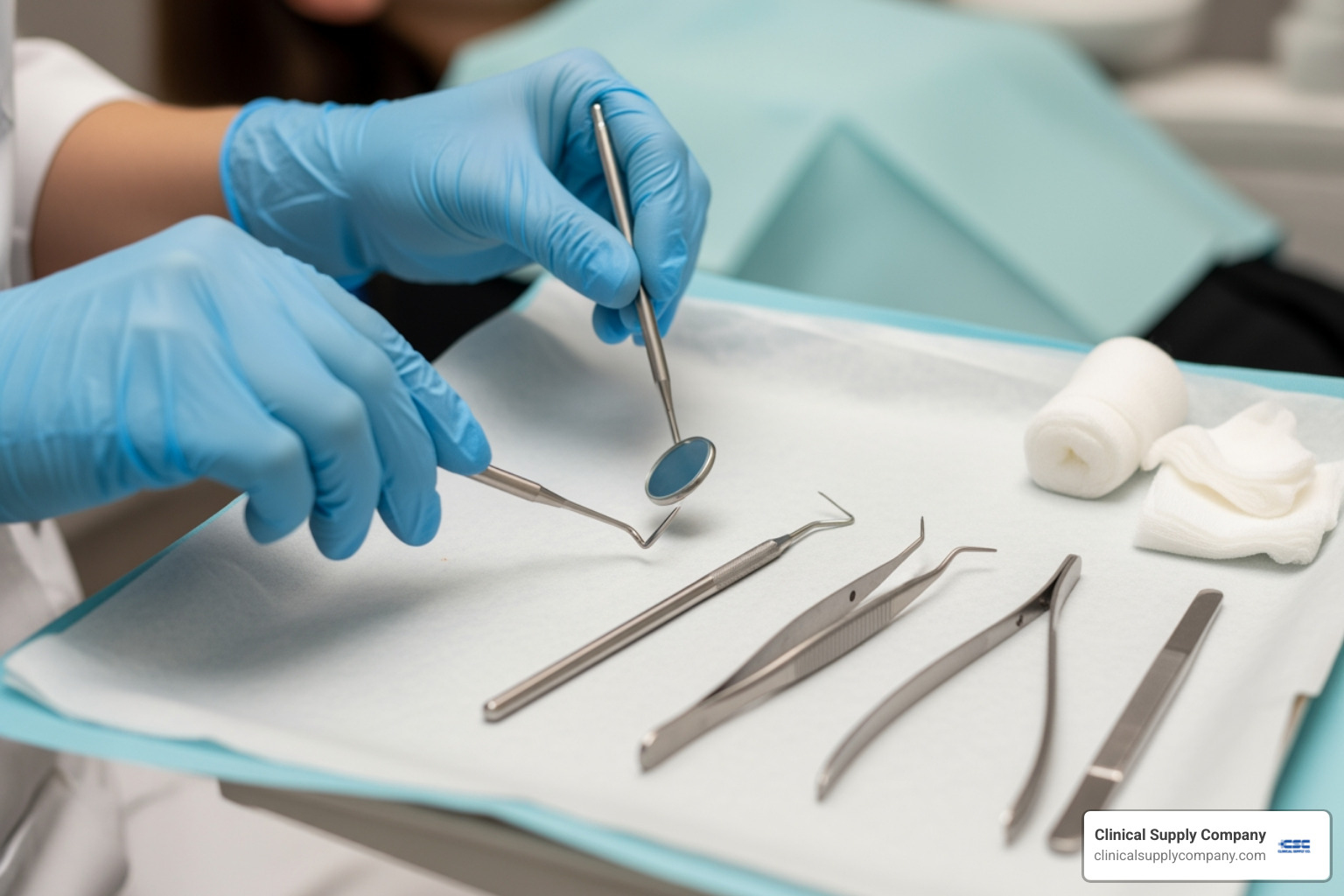
By lining instrument trays, these covers act as a sacrificial layer. Any potential contaminants like blood or saliva are contained on the disposable cover, not your reusable tray. This dramatically reduces the risk of cross-contamination, a key to Preventing cross-contamination in dental clinics.
Tray covers also shield trays from direct contact with bioburden, extending the life of your equipment and simplifying the sterilization process. Their single-use disposable nature is key; after a procedure, the contaminated cover is discarded, removing the bioburden with it. This is a cornerstone of Overcoming contamination challenges in dental practices and complements The critical role of sterilization.
Improved Procedural Efficiency
Time is a precious commodity, and tray covers dental are champions of efficiency. Instead of scrubbing reusable trays between patients, cleanup becomes lightning fast: simply gather used items, peel off the cover, and discard it.
This speed leads directly to quick operatory turnover, allowing you to see your next patient sooner and keep your schedule flowing. Setup is also simplified, as your team starts with a pristine surface every time. By protecting expensive trays from scratches and chemicals, covers also reduce wear and save money on replacements. For other surfaces, we offer Effective cleaning solutions.
Improved Organization and Instrument Visibility
Tray covers also help create a more organized, less stressful clinical environment.
- Color-Coding Systems: Assign different colors to organize procedures (e.g., blue for hygiene, green for restorative), shifts, or operatories. This visual cue reduces errors and streamlines material management.
- Reduced Instrument Noise: A paper or poly-coated cover provides a soft surface that quiets the clatter of metal instruments on a hard tray, creating a calmer environment for staff and patients.
- High-Contrast Background: A white or brightly colored cover makes it easier to see small instruments, burs, and files, preventing items from being overlooked and enhancing safety.
Choosing the Right Tray Covers Dental Professionals Trust
Picking the right tray covers dental is a small decision that impacts your practice's infection control, efficiency, and bottom line. At Clinical Supply Company, we help dental professionals find the cover that fits their practice perfectly—not the most expensive option, but the most effective one.

Factors to Consider When Selecting Your tray covers dental
When evaluating tray covers dental, consider these key factors. Material choice should match your common procedures: absorbent paper for routine work, impermeable plastic for wet procedures, or versatile poly-coated covers for a balance of both.
Size and fit are critical. A cover that's too small exposes the tray, while one that's too large is cumbersome. Measure your trays before ordering; common sizes include Ritter B (8.5" x 12.25") and Midwest ADEC E (9.5" x 13.5"). Covers with rounded corners fit cleaner and don't snag.
Color can transform your organization. Use different colors to code for procedures, shifts, or operatories, creating a simple visual system that reduces errors. Finally, consider durability and quantity per box (typically 500 or 1000) to ensure you have a reliable supply that meets your patient volume.
Here's how the three main types stack up:
| Feature | Paper Tray Covers | Plastic Tray Covers | Poly-Coated Tray Covers |
|---|---|---|---|
| Absorbency | Good for light fluids | None—completely impermeable | Paper side absorbs, poly side blocks seepage |
| Tear Resistance | Moderate, can tear when wet | High, flexible and strong | High, combines paper strength with poly durability |
| Fluid Seepage | Possible with heavy or prolonged fluid exposure | None | Minimal to none |
| Noise Reduction | Good, quiets instruments nicely | Moderate, can crinkle | Good, soft surface |
| Visibility | Excellent, matte finish in various colors | Excellent, clear or colored options | Excellent, matte finish in various colors |
| Cost | Generally lowest | Moderate | Moderate to higher |
Matching Tray Covers to Specific Procedures
Smart practices save money by matching covers to the procedure.
- Surgical Procedures: For implants or extractions with significant blood or irrigation, a fluid-proof poly-coated or plastic cover is essential to maintain an aseptic field.
- Routine Check-ups: For exams and cleanings with minimal fluid, a standard medical-grade paper tray cover is effective and cost-efficient.
- Restorative Work: For fillings and crown preps, poly-coated covers offer a great balance, providing absorbency for minor spills and a reliable barrier against moisture.
Finding a Reliable Supplier for Your tray covers dental
The perfect tray cover is useless if your supplier can't deliver. Large national distributors like Henry Schein have massive catalogs, but their size can mean you're just an account number. Practices often tell us they switched because of long backorder waits and impersonal service from these giants.
At Clinical Supply Company, we're different. As a Midwest-based company serving dental professionals nationwide, we offer personalized service and maintain consistent stock. We understand that running out of supplies disrupts patient care. Our team knows you, and we ship fast from our central Ohio location so you're never left scrambling. We are the reliable one-stop shop for all your dental consumables and sterilization products.
Proper Use, Disposal, and Sustainable Alternatives
Using tray covers dental correctly is just as important as choosing the right one. Proper application, safe disposal, and mindfulness of their environmental footprint are key to keeping your practice safe and compliant.
Step-by-Step: Correct Application and Removal
Aseptic technique is critical for tray covers to be effective.
- Hand Hygiene: Start by washing your hands or using an alcohol-based hand rub.
- Placing the Cover: With clean hands, unfold the cover and lay it smoothly over the disinfected tray, ensuring it covers the entire surface without gaps. Avoid touching the inner surface.
- Aseptic Removal: After the procedure, gather used instruments. Then, carefully peel the cover off, folding it inward to contain all contaminants, fluids, and debris.
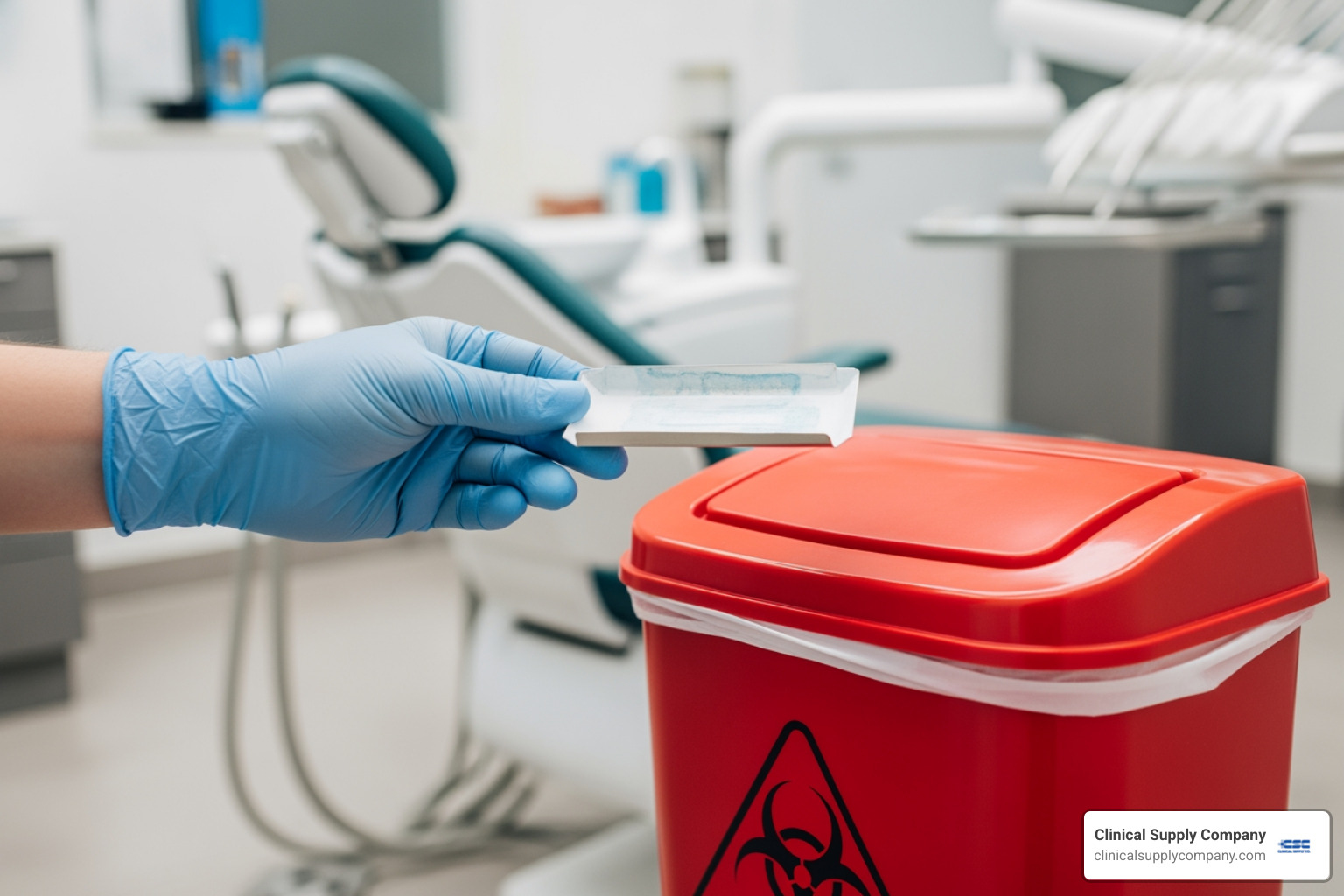
- Disposal: Handle the folded cover gently to minimize aerosol spread and immediately place it in the appropriate biohazard waste receptacle.
Disposal Guidelines for Used Tray Covers
Remember this critical rule: tray covers dental are strictly single-use items. Never attempt to clean or reuse them, as this creates a serious risk of cross-contamination.
Any cover exposed to blood, saliva, or other potentially infectious materials must be treated as biohazardous waste and disposed of in a labeled red biohazard bag. Your disposal practices must align with local regulations and OSHA guidelines. If you are unsure about specific rules, our team can help guide you. You can also access detailed safety information for various products through Safety Data Sheets.
Exploring Eco-Friendly Options
As dental professionals become more environmentally conscious, the demand for sustainable alternatives is growing. Some manufacturers now offer tray covers made from recycled paper, reducing the need for virgin materials.
The ideal solution would be fully biodegradable materials that meet rigorous infection control standards, but these options are still rare. The challenge is creating a material that degrades in the environment but remains durable during clinical use.
Infection control must always come first. The primary job of a tray cover is to prevent disease transmission. While we are optimistic about future innovations, the current focus remains on safety and efficacy. Practices can reduce waste in other areas while maintaining the highest standards for barrier protection.
Frequently Asked Questions about Dental Tray Covers
We've helped hundreds of practices streamline their operations by answering their questions about tray covers dental. Here are the most common ones we hear.
Are colored tray covers better than white ones?
Yes, for organization and visibility. While white covers are classic and clean, color-coding can significantly increase efficiency and reduce errors. You can assign colors to specific procedures, operatories, or even staff shifts. Additionally, the high contrast of a bright color makes small instruments like burs or files easier to see, preventing them from being misplaced or accidentally discarded. If your practice values visual organization, colored tray covers dental are a simple upgrade with tangible benefits.
Can I reuse dental tray covers?
No. Dental tray covers are single-use items. Their entire purpose is to serve as a disposable barrier to prevent cross-contamination. Once exposed to blood, saliva, or aerosols, a cover is contaminated and must be disposed of as biohazardous waste. Reusing a cover undermines your infection control protocols and poses a significant risk to both patients and staff. Always start with a fresh cover for every patient.
What's the most common tray cover size?
The "Ritter B" size, approximately 8.5" x 12.25", is one of the most common tray covers dental sizes available. It fits a wide range of standard instrument trays. However, the "correct" size is the one that fits your practice's trays. Other common options include the Midwest ADEC E size (9.5" x 13.5"). Before ordering, always measure your trays to ensure a snug fit that completely covers the surface, preventing exposure and slippage. If you're unsure, our team at Clinical Supply Company is happy to help you find the perfect fit.
Conclusion: Lift Your Practice's Standard of Care
In a modern dental practice, even small details like tray covers dental have a significant impact. These essential barriers are key to maintaining hygiene, improving workflow efficiency, and ensuring your patients feel safe and well-cared for.
From providing the right fluid protection to fitting your trays perfectly, quality tray covers are the unsung heroes of infection control. They are your first line of defense against contaminants, your partner in quick operatory turnover, and a simple tool for better organization. The benefits are clear: safer patients, a more efficient practice, and a visibly clean environment that builds trust.
At Clinical Supply Company, we understand you need high-quality, dependable products. As your trusted Midwest partner, we are dedicated to providing top-notch, FDA-compliant supplies with consistent stock and the personal touch you won't get from larger suppliers.
Ready to lift your practice's standard of care? It starts with choosing the right tray covers dental. To learn how these disposables can transform your daily operations, we invite you to Learn more about the importance of tray covers in dental procedures.